What is recorded here
Beet harvesters broke through the roof in 1995, revealing three beehive-shaped chambers hewn into the earth beneath a Cork enclosure. Creepways still link the rooms, though sandstone slabs and fallen soil block several exits, preserving the shape of a hidden route nobody walked when the ground closed above it. Local tradition speaks of a second passage nearby, suggesting these were not isolated cuts but rooms in a larger underground neighbourhood.
In the N half of an enclosure (CO135-049001-). This Man-made underground passage was discovered in 1995 when the ground collapsed during beet harvesting. It consisted of three earth-cut chambers all roughly rectangular in plan and beehive in shape and connected by creepways. It was entered through the collapsed roof of chamber 1 that is 1.3m below ground level. Chamber 1 (3.2m NNW-SSE; 1.45m NNE-SSW; H 1.1m) has a blocked-up construction shaft in its SSE end. Two creepways lead from its SW side. An opening (Wth 0.6m; H 0.6m) allows access to a long irregular creepway (L c. 2.5m; Wth 0.75m; H 0.85m) which leads into chamber 2. Chamber 2 (3.6m NNW-SSE; 1.5m NNE-SSW; H 1.1m) has a creepway (Wth 0.7m; H 0.7m), blocked with sandstone slabs, in its SSE end, c. 0.3m above the floor level. The second creepway (Wth 0.5m; H 0.5m) from chamber 1 gives access almost directly into chamber 3 (3.4m N-S; 1.6m E-W; H 1m). Bedrock is exposed in two places in the chamber, in the NE corner and at the S end of the chamber. There is a blocked-up construction shaft (Wth c. 0.7m) in the NE corner also. Three creepways, all blocked, lead from the S end of chamber 3. The creepway (Wth 0.6m; H 0.45m) to the S is set 0.6m above the floor level due to the presence of bedrock. It is blocked by stone slabs after c. 0.6m. The other two creepways are difficult to assess as they are partially obscured by a fall of earth. They begin as one and then split into two after a short distance. It is likely that one of these creepways originally connected with the blocked-up creepway in the SSE end of chamber 2. There is a local tradition of another Man-made underground passage (CO135-049002-) c. 175m to the SE. (Kiely 1995)
The above description is derived from 'The Archaeological Inventory of County Cork. Volume 5' (Dublin: Stationery Office, 2009).
Date of upload: 22 December 2009
The monument record does not grant public access. Check the route and ask the landowner before entering private land.
- What survives
- Recorded monument
Places near here
 Fulacht fia in Cloheen (carbery East (e.d.) By., Kilgarriff Par.)Fulacht fia · 437 yd
 Killeen WellHoly well · 519 yd
 MillMill, unclassified · 527 yd
 Clonakilty Blackpudding Visitor CentreHeritage attraction · 692 yd
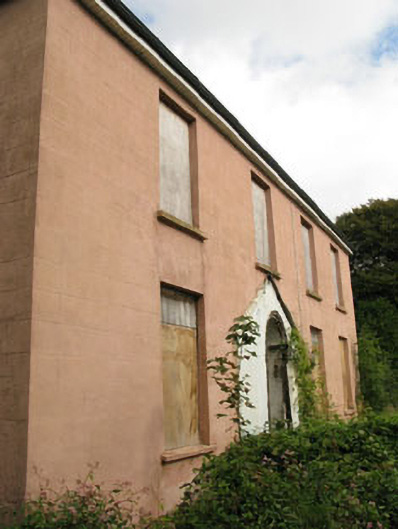 Beechgrovehouse · 794 yd
 Michael Collins House MuseumMuseum · 1670 yd
 Cloch na gCoillteMemorial · 1671 yd
 Castle (Site of)Castle, unclassified · 1.1 mi
 Clonakilty Tourist OfficeVisitor information · 1.2 mi
 Clonakilty HarbourBay · 1.8 mi
 Michael Collins MemorialMemorial · 2.6 mi
 Battle of the Big Cross (1798) Memorial MonumentMonument · 2.9 mi