
What is recorded here
National monument No. 341. In rough pasture, atop platform of limestone outcrop; overlooking Dromore Lough to N. Small antae-less church, dedicated to St Ultan (Ó Carragáin 2010, 312). Roofless ruin of rectangular gable-ended church (int. dims. 5.1m E-W; 3.05m N-S; wall thickness c. 0.7m). Built of roughly coursed limestone (with some sandstone) bonded by lime mortar; W wall rebuilt after it fell in mid-19th century during storm (Begley 1906, 117). Entered through plain lintelled door in centre of W wall; door has plain inclined sides and lintel supported by iron bar, it was rebuilt in 19th century (see above). Side walls are blank apart from small wall press (Wth 0.42m; D 0.5m) near E end of S wall, and a single projecting stone about mid-way along exterior, top of S wall. Single window is in centre of E gable: plain opening with splayed sides and a triangular head which splays upwards towards the inside; lower half has been blocked up (Westropp 1903-4, 386-7, plate 10). Leask (1955, vol. 1, 73) unsure of its date but considered it 'oldest church in the county'; otherwise date given as 8th century (Craig and Glin 1970, 45) and 9th/10th century (Duignan & Killanin 1962, 396). According to O'Donovan called Cill Ollta (OSL vol. 1, 21) though Spellissy says known locally as the Teampailli(fada)n (1989, 243); no traditions or history have survived regarding this church (OSL ibid.; Harbison 1992, 220). Used as a children's burial ground until 1910 (Spellissy ibid.) but now no trace of burials or burial markers in vicinity of church.
Westropp records the following details about Killulta; 'Ancient parish, perhaps Kyltuly,
in deed of G de Mareys, 1228 (B.B.L., xxiii.). Glanmithithig, 1410. Gleande church, 1418 and 1657 (D.S. (B), 16). Pococke calls it, in 1752, Killallatring (Tour, p. 114); Lewis, Killenalotar (vol. i., p. 321) ; Fitzgerald, Kilenalutter, i., p. 350. Fabric - It lies in Glen na Meade, and is an exceptionally ancient oratory on a bold rock. It is 16 feet [4.87m] by 9 feet 10 inches [3m], the walls 2 feet 8 inches [0.81m] of large blocks; the east end entire, its window with an angular head; Pococke compares it with the round towers, and considers it one of the oldest churches in Ireland ; Fitzgerald describes its west door as "Gothic", but that end fell, and has been roughly rebuilt. Near it is Tobermurry well [LF011-029----]' (Westropp 1904-5, 386-7).
Compiled by: Denis Power
Revised by: Caimin O'Brien
Date of revised upload: 4 October 2018
Killulta Church, dedicated to St Ultan, is a small, roofless rectangular ruin built atop a limestone outcrop, likely dating to the early medieval period. Its construction and patronage remain unidentified, but it is significant as a local religious site associated with an early Christian saint.
The monument record does not grant public access. Check the route and ask the landowner before entering private land.
- What survives
- Recorded monument
Places near here
 Partially indicatedEcclesiastical enclosure · 60 yd
 Enclosure in GlennameadeEnclosure · 400 yd
 RoadRoad, road/trackway · 488 yd
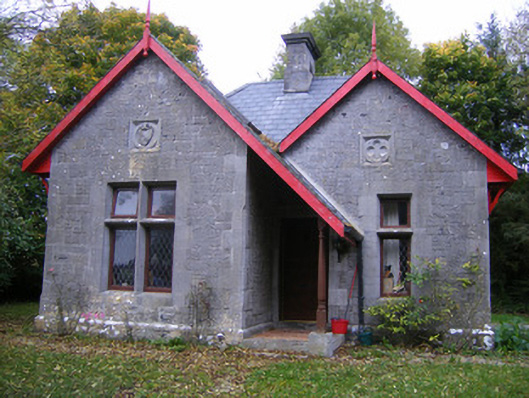 Dromore Castlegate lodge · 699 yd
 Bolane CastleCastle · 909 yd
 Castle (in ruins)Castle, tower house · 1675 yd
 Celtic Park and GardensHeritage attraction · 1.4 mi
 Stonehall Visitor FarmHeritage attraction · 2.0 mi
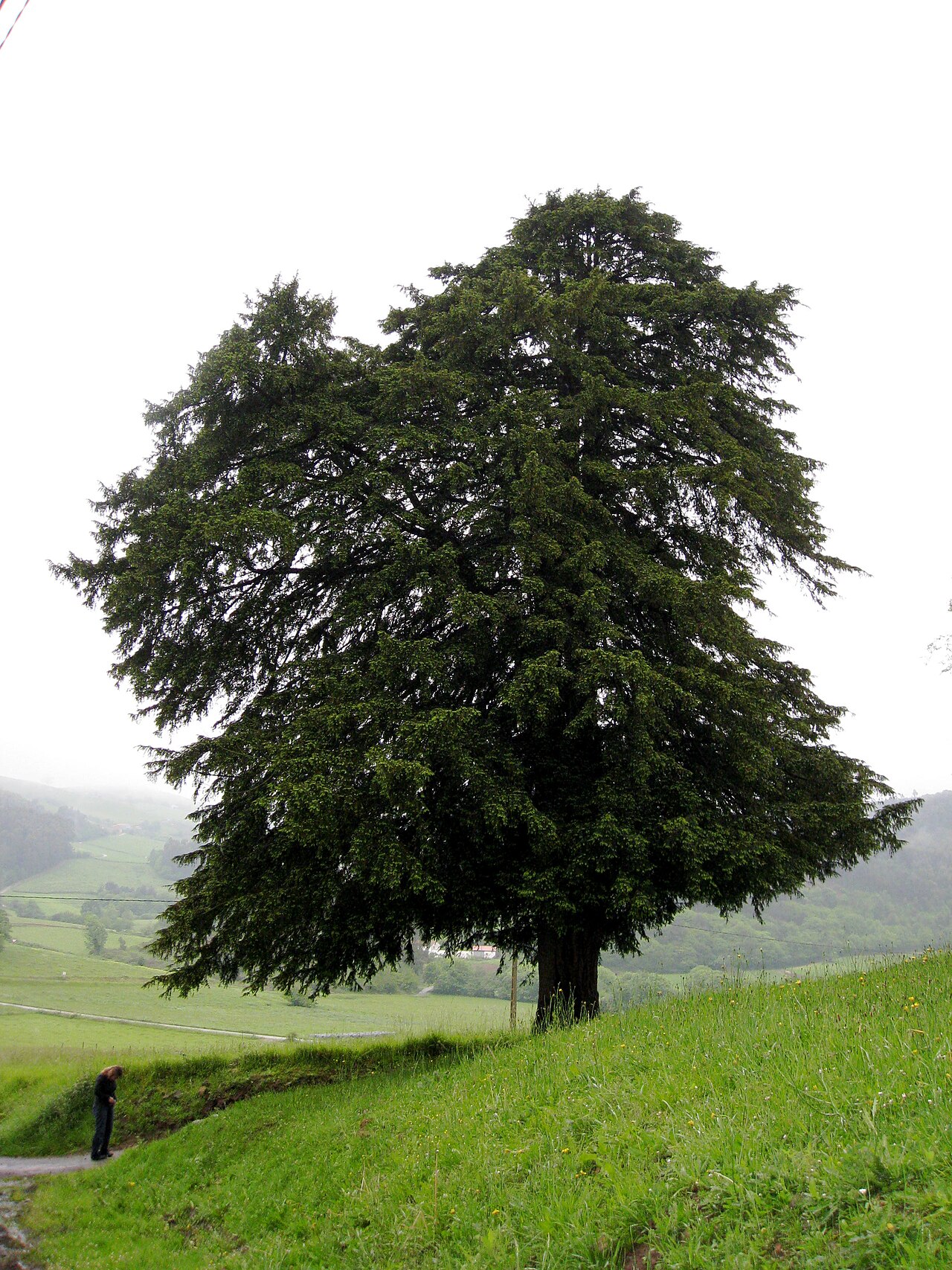 European YewEuropean Yew · 2.2 mi
 Mellon PointHeadland · 3.0 mi
 Maiden RockNamed rock · 3.2 mi
 Grass IslandIslet · 3.2 mi
Other information
Photo: Stevesphotography · CC BY-SA 4.0