What is recorded here
William Doulloghant, his wife Catherine, and their children John and Margaret lie beneath an unfinished limestone cross in St Francis' Abbey. The carver left the centre incised but never carved out, perhaps running out of time or breath while marking the quick deaths of January 1624. That sudden loss may have stalled the chisel, freezing the stone in a moment of shock rather than completion.
In St Francis' Abbey (KK019-026101-). A rectangular limestone graveslab (L 1.87m; Wth 0.725; D 0.165m) decorated with an eight-armed segmental cross with fleur-de-lis terminals. The upper edge of the slab has been damaged, the border being broken off, along with some of the inscription. The decoration is largely in false relief, however the carving is unfinished as the centre of the cross, the lower dexter fleur-de-lis, the cross-shaft and base are incised but not been carved out. The cross-shaft rises from a stepped mount, within which there is skull and cross-bones.
The inscription in Latin, in Black Letter script, begins in the upper dexter corner and continues around the border of the slab, finishing on the upper portion of the face of the slab beneath ‘C JACET GUILELM’, with a blank horizontal panel for date of death to be carved beneath, ‘DOULLOGHANT FILIUS’ and beneath ‘ET MARGARET MONY’.
The inscription has been transcribed by Manning (2007, 48) as: HIC JACET GUILELM[US] DOULLOGHANT QUADAM BURGENSIS CIVITATIS KILKENIE QUI OBIIT 18 JANUA[RY] 1624 ET CATERINA BRENAN UXOR IEUS QUE OBIIT 3 DIE JANUARY 1624 ET JOANNES DOULLOGHANT FILIUS [blank panel] ET MARGARET MONY [blank panel].
It translates as, ‘Here lies William Doulloghant formerly a burgess of the city of Kilkenny, who died 18 January 1624, and Catherine Brenan, his wife, who died the 3rd day of January 1624 and John Doulloghant, son [blank panel] and Margaret Mony [blank panel]’ (ibid.).
This graveslab was uncovered in the N transept of the church during archaeological excavations in the 1960s (ibid.). It is currently on display in an elevated upright position against the inner face of the N wall of the chancel.
Compiled by: Jean Farrelly
Medieval Christian graveslab, 12th–13th century. Its carved cross and fleur-de-lis terminals reflect the influence of Romanesque artistic traditions in Ireland.
The monument record does not grant public access. Check the route and ask the landowner before entering private land.
- What survives
- Recorded monument
Places near here
 St Francis Abbey (in ruins)Religious house, Franciscan friars · 2 yd
 Font in Gardens (kilkenny City By., St. Mary’s Par.)Font · 17 yd
 Holy well in Gardens (kilkenny City By., St. Mary’s Par.)Holy well · 53 yd
 Bridge in Gardens (kilkenny City By., St. Canice Par.),gardens (kilkenny City By., St. Mary’s Par.)Bridge · 99 yd
 City WallsMemorial · 136 yd
 St. Francis BridgeMemorial · 160 yd
 Smithwick's Brewery ExperienceHeritage attraction · 197 yd
 Grace's Old CastleCastle · 202 yd
 Kilkenny Old Jail and CourthouseVisitor information · 207 yd
 Kilkenny CourthouseVisitor information · 217 yd
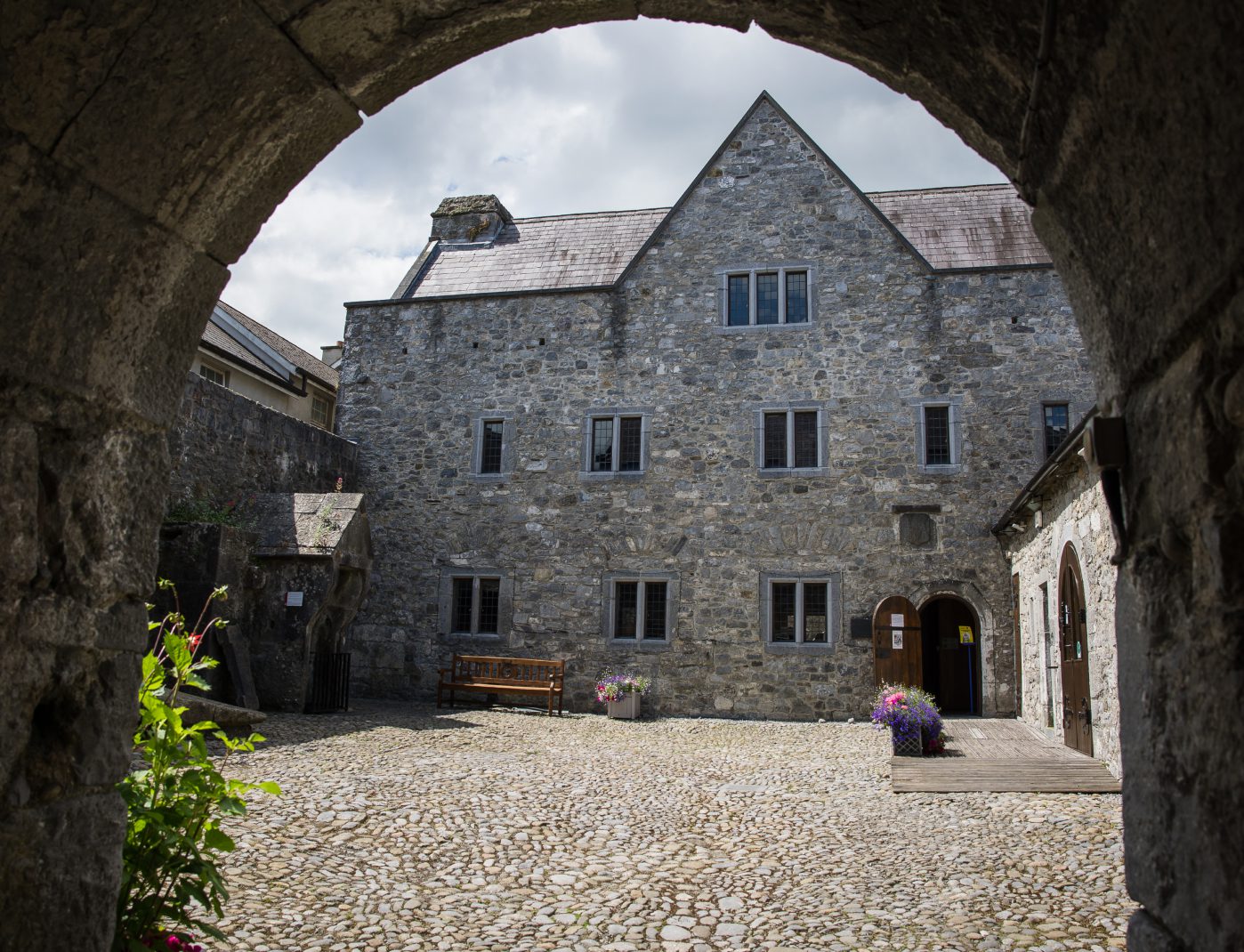 Rothe House & GardenMuseum · 278 yd
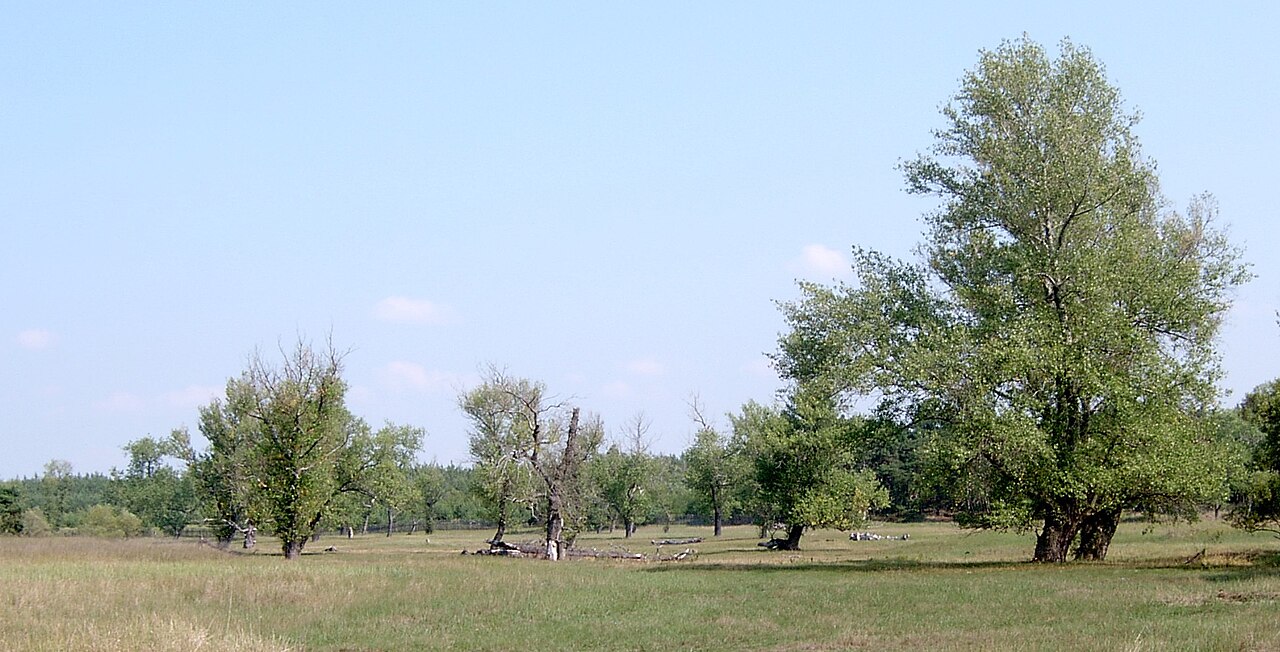 Black PoplarBlack Poplar · 289 yd