What is recorded here
Half a kilometre east of Ballyshannon, two stones still mark a grave that swallowed a giant. They sit on a ridge above the Erne, watching water and sky while the rest of the tomb has vanished into fields and memory. What is left is enough to suggest scale: one flat stone, one taller block, and a distance between them that invites a body larger than any living person. The grade is empty, the name is not.
This monument is 4.6km SE of Bally shannon. It is prominently sited on the crest of a ridge above the basin of the River Erne and commands an extensive outlook in all directions.
Only two orthostats of the monument survive. One, at the S, lies E-W, and 3m to the N of its western end is another, orientated N-S. The southern stone is flat topped and 0.65m high. The northern stone, a considerable block, is uneven on top and 1m high. A modern field wall, not on the plan, runs E-W just N of the remains. In the field wall c. 8m NW of the northern orthostat there is a large stone, and 3m further W another, both c. 1m in maximum dimension. These may have been robbed from the monument.
The monument was in its present state in around 1850, according to an account in an OS Revision Name Book. Allingham (1879, 108-9), apparently on the basis of a report in The Dublin Penny Journal (G.H.R. 1834-5), recorded that a cinerary urn was found here. It reportedly contained ashes and several large bones.
The size and juxtaposition of the two surviving orthostats indicate that this was a megalithic tomb, although it must remain unclassified.
G.H.R. 1834-5 ('...situated at the top of an eminence...'); OS Revision Name Book, sheet 107 (1847-50), 27; Allingham 1879, 108-9; Holly 1975-6, 196 (plan); Ó Nualláin 1983a, 46, no. 37; SMR 1987, 107:102; Ó Nualláin 1989, 142; RMP 1995, 107:102.
The above description was published in the 'Survey of the Megalithic Tombs of Ireland. Volume VI, County Donegal.' Compiled by: Eamon Cody (Dublin: Stationery Office, 2002).
Date of upload: 22 September 2008
See linked document with details from Eamon Cody, Survey of the Megalithic Tombs of Ireland. Volume VI. County Donegal. (Dublin: Stationery Office, 2002)
Portal dolmen; likely dates to the Neolithic period (c. 4000–2500 BCE). Its strategic hilltop location suggests it had ritual or ceremonial significance, possibly as a focal point for early farming communities in the region.
The monument record does not grant public access. Check the route and ask the landowner before entering private land.
- What survives
- Recorded monument
Places near here
 Rowantreehill Househouse · 356 yd
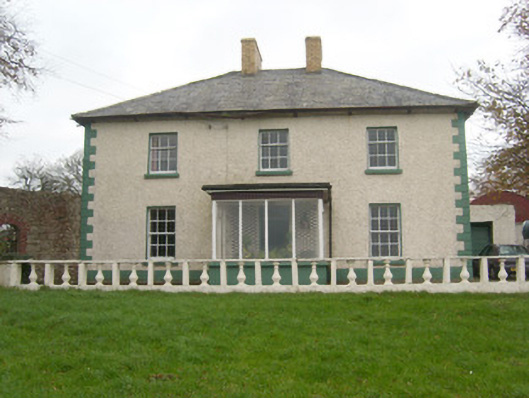 Rockfield Househouse · 542 yd
 Former Camlin Fairy Fort / BreginaFairy fort / earthen ringfort · 1277 yd
 Lissacholly Earthen RingfortFairy fort / earthen ringfort · 1304 yd
 Belleek Pottery MuseumMuseum · 1.4 mi
 Belleek PotteryHeritage attraction · 1.4 mi
 Castle in ruinsCastle, unclassified · 1.5 mi
 InishkeenIslet · 3.1 mi
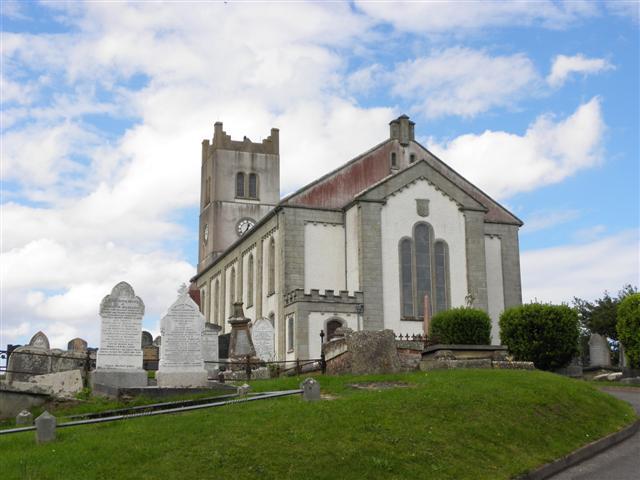 St Anne's Church GraveyardGraveyard · 3.2 mi
 GorminishIslet · 3.5 mi
 PLANTATION CASTLE: MAGHERAMEENAGH CASTLE in MagherameenaghPLANTATION CASTLE: MAGHERAMEENAGH CASTLE · 3.7 mi
 HawthornHawthorn · 4.2 mi