What is recorded here
Fairy fort / earthen ringfort in Emlaghnaghtan is a fairy fort or earthen ringfort in Emlaghnaghtan, County Sligo, Ireland. The roughly circular site sits on a low rise in undulating pasture and contains two earth and stone banks with an intervening fosse. Richard Fleming built a stone monument there in 1712, though he is probably buried in Emlaghfad with other family members. A circular earthwork and drystone wall also occupy the southern half of the grassy interior.
In undulating pasture, on a low rise with excellent views in all directions. A roughly circular raised area (35m N-S; 33m E-W) defined by two earth and stone banks with an intervening fosse. The interior is enclosed by an inner bank (int. H 0.45m; ext. H 3.9m); the width and internal height (H 1.8m) of the bank have been increased NNW-N to accommodate an OS trigonometrical station (now gone but indicated on the 1941 OS 6-inch map). The entrance (Wth 6m) is at E with breaks in the inner and outer banks and a ramp and causeway across the fosse. The fosse is evident all round with a slight infilling visible W-NW as a result of livestock traffic into the interior. The outer bank (int. H 1.05m; ext. H 0.7m) is evident NE-NNW; elsewhere it has been replaced by a drystone-built wall. There is a gap (Wth 2.2m) at W. A drystone-built wall has been constructed on the external edge of the top of the outer bank WSW-NW and an E-W earth and stone field boundary abuts the external base of the outer bank at S.
The interior is level and under grass with some hawthorn bushes. In the S half is a circular earthwork surrounded by a stone wall; on top of the enclosing bank on the S side of the earthwork is a stone monument of the Fleming family. The circular earthwork consists of a slightly raised level area (diam. 7.5m) enclosed by an earth and stone bank (H 0.3m). The earthwork is enclosed by a circular drystone wall (H 0.85m; T 0.65m) of rubble limestone with an entrance (Wth 1.6m) at N. The rubble limestone on the W side of the entrance is stone faced and coursed while the E side has mostly collapsed.
The Fleming monument (Flynn 2003-4, 22-3) consists of a rectangular column (0.75m N-S; 0.9m E-W; H 1.2m) of rubble limestone, mortared in rough courses. At the top of the N-facing side are two roughly shaped rectangular sculpted stones, both of similar dimensions (H 0.37m; Wth inscribed face 0.23m; T 0.45m). The westernmost stone is decorated with a stag, a heart between a unicorn and another animal as well as a hand holding a sword, a fleur-de-lys and an open hand. The easternmost stone is inscribed with capital letters in relief and reads as follows: RICHARD FLEMING WHO MADE THIS IN THE YEARE 1712; there is an upright flower stem between the 17 and the 12. This monument does not mark a burial and Richard Fleming is probably buried in Emlaghfad (SL033-14402-), with other members of that family, where there are five Fleming chest-tombs, three of which are very ornate (pers. comm. M. B. Timoney).
The above description is derived from the published 'Archaeological Inventory of County Sligo' compiled by Ursula Egan, Elizabeth Byrne, Mary Sleeman with Sheila Ronan and Connie Murphy (Dublin Stationery Office, 2005).
Date of upload: 18 January 2008
The monument record does not grant public access. Check the route and ask the landowner before entering private land.
- What survives
- Recorded monument
Places near here
 Enclosure in EmlaghnaghtanEnclosure · 197 yd
 Enclosure in Rathdoony MoreEnclosure · 1115 yd
 RathdoonyCastle, motte · 1472 yd
 Templehouse Bridgebridge · 1.4 mi
 ElderElder · 1.4 mi
 Temple Housecountry house · 1.6 mi
 Brother WalfridMemorial · 1.7 mi
 Ballymote CastleCastle · 1.8 mi
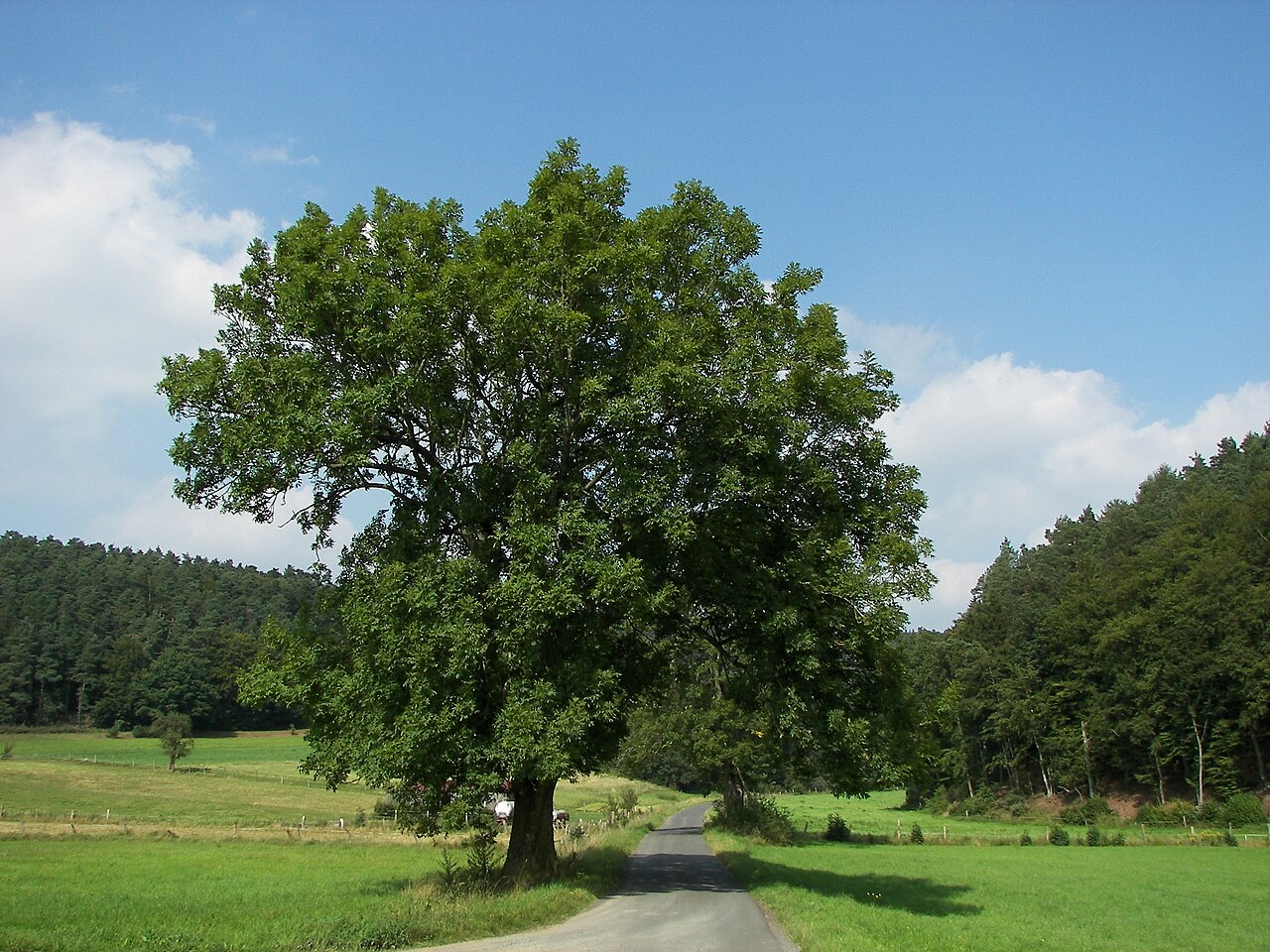 European ashEuropean ash · 2.0 mi
 Tymon's HillMountain / peak · 3.4 mi
 KnocknasheeMountain / peak · 5.1 mi
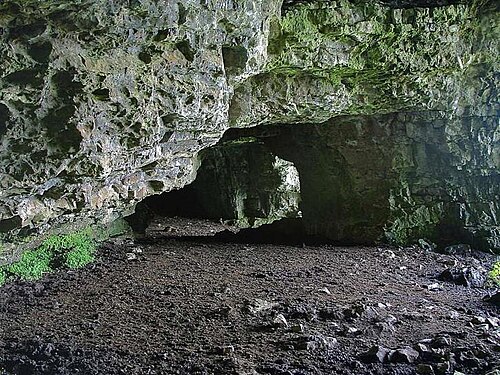 Caves of KeshCave · 5.2 mi