
What is recorded here
Clooney Castle stands as a ruined three-storey limestone tower on a rocky hillock in County Clare, built by Donough O'Grady and contested by Mac Gilleriogh, Teige O'Brien, and Thomas Bourne before the 1641 rebellion. Its southern wall has collapsed, exposing a barrel-vaulted guard room and spiral stairs, while locked gates still block the ground floor where a garderobe chute once dropped waste into the mud below. The Bindon family later moved nearby to build Clooney House, leaving the old tower to rot into a grass-covered cairn of rubble.
In a commanding location on a rocky hillock in a low-lying landscape. A tower of at least three storeys, but now inaccessible, the ground floor having locked gates. It is surrounded by a grass-covered cairn of rubble (diam. c. 15m; H c. 2m).
Recorded as having been built by Donough O'Grady, it was owned in 1570 by Mac Gilleriogh and was granted to O'Gradys again in 1585. In 1598 Teige O'Brien took Clooney Castle from the son of the Bishop of Meath, but soon after it appears to have been returned to O'Grady ownership, until the 1641 rebellion. In that year the castle was held by Thomas Bourne, an Englishman, and after the rebellion it was disposed of to David Bindon, transplanted from Co. Tipperary, and James Roche. The Bindons later settled at and enlarged the nearby Clooney House (CL034-084----).
Rectangular tower (ext. dims. 11.6m NW-SE; 8.9m NE-SW) of crude limestone with dressed quoins, and with a base-batter on the N wall and plinth at the NE angle. The entrance was in the S wall, which is destroyed, but the remains of a barrel vaulted guard room at the SE angle and a spiral stairs at the SW are visible. A pointed doorway provides access to ground floor which has embrasures in each wall, only that at the N end of the E wall having a narrow light and that on the N having a secondary pointed doorway. There is a damaged rectangular fireplace at the S end of the E wall, and a garderobe chute is contained in the wall to its S, the outlet being 1.25m over present ground level on the outer face of the wall. There is no evidence of a bawn. (Spellissy, 1987,51; Ua Cróinín and Breen 1998, 6-7)
Compiled by: Leo Morahan and Michael Moore
See attached document with details from Risteárd Ua Cróinín and Martin Breen, The Castles and Tower-houses of Co. Clare (unpublished report). Uploaded courtesy of R. Ua Cróinín and M. Breen.
Date of upload: 11 December 2014
Built in the 17th century by the O'Donnell clan, Clooney Castle is remembered as a significant historical site linked to the Gaelic aristocracy of Ulster and as a symbol of the region's turbulent medieval and early modern history.
The monument record does not grant public access. Check the route and ask the landowner before entering private land.
- What survives
- Recorded monument
Places near here
 Clooney Church (in Ruins)Church · 134 yd
 Clooney Ho.House, 18th/19th century · 364 yd
 IndicatedFairy fort / earthen ringfort · 662 yd
 St Patricks Holy Well (Site of)Holy well · 736 yd
 Corbally Castle (Site of)Castle, unclassified · 1015 yd
 CastleCastle, unclassified · 1.1 mi
 Kilcatherine GraveyardWood · 2.1 mi
 Quin AbbeyHeritage attraction · 2.4 mi
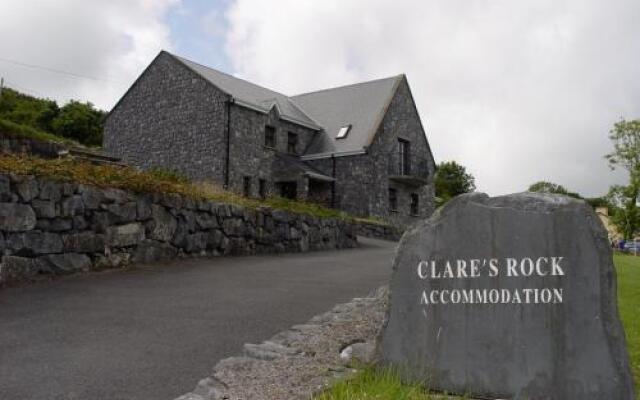 Cloghleagh RockNamed rock · 3.2 mi
 Derrymore WoodWood · 3.6 mi
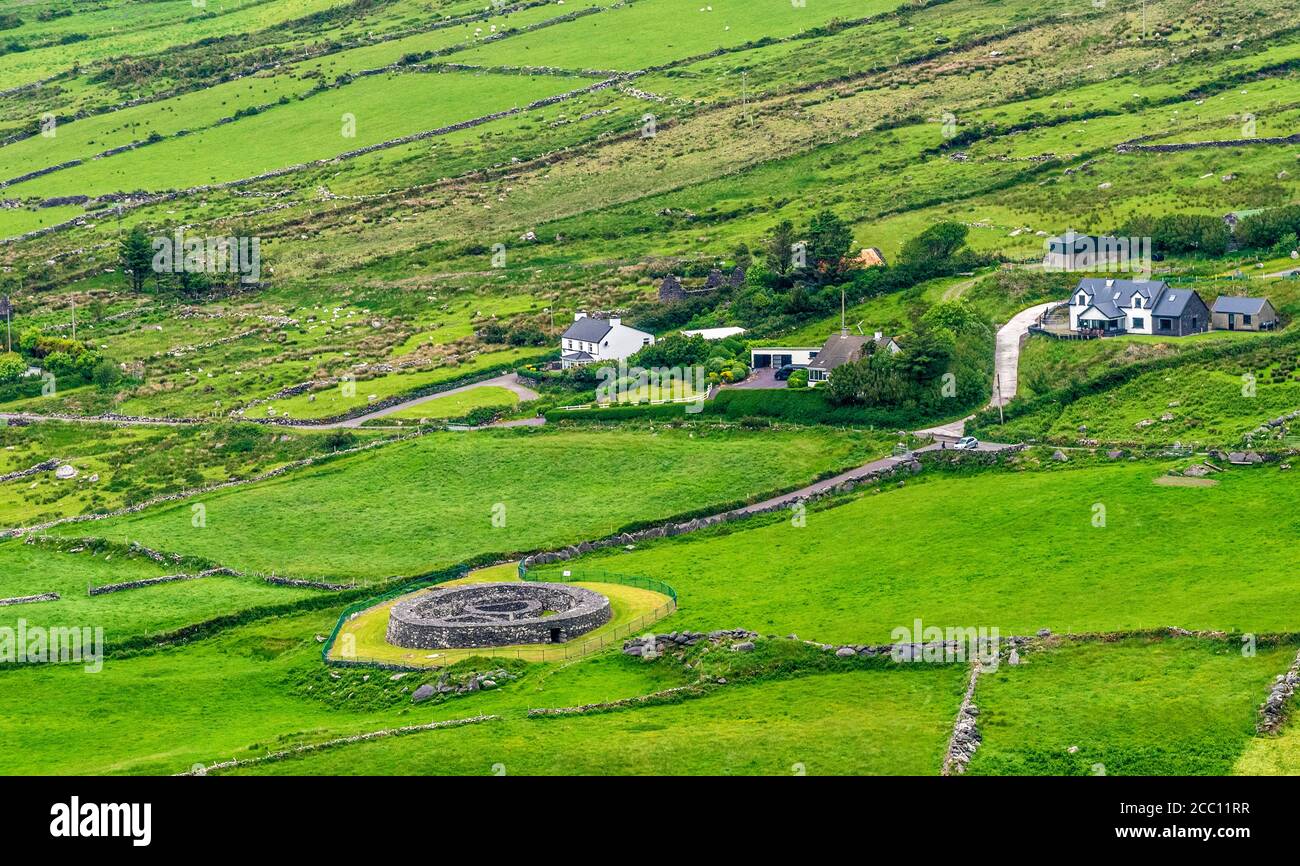 The RingfortHeritage attraction · 4.0 mi
 G.A.A. Commemorative StoneMemorial · 5.3 mi
Other information
Photo: Credit not shown in the picture search · Rights wording not checked; contact us if this picture should be removed