What is recorded here
Illaunloughan is a children's burial ground on a tiny island in Portmagee Channel, where about fifty upright slabs mark small boxes made from Scots Pine. The sea claims the island at high tide, but low water exposes a narrow path from the mainland, inviting people to cross into a place set apart for the vulnerable. That boundary between reach and loss is the shape of the legend: a little island large enough for mercy, hidden enough to keep it.
National Monument No. 10001. Illaunloughan/Oileán Lócháin (KE087-036017-) is a small, low-lying island located in Portmagee Channel, c. 120m from the mainland at S and c. 400m WNW of Portmagee (Port Mhic Aoidh) village. The island stands in the civil parish of Killemlagh (Cill Imleach), in the barony of Iveragh (Uíbh Ráthach). Its habitable surface measures a maximum of 26m N-S x 50m E-W, and is c. 0.1ha in area. During certain low tides it can be reached on foot from the mainland. According to Marshall and Walsh (1998, 102) 'There is no historical documentation for the island, and the origin of its name is uncertain. Lochán may be the name of a saint associated with the island, a theory supported by the mention of two Lochans in the Martyrology of Oengus, written c. AD 800 (Stokes 1984, 255, 263) and by the inland location of Killoughane (Cill Lócháin) ecclesiastical site [KE065-058001-] at the eastern end of the Iveragh peninsula (O'Sullivan and Sheehan 1996, 357). Alternatively the island name may be derived from the island of the chaff. Four seasons of archaeological work, carried out from 1992 to 1995, have completed the excavation of about 70 per cent of the island.
On the island are the remains of a monstery consisting of an oratory (KE087-036008-), a leacht (KE087-036004-), gable-shrine (KE087-036006-), a hut site (KE087-036005-) and a well (KE087-036002-). In addition, about fifty upright slabs occur on the island, particularly at its W side where they tend to occur in regular rows. Illaunloughan is noted in the OSNB as 'a burial place for children and adult strangers' (Killemlagh, 55), and these slabs probably relate to such use.
According to Marshall and Walsh (1998, 106), 'The island was utilised as a ceallúnach in more recent times. In contrast to the earlier adult burials, the infant skeletons were well preserved. These burials usually had simple uninscribed headstones, and many were placed in small boxes made from Scots Pine. Most of these later burials were placed towards the western side of the island'.
This monument is subject to a preservation order made under the National Monuments Acts 1930 to 2014 (PO no. 1/1998).
The above description is derived from O'Sullivan, A. and Sheehan, J. (compilers) 'The Iveragh peninsula: an archaeological survey of South Kerry'. Cork University press. (1996), no. 964. In certain instances the entries have been revised and updated in the light of recent research.
Revised by: Caimin O'Brien
Date of revised upload: 30 March 2022
The monument record does not grant public access. Check the route and ask the landowner before entering private land.
- What survives
- Recorded monument
Places near here
 Church in Illaunloughan,portmageeChurch · 32 yd
 Skellig Experience CentreMuseum · 600 yd
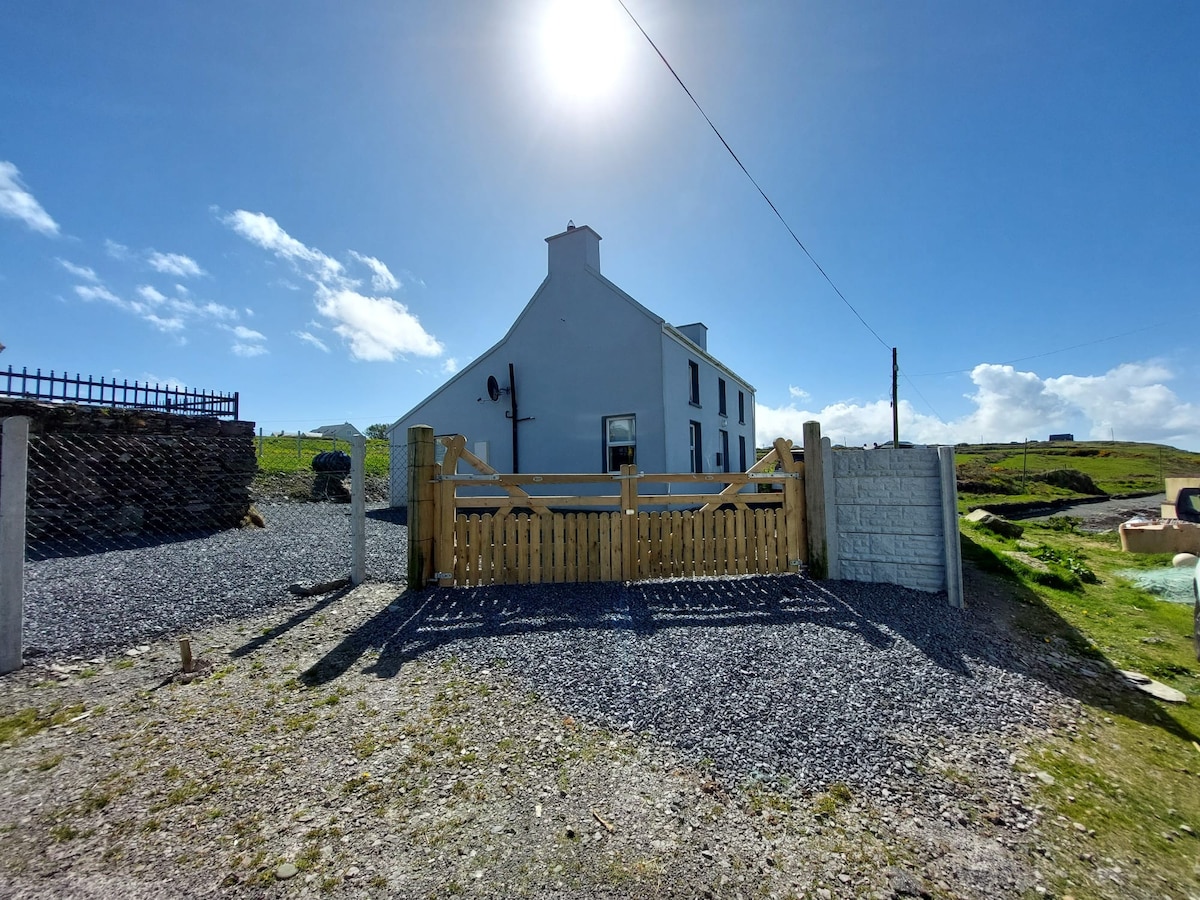 Enclosure in Coarha MoreEnclosure · 946 yd
 Cromwell's FortRuins · 1313 yd
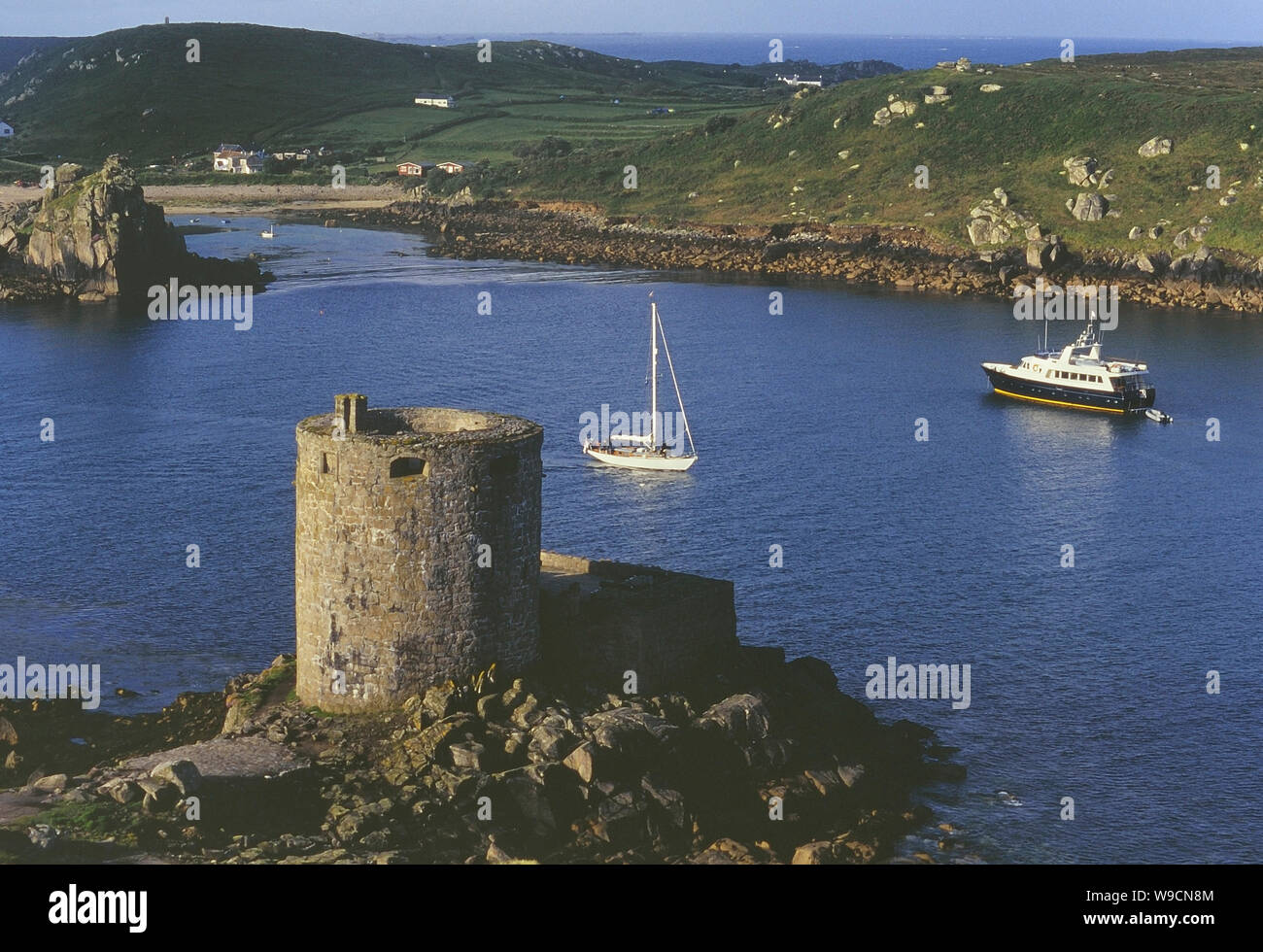 Cromwells Fort, Old Watch Tower (in ruins)Fortification · 1334 yd
 Telegraph Field Valentia IslandMemorial · 1467 yd
 Horse IslandIslet · 1.1 mi
 Beehive CellsHeritage attraction · 1.3 mi
 Long IslandIslet · 1.4 mi
 Tobairin Holy WellSpring · 1.9 mi
 Culloo RockViewpoint · 2.1 mi
 Cúm an EaspaigMountain / peak · 2.1 mi