What is recorded here
Cave in Acres (burren By.) sits near the summit of Moneen Mountain, hiding a small chamber reached through a narrow roof opening and a sharp horizontal drop. In June 2011, cavers digging through the floor uncovered Bronze Age pottery, an antler hammerhead, animal bones and human skull fragments, forcing an immediate rescue excavation. The cave also contained a young skeleton locked in a shallow wall niche, dated to the sixteenth or seventeenth century AD, suggesting a hard-lived person was placed there rather than formally buried.
This cave is located towards the summit of Moneen Mountain. It consists of a small chamber (2.8m x 3.4m) that is accessed via a narrow opening in the cave roof, with a horizontal drop of 1.8m to the cave floor beneath. In June 2011 cavers were digging through the floor of the cave chamber in an attempt to extend the length of known cave passage. In the process they discovered an antler hammerhead (or macehead), Bronze Age pottery, human skull fragments, animal bones and oyster shells. Digging was immediately suspended and the National Monuments Service was contacted. A two-week rescue excavation (Licence no. 11E0316) followed in August with a team of archaeologists and cavers. The objective was to recover archaeological material that had been disturbed and lay exposed in the cave, as well as to assess the nature and date of activities at the site.
A number of artefacts and bones were recovered from lower levels in the cave. These seem to have worked their way down from the chamber overhead both in antiquity and during the cavers’ dig. The antler hammerhead (radiocarbon dated to 2139-1895 cal BC (UBA-20291)) came from these lower levels, as did a broken flint flake of Neolithic or earlier Mesolithic date. Scattered throughout the cave were 345 sherds of undecorated middle/late Bronze Age pottery, representing at least six different vessels. A total of 3,124 fragments of animal bone (including a skull that had broken into 353 pieces) were recovered. Many were not identifiable because they were in such a fragmentary state. Those that could be identified included (in order of frequency) sheep/goat, bird, hare, mouse, cattle, frog, rat, fish, pig, deer and cat. Almost all the bones had entered the cave by natural processes but four mammal ribs bore butchery marks indicative of human activities.
A human skeleton (CL002-080001-) was discovered in a small artificial cavity (0.6m x 0.6m x 0.85m high) in the north wall of the cave. The remains represent an adolescent aged 14–16 years at the time of death. The bones bore no indication of violence yet the body was not in a formal burial position. The skull fragments initially discovered by the cavers in the chamber, 2.5m outside the niche, derive from the skeleton. It is not clear how the skull became separated from the corpse. Osteoarchaeological analysis indicates that the individual had had a hard life and may have suffered extended periods of hunger and malnutrition. Radiocarbon dates obtained for the skeleton revealed a strong probability that the youth lived in the sixteenth or seventeenth century AD. (Dowd 2011; Dowd 2013, 9-12)
Compiled by: Mary Tunney
Date of upload: 16 February 2015
The monument record does not grant public access. Check the route and ask the landowner before entering private land.
- What survives
- Recorded monument
Places near here
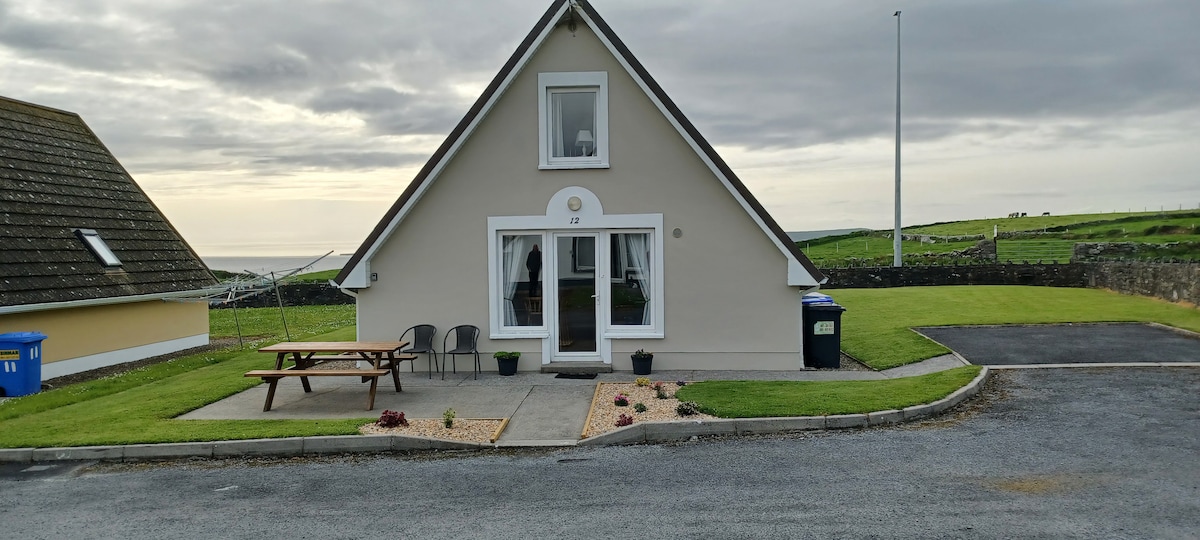 Enclosure in Kilweelran, Dangan (burren By.)Enclosure · 437 yd
 Enclosure in KilweelranEnclosure · 591 yd
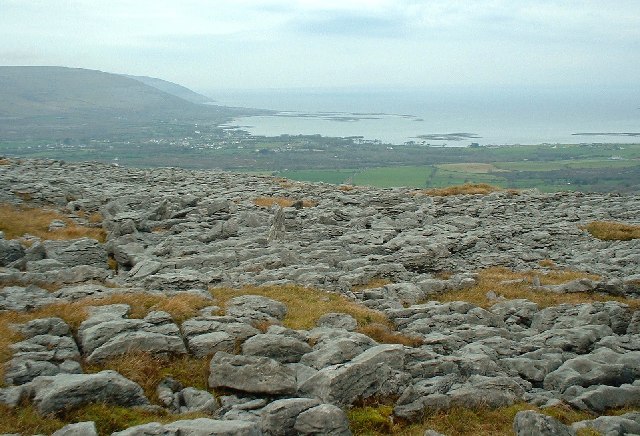 Moneen MountainMountain / peak · 1368 yd
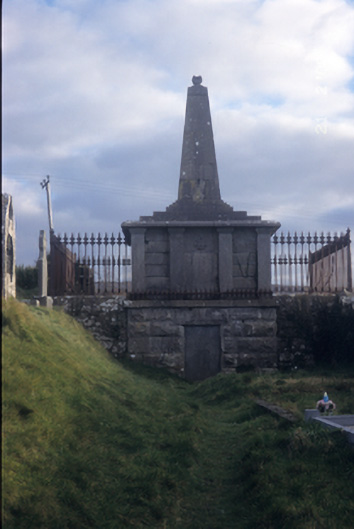 mausoleummausoleum · 1.2 mi
 Castle Mael (in ruins)Castle, unclassified · 1.5 mi
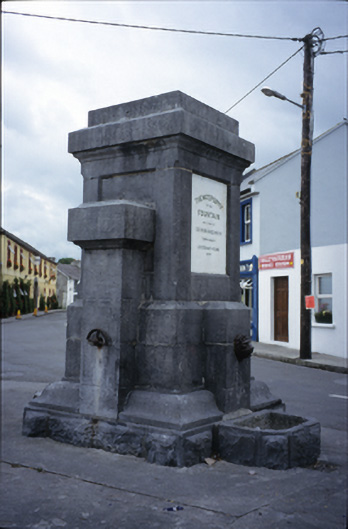 Ballyvaghan Fountainfountain · 1.7 mi
 Ballyvaghan Castle (in ruins)Castle, unclassified · 1.8 mi
 Aillwee CaveCave · 1.9 mi
 Bird Of Prey CentreHeritage attraction · 1.9 mi
 Battle of Lough Raskabattle · 2.2 mi
 Rine PointHeadland · 2.7 mi
 Saint Patrick's ChurchHeritage attraction · 2.7 mi