What is recorded here
Castlefarm holds a tower house built for Dunboyne, rising above flat farmland while the Castle River flows a hundred metres north. Hugh de Lacy gave the land to William le Petit, who first raised a ringwork perhaps on an older rath before stone took over the job. Edward IV ordered a new castle in 1475, and later bars and surveys kept finding houses where that command had landed. The ground still keeps a thick medieval wall and stone floor beneath younger cobbles, waiting under the farm for someone to remember why it was built.
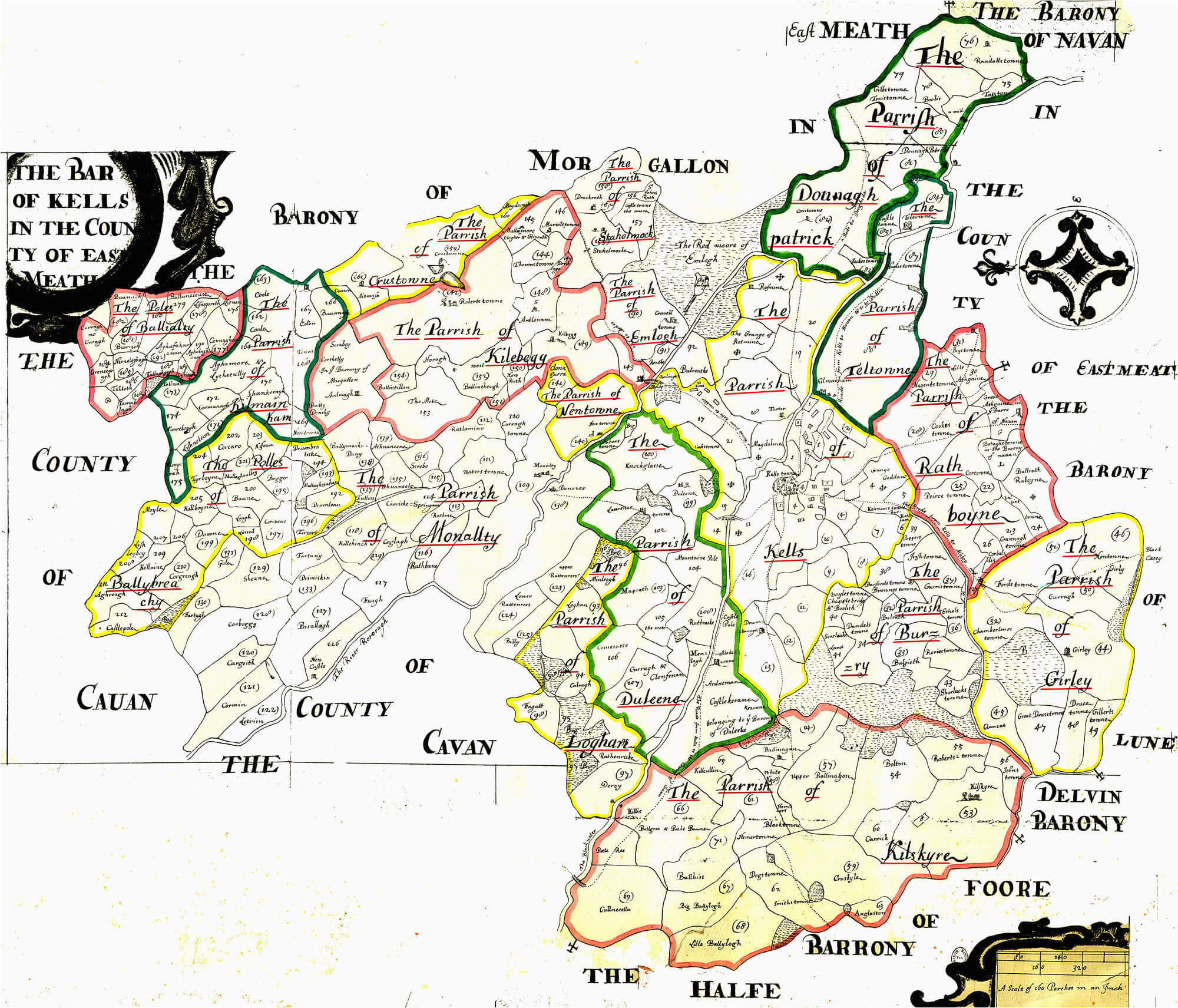
Situated on a rise in a fairly level landscape, with the WNW-ESE Castle River c. 100m to the N. Following Hugh de Lacy’s grant of Dunboyne to William le Petit the latter established a ringwork castle (ME050-021007-), perhaps adapting an older rath, on the S side of the stream, but this would not suffice for very long and may have been rebuilt at some stage in stone. A stone castle was mandated in 1475-6 when Edward IV ‘Purposes by the grace of God to commence to erect a castle anew at Dunboyne’ to be completed in one year (Connolly 2002). This was probably a tower house and possibly located on a new site. One stone house owned by Lord Dunboyne is recorded in the Civil Survey (1654), and the Down Survey (1656-8) barony map depicts a two storey gabled and probably then roofless structure on the S bank of the stream. The present Dunboyne Castle was built by the tenth or eleventh Baron of Dunboyne in the 1770s or 1780s with further work conducted in the 1830s (Bence-Jones 1988, 114).
Archaeological testing (01E0875) by S. Johnston on the N side of the eighteenth century house recorded modern disturbance over a cobbled surface that is probably associated with the eighteenth century building. Beneath the cobbles mixed layers produced seventeenth century gravel-tempered wares and beneath these was the base of a NNE-SSW wall (Wth 1.8m; max. H 1.6m) with an associated stone floor on its W side. The wall is likely to be medieval, and probably from the castle mentioned in the Statute Rolls. Archaeological testing (04E1040) by C. Cotter uncovered another building (ME050-021009-) outside the medieval enclosure at E. (Johnston 2001)
Compiled by: Michael Moore
Date of upload; 29 October 2021
William le Petit built the tower house at Castlefarm following his receipt of Dunboyne from Hugh de Lacy in the late 12th century; it is remembered as part of the early medieval fortification network in the region.
The monument record does not grant public access. Check the route and ask the landowner before entering private land.
- What survives
- Recorded monument
Places near here
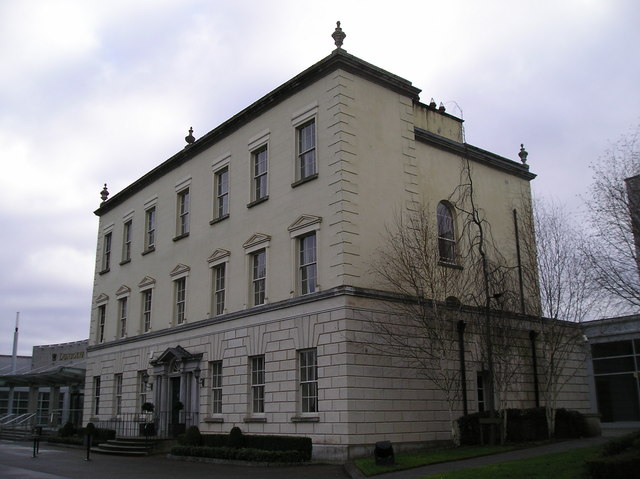 Dunboyne Castlecountry house · 17 yd
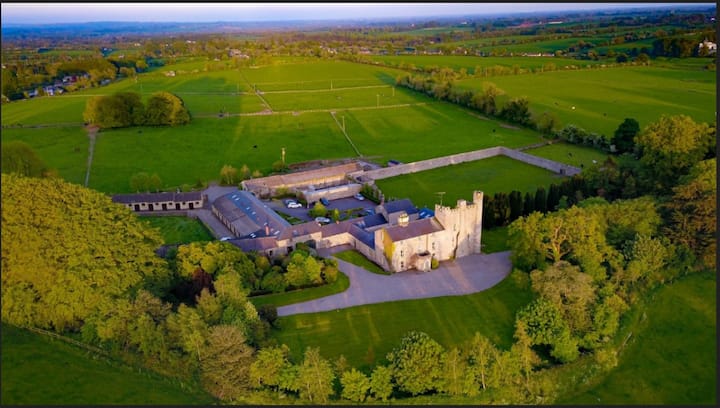 CastleCastle, ringwork · 29 yd
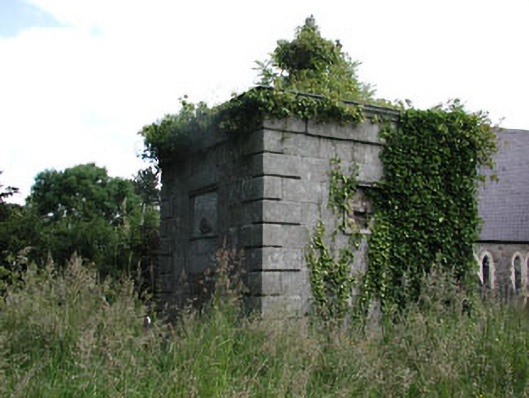 Saint Peter's Church (Dunboyne)mausoleum · 262 yd
 Font in DunboyneFont · 270 yd
 EnclosureEnclosure, large enclosure · 1016 yd
 Hanwood GardensHeritage attraction · 1.6 mi
 Ash HillMountain / peak · 2.0 mi
 Church, GraveyardChurch · 3.2 mi
 TyrrelstownWood · 3.4 mi
 Luttrellstown CastleCastle · 3.6 mi
 Wesley's WoodsWood · 3.6 mi
 Graveyard in BuzzardstownGraveyard · 3.6 mi