
What is recorded here
Lisburn Castle rose in the post-medieval period before becoming an artillery fort, yet only its gate and buried foundations remain visible in Castle Gardens. The site has changed from residential defence to military firepower and finally to public memory, forcing each generation to reimagine what strength means. People may have walked these gardens knowing walls once rose behind them, or they may have forgotten the castle entirely and seen only empty grass. Either way, the gate still marks the place where human ambition kept reinventing itself.
The official Northern Ireland record identifies this as CASTLE later ARTILLERY FORT (site of) & GATE: LISBURN CASTLE, CASTLE GARDENS, LISNAGARVEY. Recorded period: POST-MED. Recorded protection: Scheduled. The official map point was placed at the centre of the recorded archaeological site from the source map reference.
Lisburn Castle was built in the late 16th century by Sir Henry Stewart, Lord of Lisnagarvey, during the Tudor period of English expansion in Ireland. It is remembered as an example of early plantation architecture and as a site later adapted for military use, reflecting the strategic importance of the area in both colonial and later defensive contexts.
The monument record does not grant public access. Check the route and ask the landowner before entering private land.
- What survives
- Recorded monument
Places near here
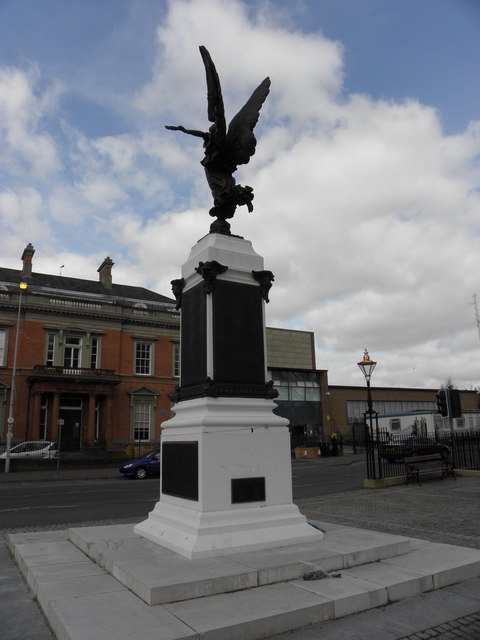 Lisburn War MemorialMemorial · 72 yd
 Cathedral of Christ ChurchChurch · 73 yd
 Wallace MemorialMemorial · 76 yd
 The Wallace MemorialMemorial · 77 yd
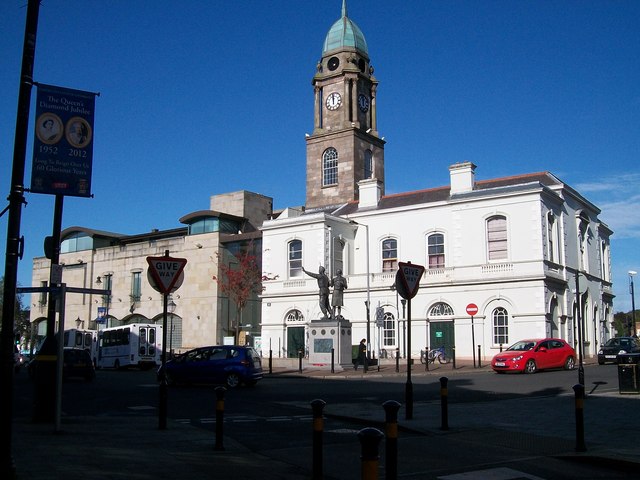 Linen Centre and MuseumMuseum · 171 yd
 Welcome to Lagan Valley Regional ParkVisitor information · 237 yd
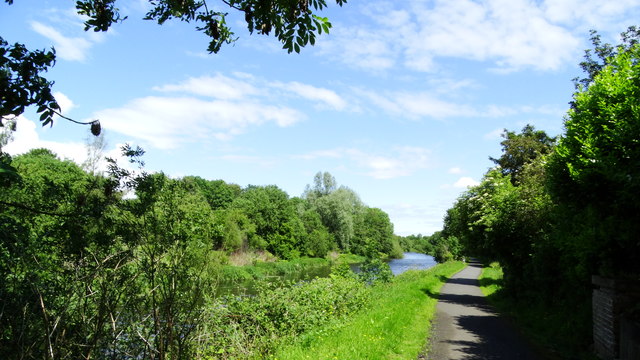 Lagan Valley IslandIsland · 414 yd
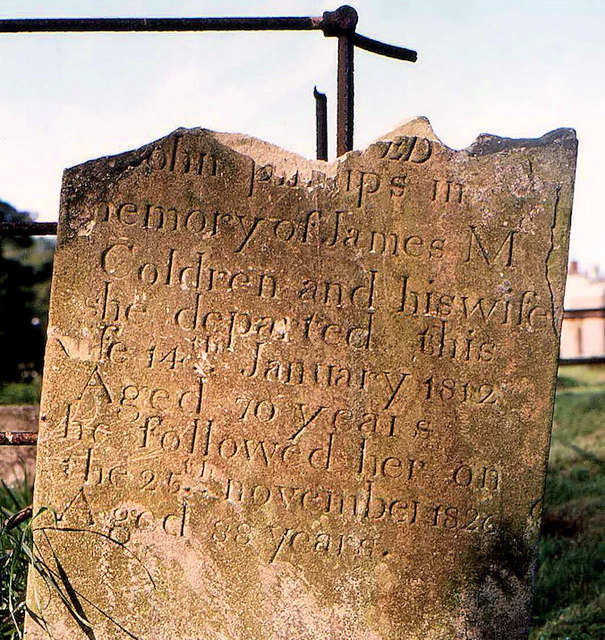 CHURCH?, GRAVEYARD, RECTANGULAR ENCLOSURE & HOLY WELL: KILRUSH in LisnagarveyCHURCH?, GRAVEYARD, RECTANGULAR ENCLOSURE & HOLY WELL: KILRUSH · 433 yd
 ENCLOSURE: PROSPECT HILL in LisnagarvyENCLOSURE: PROSPECT HILL · 797 yd
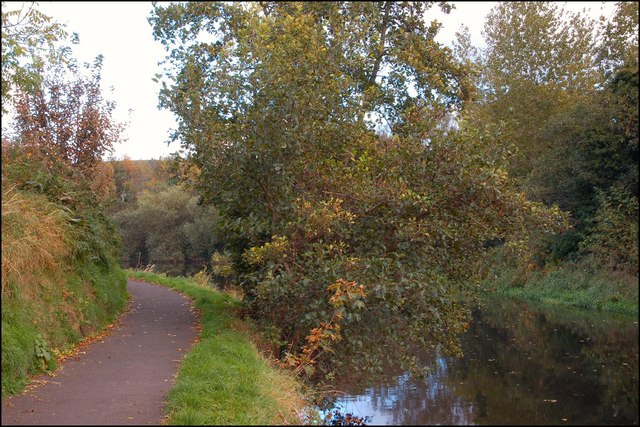 Lagan TowpathWalking route · 1096 yd
 PLANTATION HOUSE & BAWN: THE COURT in HillhallPLANTATION HOUSE & BAWN: THE COURT · 1.9 mi
 Belshaw's Quarry Nature ReserveNature reserve · 3.0 mi
Other information
Photo: Albert Bridge · CC BY-SA 2.0