What is recorded here
This mound barrow was evident as a low, circular grass-covered mound when in 1937 it was quarried for sand and stone for road building. During the quarrying, a cremated burial with food vessel was exposed. Further burials were uncovered in 1939. The National Museum subsequently undertook an excavation of the barrow, approximately half of which had already been disturbed or destroyed (Raftery 1960, 79-93).
The excavation revealed that the barrow (diam. c. 13m; H c. 1m) consisted of a circular mound (H c. 0.6m) of brown sandy soil on top of which, slightly to N of centre, there was a cairn of stones. The cairn was defined by a U-shaped setting of kerb stones. Underlying the barrow were nine graves -five pits or possible pits and four cists -which were built on or dug into the underlying subsoil. In all, the pits and cists contained the cremated remains of thirteen, possibly fourteen individuals, two of which were children. It was not possible to determine the gender of the remains. Food vessel pots accompanied the cremations in five of the graves. The evidence suggested that all the burials had been deposited at the same time, and then covered by the mound barrow. The excavator interpreted the remains as a Bronze Age cemetery (Raftery 1960, 90)
Compiled by: Jane O’Shaughnessy
Date of upload: 25 May 2020
Mound barrow, likely dating to the Early Bronze Age, associated with cremation burial practices. Its discovery provides evidence of funerary rituals involving food vessels, reflecting broader cultural traditions of the period.
The monument record does not grant public access. Check the route and ask the landowner before entering private land.
- What survives
- Recorded monument
Places near here
 Enclosure in Carrowcastle (gallen By., Kilgarvan Par.)Enclosure · 952 yd
.JPG) IndicatedFairy fort / earthen ringfort · 957 yd
IndicatedFairy fort / earthen ringfort · 957 yd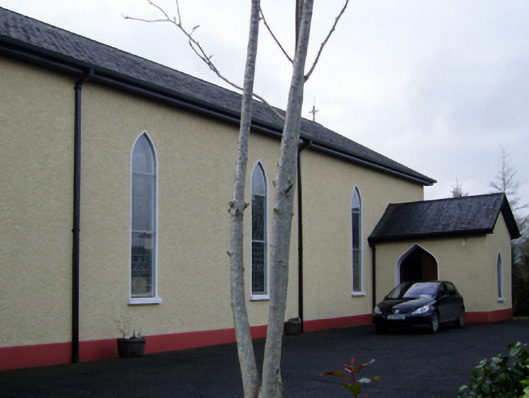 Catholic Church of the Immaculate Conception and Saint Josephchurch/chapel · 2.1 mi
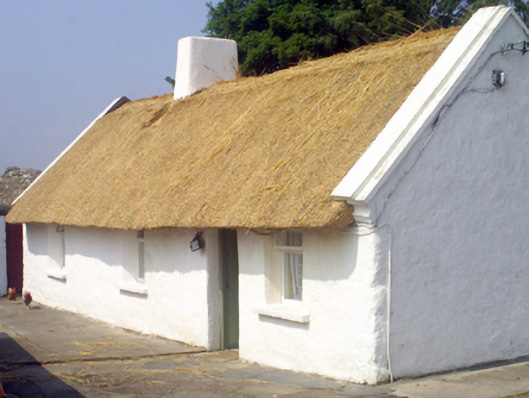 farm housefarm house · 2.5 mi
 Belleck CastleCastle, unclassified · 3.4 mi
 Humbert MonumentMemorial · 3.5 mi
 Gull IslandIslet · 3.6 miBattle of Ballinabattle · 3.9 mi
 Castle (in ruins)Castle, unclassified · 4.0 mi
 The Marshall Doran CollectionGallery · 4.2 mi
 FloretteWreck · 4.2 mi
 Belleek WoodsWood · 4.3 mi