
What is recorded here
Group of three sea locks, built 1796, connecting Grand Canal Dock with the River Liffey. Two central dock platforms having tooled granite walls and coping, inscribed lettering to walls showing names and dates, notches for machinery, and lock-gate emplacements to each elevation. Sign marking locks with name 'Grand Canal Docks'. Some cast-iron ladders and rings inset to walls. Three sets of double-leaf timber gates, with timber beams and some recent metal panels, to lock to west, pair of replacement gates to central and east lock. Stone sets and limestone paviers to surface of platforms, winch mechanisms to platforms to east and centre. Adjoining south bank of River Liffey.
Grand Canal Dock was constructed in the 1790s, to designs by William Jessop, to terminate an extension of the Grand Canal, the Circular Line, from Grand Canal Harbour at James’s Street. These sea locks were an integral component of the docks, as they were designed to accommodate the tidal River Liffey with the still water of the canal. Well executed in tooled granite, each lock was named after English viceroys. Westmoreland Lock, the smallest of the three, was designed to accommodate canal boats, while Camden and Buckingham Locks were intended to accommodate ocean-going vessels. However, by the 1830s, the newer varieties of steam-powered paddle steamer were too large for even Camden Lock, the largest of the three, rendering the docks unfit for purpose. Buckingham and Westmoreland Locks remain in working order. The use of tooled stone creates a sense of unity between these locks and the basin itself, while inscribed lettering to the walls lends contextual as well as decorative interest. There is an impressive level of skill and artisanship evident in their execution, an important reminder of Ireland’s civil engineering and maritime history and heritage.
This does not grant access. Most recorded buildings are privately owned; view them only from public ground unless the owner allows entry.
Places near here
 Grand Canal DocksVisitor information · 45 yd
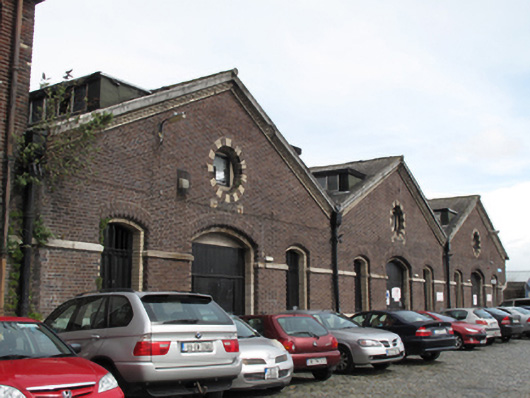 store/warehousestore/warehouse · 62 yd
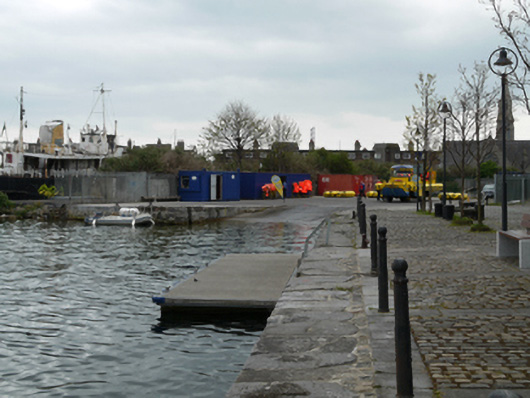 dry dockdry dock · 148 yd
 IndicatedSettlement cluster · 218 yd
 Hanover StudiosHeritage attraction · 350 yd
 Quay in Unknown TownlandQuay · 415 yd
 Waterways Ireland Visitors CentreVisitor information · 608 yd
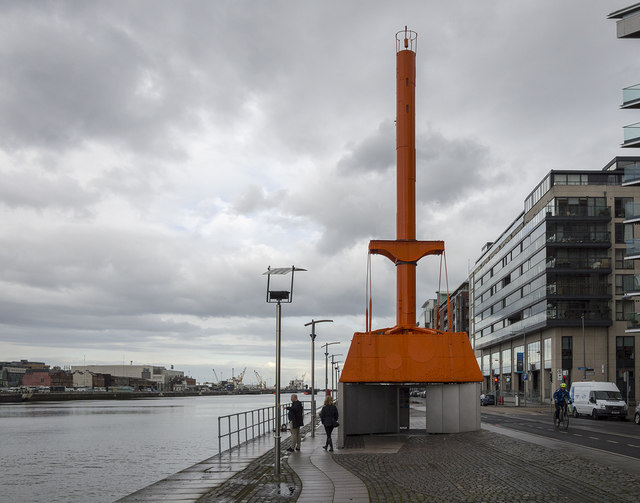 Dublin Port Diving Bell and Visitors CentreHeritage attraction · 636 yd
 PaulMemorial · 810 yd
 Waxie's DargleMemorial · 928 yd
 Burning of the Custom Housearmed conflict · 1729 yd
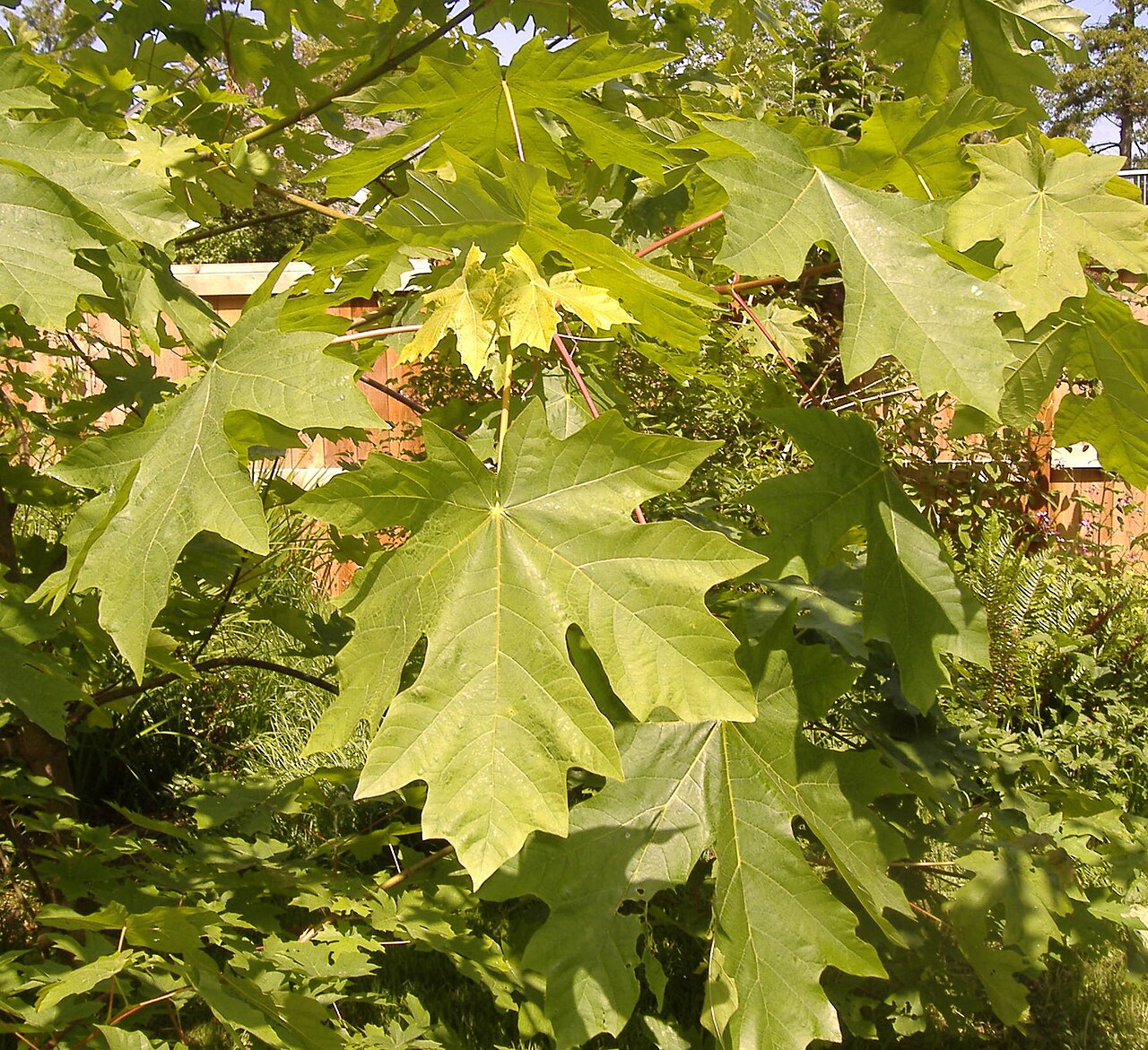 Bigleaf MapleBigleaf Maple · 1755 yd
Other information
Photo: John S Turner · Creative Commons Attribution-ShareAlike 2.0