What is recorded here
Turnincorragh is a Bronze Age burial mound in County Mayo where road builders cut through ancient chambers in the early 1950s. They exposed stone-lined cists holding cremated bones and decorated Food-Vessel pottery before the state stepped in to protect what remained. The mound still stands reduced, its eastern edge stripped and boulders scattered across the surface like broken teeth.
This Bronze Age burial mound is a National Monument (no. 483) in state guardianship. It is shown on the 1838 and 1930 OS 6-inch maps as a circular area (diam. c. 25m), named ‘Turnincorragh’. In the early 1950’s, the mound was quarried for road construction material, and burials were exposed. It was subsequently taken into state guardianship.
The burial mound (diam. c. 12-15m; H c. 1.8m) consists of an earthen core covered by an outer layer of large stones. An inspection at the time the damage took place, recorded that the the stone layer on the E third of the mound had been completely removed (Rynne (1954-6, 72-4). Four large boulders were noted protruding from the outer edge of the mound, and may be part of an original kerb. Cremated bones and a tooth found in this area suggested that at least one burial had been destroyed. Two cists, oriented roughly NW−SE, were exposed. One, located near the centre of the mound, was open. It was subrectangular (L 0.6m; Wth 0.3m; D 0.3m), stone-lined and divided into two compartments of roughly equal-size. The NE compartment contained cremated bone and several decorated Food-Vessel pottery sherds. The second cist, which was located c. 1.5-2m to NE, was only partly exposed, but appeared to be similar in size and construction. A number of large slabs lying on the surface of the mound were interpreted as possible capstones, which once covered these and other cists. The cremated bones and the pottery sherds were removed to the National Museum. The sherds came from a vase type Food-Vessel, which had an everted rim and unpierced lugs. It was decorated with horizontal and vertical bands of incised herringbone pattern separated by incised grooves. (Rynne 1954-6, 72-4).
Compiled by: Jane O'Shaughnessy
Date of upload: 18 June 2018
This monument is subject to a preservation order made under the National Monuments Acts 1930 to 2014 (PO no. 199/1954).
Bronze Age portal dolmen; significant as a scheduled National Monument indicating early communal burial practices in the region.
The monument record does not grant public access. Check the route and ask the landowner before entering private land.
- What survives
- Recorded monument
Places near here
 IndicatedEnclosure · 299 yd
 CaherFairy fort / stone ringfort · 324 yd
 Kilbride Church (in ruins)Church · 1.0 mi
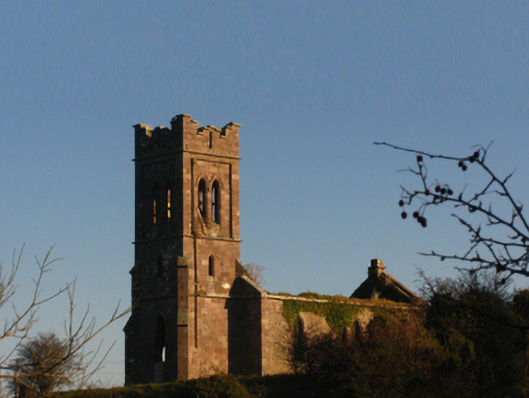 Saint Patrick's Church (Aghagower)church/chapel · 1.2 mi
 Castle in ruinsCastle, unclassified · 1.9 mi
 Carney's Cottage 1863Memorial · 3.0 mi
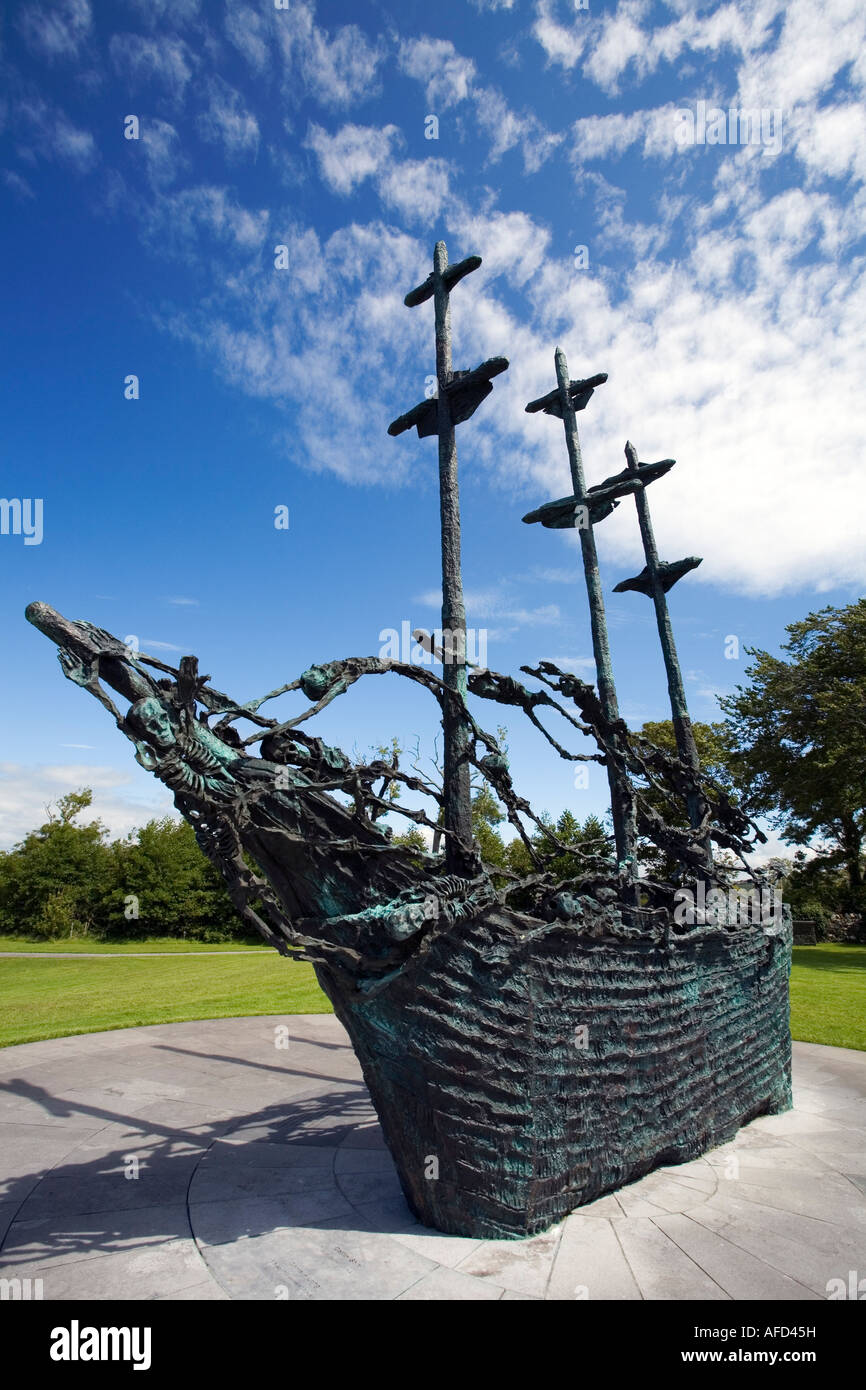 Famine MemorialMemorial · 3.1 mi
 Cock IslandWood · 3.9 mi
 Raheens WoodForest · 4.3 mi
 Kinturk CastleCastle · 4.3 mi
 The Celtic FurrowHeritage attraction · 5.3 mi
 Pirate QueenHeritage attraction · 5.5 mi