What is recorded here
Loose in the chancel of St Mary’s, Callan, a broken tomb panel still wears its early 17th-century relief: a small pillar, an arch, trefoil leaves, vine leaves and grapes, a bird at the fruit, and a scourging pillar topped by a cock. It is not a grand monument but a fragment, perhaps an end piece, saved from oblivion only because somebody left it where the church could keep witnessing. The dead are no longer named, yet their stones still arrange themselves around mercy, fear, hunger and the little pleasures of life.
Lying loose within the chancel of St Mary’s medieval parish church (KK026-010012-) Callan. Portion of a limestone front panel (L 0.44m; H 0.7m; T 0.18m) from a chest tomb, possibly the dexter end piece as it has a straight side at this end while the other is broken off. It is decorated in raised relief. The decoration consists of a squat fluted pillar resting on a plinth on the dexter side, with a raised arch springing from the abacus towards the sinister side. There are small trefoil leaves handing from the underside of this incomplete arch. Centrally placed beneath the arch is a scourging pillar with twisted ropes, resting on a stepped base and surmounted by a cock. On the dexter side of the pillar there is a scourge and beneath this a flail of twigs. Though the sinister side if broken off, there is enough surviving to indicate that the scourge and flail are mirrored on the opposite side of the pillar. Also springing from the abacus of the dexter pillar, towards the dexter side, is an incised arch which partially cuts across a floral motif in the spandrel. Along the top of the panel there is a decorative horizontal band (H 0.13m) in relief, consisting of vine leaves and grapes, with a bird picking at a bunch of grapes. Stylistically this chest tomb panel dates to the early 17th century.
Compiled by: Jean Farrelly
Date of upload: 27 November 2019
Chest tomb fragment, likely medieval in date. Its significance lies in its association with the chancel of St Mary’s parish church, indicating possible ecclesiastical or elite burial practices in the area.
The monument record does not grant public access. Check the route and ask the landowner before entering private land.
- What survives
- Recorded monument
Places near here
 Castles in ruins; Church & SchoolChurch · 8 yd
 Humphrey O'SullivanMemorial · 53 yd
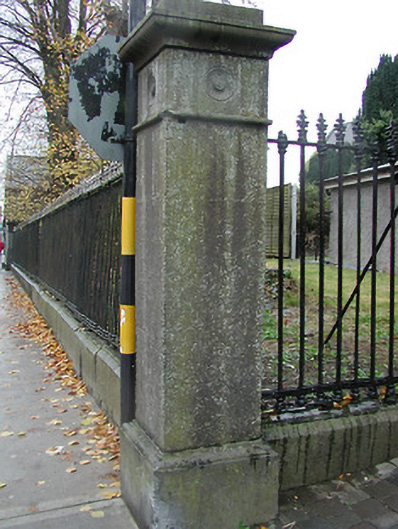 Saint Mary's Church (Callan)gates/railings/walls · 54 yd
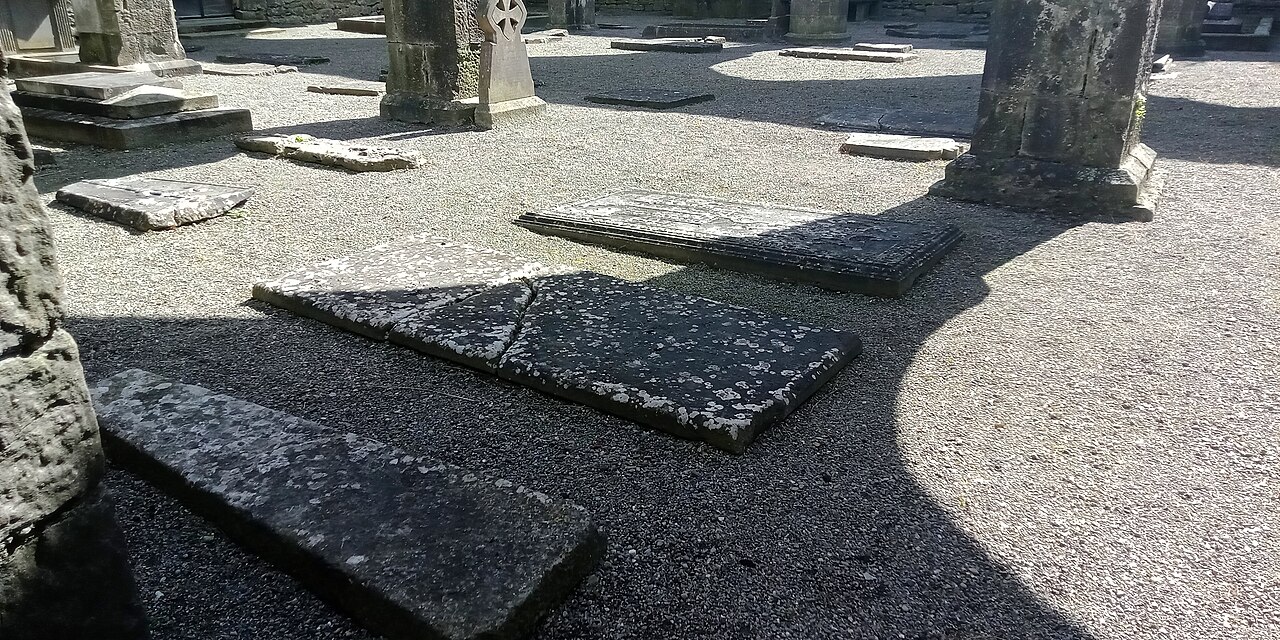 St Mary's ChurchVisitor information · 54 yd
 Stop 4: Callan Town HallVisitor information · 77 yd
 CrossCross, Market cross · 77 yd
 CastleCastle, tower house · 97 yd
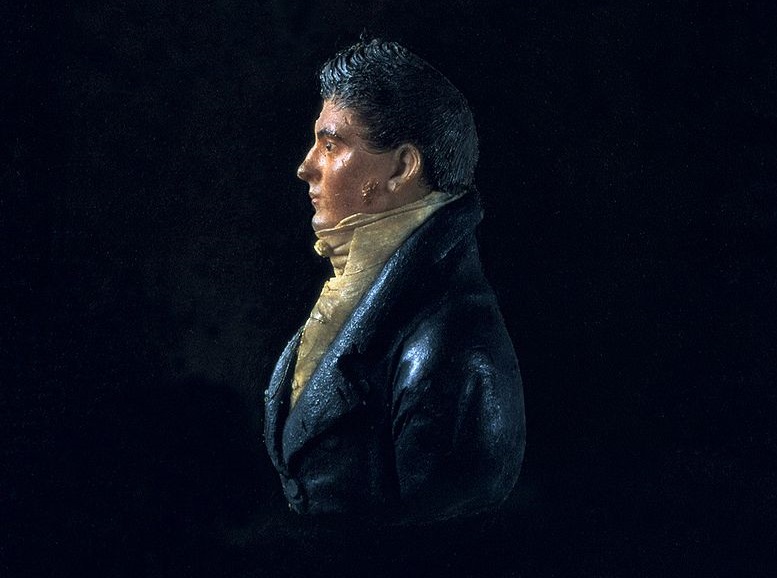 James Hoban MonumentMemorial · 144 yd
 St. Augustines WellHoly well · 209 yd
 West CourtCastle, unclassified · 831 yd
 Edmund Rice Heritage CentreMuseum · 1190 yd
 Mill IslandIslet · 1.1 mi