What is recorded here
St Marys Well in County Cork is a circular stone-lined basin inside an early ecclesiastical enclosure, topped by a square structure and a statue of the Blessed Virgin. Local tradition holds that a Cromwellian soldier lost fingers prying out its lead lining, explaining the name Poll a mheir and the well’s reputation for curing sore limbs. People still pay rounds there on February 18th and throughout the year, treating the water as a living bridge between ancient faith and bodily relief.
One of two wells (the other CO006-006002-) within an early ecclesiastical enclosure (CO006-006011-); in the NE quadrant, close to the N bank of a stream. Circular stone-lined well covered by square stone-built, flat-topped structure; a statue of the Blessed Virgin sits on top. A low wall, with entrance to the S, surrounds the well and the area around it. The well is described by Reeves (1858, 274) as 'cased inside with blocks of oak, about three feet deep, rudely squared...believed to have been formerly lined with lead.' Photograph taken in 1907 (Grove White 1905-25, vol. 4, 264) shows a low square drystone surround with a lintelled ope. According to Bowman (1934, 701), many miracles were performed at the well; it is locally called 'The Blessed Virgin's Well' where rounds are paid on February 18th and on Fridays and Saturdays throughout the year. Bowman gives (ibid.) the meaning of the townland name as 'hole of the finger' and says the well cured sore fingers; according to Grove White (ibid., 273), it cured sore arms and legs and was famed for its minerals. Larkin (1978-9, 52) notes the well was used as a baptistery until it was granted to a Cromwellian soldier who lost his fingers trying to remove its lead lining - hence 'Poll a mheir' (hole of the finger).
The above description is derived from the published 'Archaeological Inventory of County Cork. Volume 4: North Cork' (Dublin: Stationery Office, 2000). In certain instances the entries have been revised and updated in the light of recent research.
See also: https://holywellscorkandkerry.com/2016/06/27/a-trio-of-wells-in-tullylease/
Date of upload: 14 January 2009
Linked to St Mary, the well is traditionally associated with healing and protection, with pilgrims historically visiting to seek cures for ailments and to collect water for blessings. The site's location within an early ecclesiastical enclosure suggests its religious significance dates back to the early Christian period in Ireland.
The monument record does not grant public access. Check the route and ask the landowner before entering private land.
- What survives
- Recorded monument
Places near here
 IndicatedEcclesiastical enclosure · 46 yd
 St Benjamins WellHoly well · 92 yd
 Tullylease Church (in ruins)Church · 97 yd
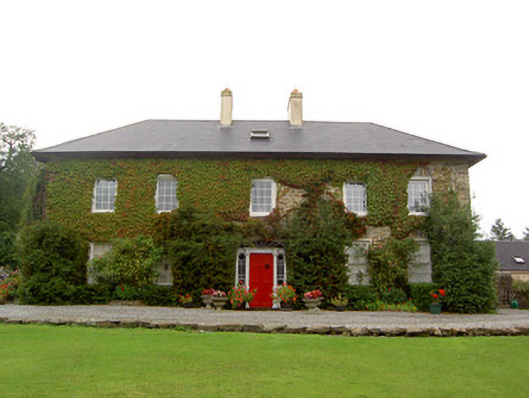 Tullylease Housecountry house · 1066 yd
 National Co-op MuseumMuseum · 2.1 mi
 Castle (in ruins), Springfield CastleCastle, tower house · 2.5 mi
 Castle LisheenCastle · 2.6 mi
 ToberacappeenSpring · 3.2 mi
 ToberhoranSpring · 4.5 mi
 Mullaghareirk - Banane LoopWalking route · 4.7 mi
 Ballagh MountainMountain / peak · 6.8 mi
 KnockacummerMountain / peak · 7.3 mi
Other information
Photo: Credit not shown in the picture search · Rights wording not checked; contact us if this picture should be removed