What is recorded here
Half a metre of limestone, cut back and punched flat, holds a woman whose hands pull her own genitals open for every driver passing the north end of Hollymount main street. Her cone-headed face stares down the road with incised eyes and a flat chin, legs splayed so wide they nearly touch both edges of the stone. She was moved there in 1993 from old farm buildings in Lehinch Demesne, perhaps cast off from a castle whose exact site has never been recovered.
Located at the N end of the main street in Hollymount village. A full figure sheela-na-gig is evident on the broad, vertical face of a roughly rectangular limestone block (H c. 0.5m; Wth 0.37m; max. T 0.25m). The stone has been cut back and roughly punch-dressed to leave a flat prepared surface on which the sheela-na-gig is portrayed in relief. The figure (H 0.34m) takes up over half the available space, with her head 0.15m below the top of the stone, and her legs just a few centimetres above the base of the stone. Her body is centrally placed and her splayed legs span almost the full width of the stone. The disproportionately large head (H 0.15m) is carved in pronounced or high relief, which contrasts with the lower relief of the torso and limbs. The head is roughly cone-shaped, with the broad end of the cone defining the top of the head, and the narrow end representing a sharply cut, flat chin. The flat top of the head appears to be carved to represent some form of headdress or formal arrangement of the hair. The face is elongated in appearance, with incised grooves outlining rudimentary features: the inner corners of almond shaped eyes merge with two vertical lines which define either side of the nose, and a short incised horizontal line represents the mouth. Two tiny, circular indentations on either side of the head, more or less in line with the eyes, appear to represent ears. Beneath the chin, a broad neck merges seamlessly with a poorly defined torso with no evidence of breasts. The arms, with sharply bent elbows, curve inwards so that the hands are positioned on either side of the genital area. The fingers are delineated and hold her deeply indented genitalia open in blatant display. The legs are widely splayed, with triangular-shaped feet pointing sharply upwards. An inscription, cut into the concrete at the base of the stone, indicates that the carving was moved to this location in 1993. According to local information, the original location (MA111-110----) of the carving is in Lehinch Demesne where it was found amongst old farm buildings. The Strafford Inquisition of Co. Mayo lists '…the moiety of the castle town and lands of Lehinch…' (O' Sullivan 1954, 70). However, the exact location of this castle (MA111-072001-) and deserted settlement (MA111-072002-) are unknown. A castle (MA111-018----), shown on the 1837 OS 6-inch map as ‘Castle (ruin)’ and on the 1930 edition as ‘Castle (site of)’, is located in Knockalegan townland which borders the E side of Lehinch Demesne. A castle in Lehinch Demesne townland or the castle in Knockalegan is a likely provenance for the carving.
See attached screenshots of 3D model of Sheela-na-gig created by Digital Heritage Age. 3D model can be accessed on the Sketchfab website at: https://skfb.ly/6qPF9
Compiled by: Jane O’ Shaughnessy
Date of upload: 6 April 2016
Date likely to the early medieval period (c. 10th–12th century). The Sheela-na-gig is a carved female figure displaying an exaggerated, open vulva, commonly interpreted as a fertility symbol or associated with themes of childbirth and female power in prehistoric and medieval European traditions.
The monument record does not grant public access. Check the route and ask the landowner before entering private land.
- What survives
- Recorded monument
Places near here
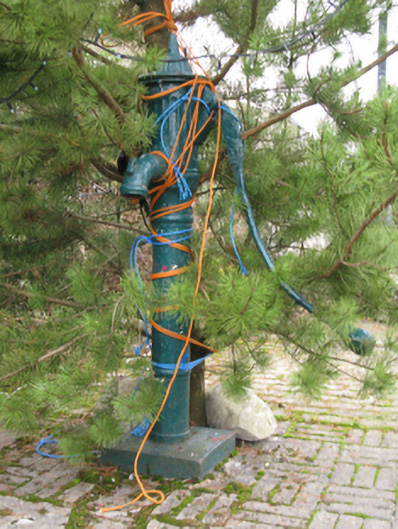 water pumpwater pump · 3 yd
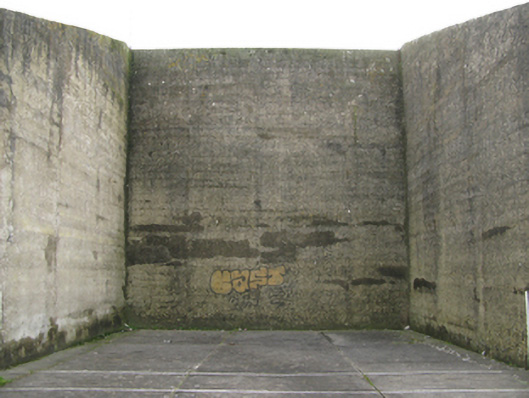 handball alleyhandball alley · 37 yd
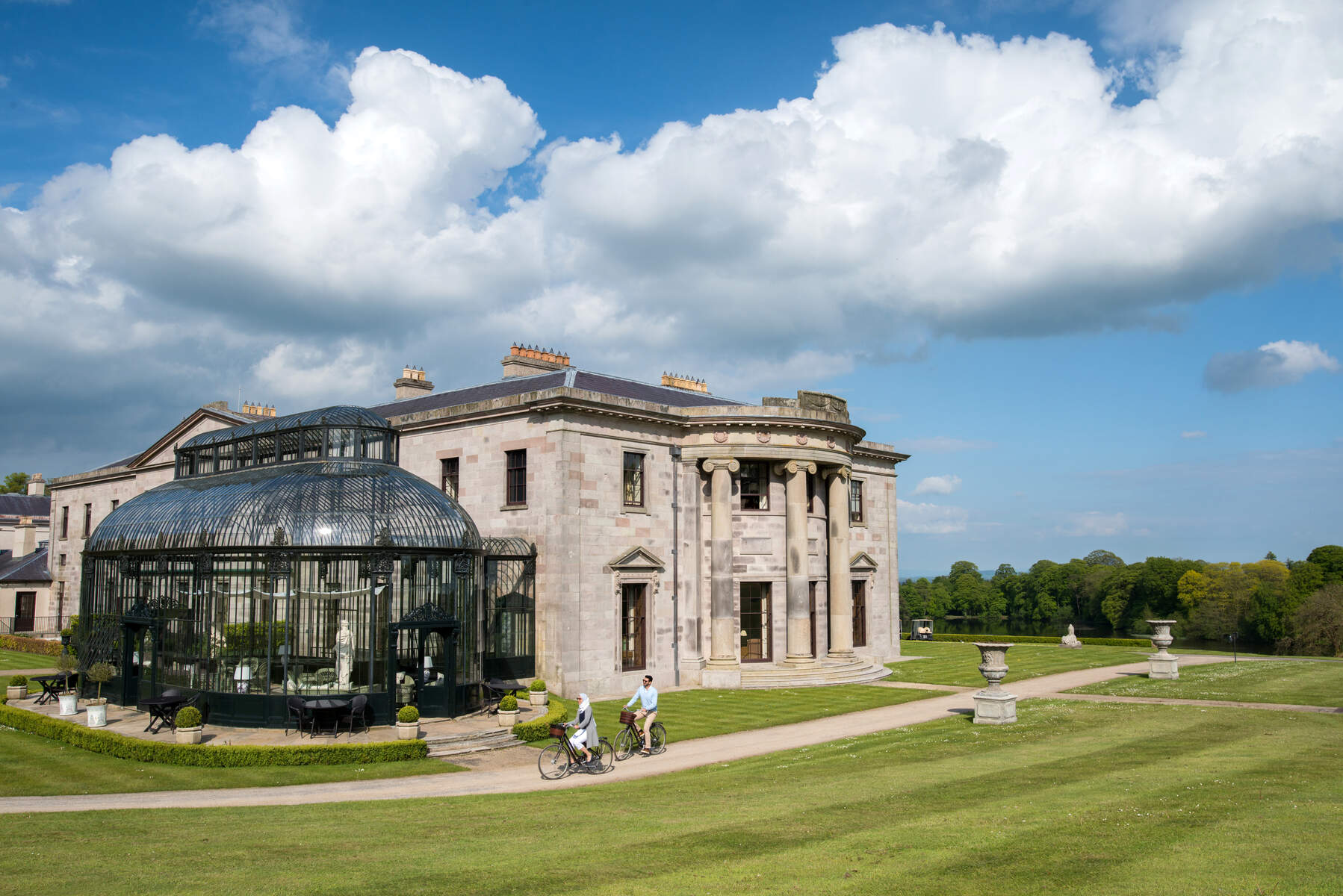 Enclosure in Lehinch DemesneEnclosure · 1025 yd
 Enclosure in BloomfieldEnclosure · 1447 yd
 Castle (ruin)Castle, unclassified · 1.6 mi
 Castle (in Ruins)Castle, tower house · 1.8 mi
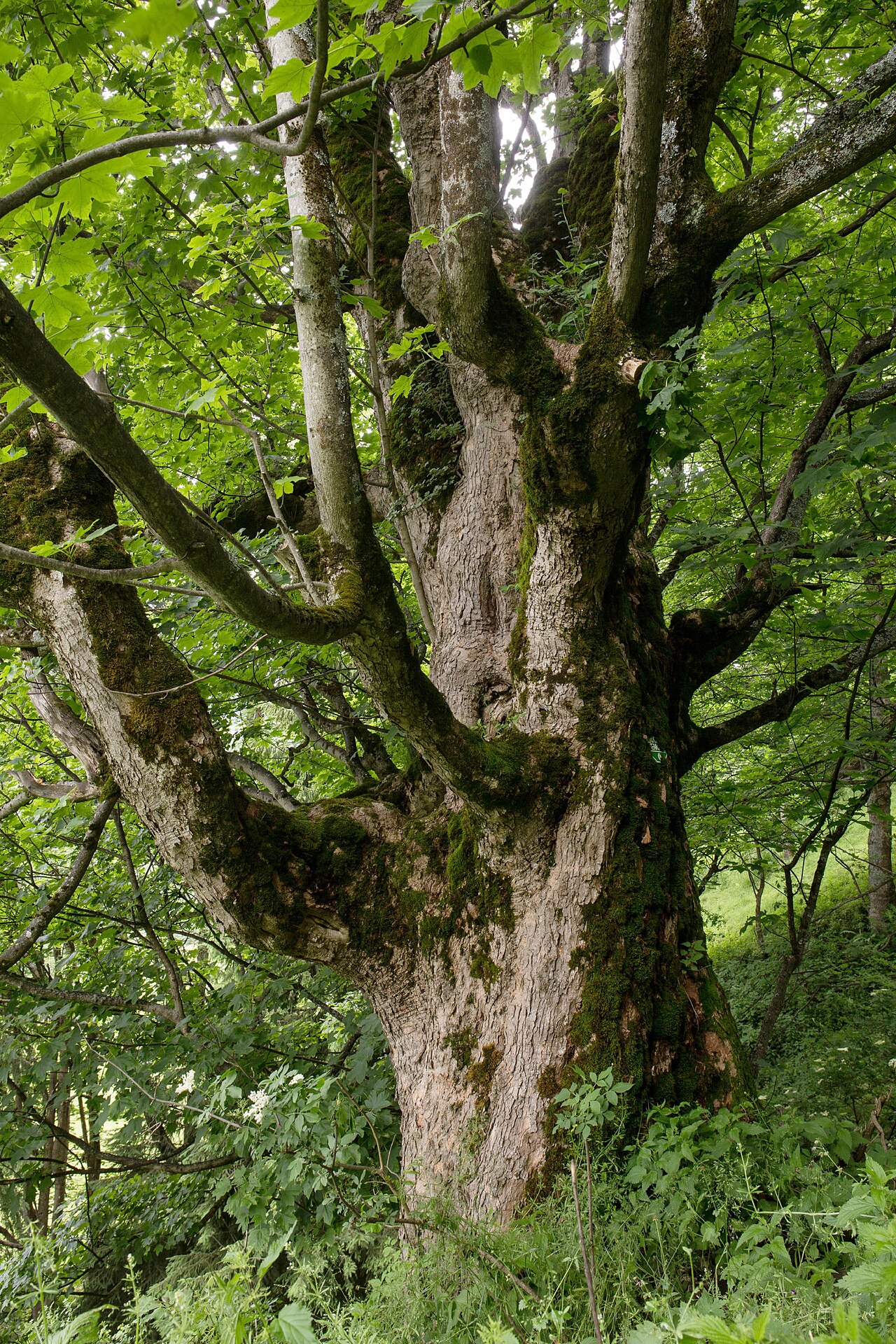 SycamoreSycamore · 2.0 mi
 Bush IslandIslet · 4.7 mi
 Dormbeg Island NorthIslet · 4.7 mi
 Geoffrey's WoodForest · 5.2 mi
 Kiltoom PointHeadland · 5.5 mi
 Land of the GiantsHeritage attraction · 6.0 mi