What is recorded here
Gleninsheen wedge tomb on the Burren plateau hides five or six small cupmarks inside its northern and southern stones. They appear only when light strikes the rock at the right angle, suggesting the chamber was built to reveal marks at a certain hour or season. The smallest holes may have been pecked by human hands, while the deepest cup could have started as a natural hollow and been shaped into meaning. The tomb does not shout its purpose; it waits for shadow, angle and patience to bring its hidden face into view.
On the inner face of the northern and southern orthostats of Gleninsheen wedge tomb (CL005-133----) on the Burren plateau. Five and possibly six cupmarks (Wth 0.01-0.025m; D 0.01-0.015m) are visible in particular lighting conditions on the interior of the northern orthostat and one on the southern one. A possible circular area of light pecking is also visible adjacent to the northern group. It is possible that the largest and deepest cupmark was a natural feature augmented by pecking. (Gibbons 2007, 16-18)
Compiled by: Mary Tunney
Date of upload: 19 December 2016
Likely dating to the Neolithic period (c. 4000–2500 BCE), the cupmarks at Gleninsheen wedge tomb may have held ritual or symbolic significance, possibly linked to water or fertility practices common in prehistoric Ireland.
The monument record does not grant public access. Check the route and ask the landowner before entering private land.
- What survives
- Recorded monument
Places near here
 Wedge tomb in GleninsheenWedge tomb · 1 yd
 Gleninshing portal tombHeritage attraction · 2 yd
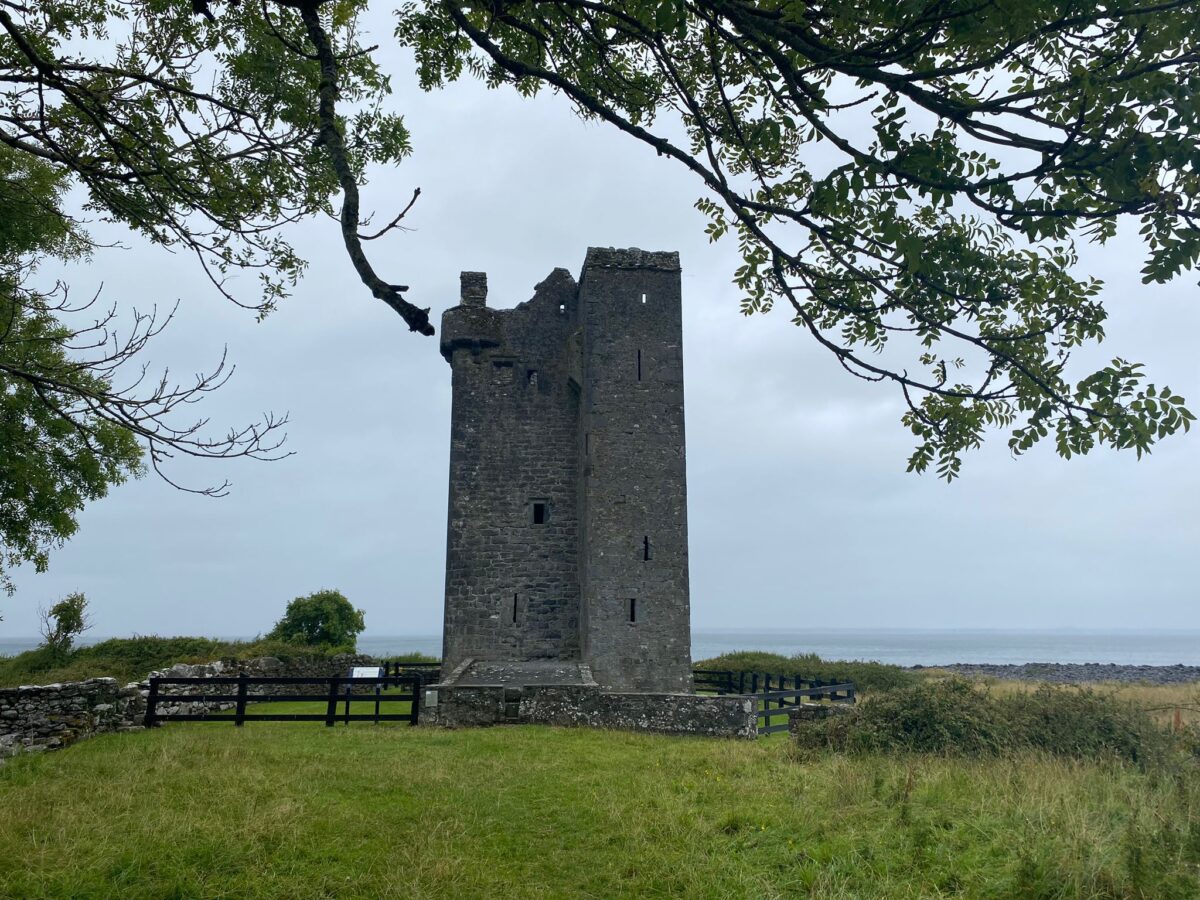 IndicatedFairy fort / stone ringfort · 441 yd
 Gleninshing tombHeritage attraction · 564 yd
 Gleansleade Castle (in ruins)Castle, tower house · 1218 yd
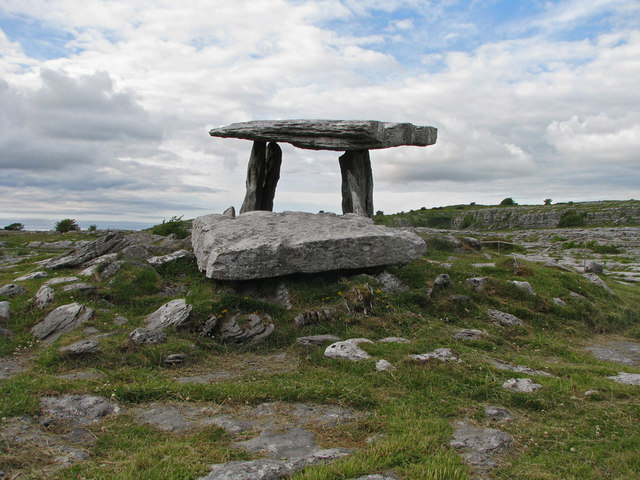 The Portal TombVisitor information · 1.2 mi
 Poulnabrone - Burren GeositeVisitor information · 1.3 mi
 PoulnabroneMemorial · 1.4 mi
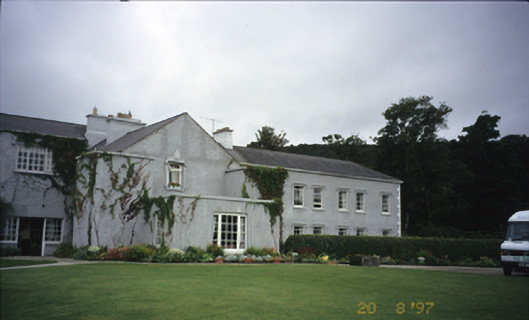 Gregans Castlehouse · 1.7 mi
 Aillwee CaveCave · 1.7 mi
 Caherconnell Stone FortRuins · 1.7 mi
 Cave of the Wild HorsesCave · 1.8 mi