What is recorded here
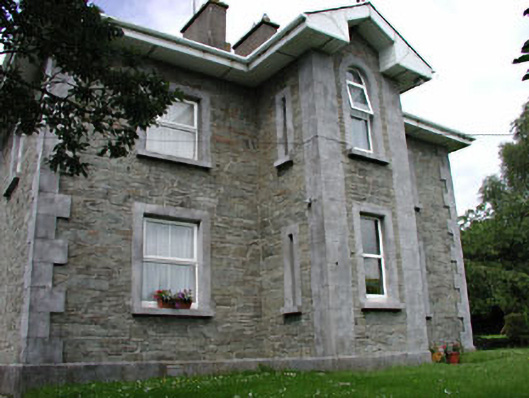
Detached three-bay two-storey rubble stone former Royal Irish Constabulary barracks, c.1830, with single-bay two-storey gabled projecting bay to centre and two-bay two-storey lean-to lower return to rear to north originally single-storey. Extensively renovated and extended, c.1970, comprising three-bay single-storey flat-roofed rubble stone return to rear to north with first floor added to original return to accommodate residential use. Part refenestrated, c.1990. Hipped roof (gabled to projecting bay; lean-to to return to rear to north). Replacement artificial slate, c.1970. Concrete ridge tiles. Rendered chimney stacks. Replacement uPVC eaves, c.1990. Replacement uPVC rainwater goods, c.1990. Flat-roof to additional return behind rubble stone parapet wall. Materials not visible. Rubble stone walls (possibly originally rendered). Cut-stone quoins to corners. Roughcast to rear elevation to north. Unpainted. Rubble stone walls to additional return. Rubble stone parapet wall. Square-headed window openings (slit-style to projecting bay; round-headed to first floor projecting bay). Cut-stone sills. Cut-stone surrounds. Concrete sills to additional return. Replacement timber casement windows, c.1970, to rear elevation to north. Replacement uPVC casement windows, c.1990, to front elevation to south. Square-headed door opening. Cut-stone surround. Replacement glazed timber panelled door, c.1970. Set back from road in own grounds on a corner site. Lawns to front.
This official record and map point do not grant access. Most recorded buildings are privately owned; view them only from public ground unless the owner allows entry.