Add your own picture and explain the route, parking, gates, paths or landmarks that help people find it.
Earn 5 points after the picture is checked and accepted.
Add your photo and local directionsShare what you foundWhat is recorded here
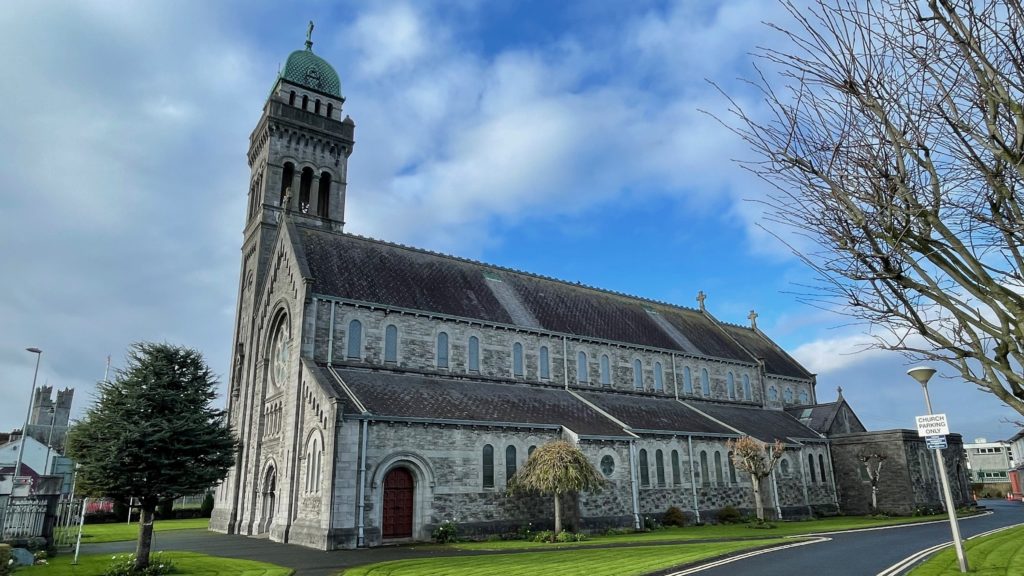
National monument No. 194. The medieval church ruins of the Hospital of Any belonging to the Order of the Knights Hospitallers was dedicated to St. John the Baptist. It now stands on N side of a graveyard (LI032-147003-) with R. C. Church standing immediately to WNW. The R. C. church also dedicated to St. John the Baptist was built in 1852. The Order of the Hospital of St John of Jerusalem originated in a hospice founded in Jerusalem around 1070 to care for pilgrims and was dedicated to St John the Baptist. The Hospital of Any or Hospital of St. John of Jerusalem is also known today as the Knights Hospitaller and the Knights of Malta. The Order of the Hospital of St John of Jerusalem in Ireland consisted of a central Priory founded at Kilmainham (DU018-020286-), Co. Dublin in 1174 with subordinate houses known as preceptories located through the country. The preceptory at Hospital was second in importance after Kilmainham Priory (Gwynn and Hadcock 1970, 336).
The church ruins formed part of the 13th century preceptory dedicated to St. John the Baptist (Ware 1658, 234; Gwynn and Hadcock 1970, 336). The church belonged to the Order of the Knights of St. John of Jerusalem, and was known as the Hospital of Any or the Hospital of St. John of Jerusalem (De Montmortency-Morres 1817, cixxi). The hospital was founded in the year 1215 by Geoffrey de Marisco (Mariscis), Justiciar of Ireland (RIA Ms. 14/D/17/27 (iii)). According to Ferrar (1784, 432) the hospital may have been built on an earlier late 12th century monastery which was described by Ferrar as a 'friary for eremites, following the rule of St. Augustine, founded in the reign of King Henry II (1154-89). In 1216 King John issued letters of unlimited protection for the Prior of St. John of Jerusalem and these letters were issued to Geoffrey de Marisco, of Katherain [Knockainey/Cathair Áine], justiciary of Ireland, and all the king’s bailiffs and faithful subjects of that country (Cal. Doc. Ire., 105). In 1303 the ecclesiastical taxation of all goods belonging to the Bishop of Emly recorded the church of Any located in the Deanery of Grene had an annual value of 8 marks and stated that the 'Hospitallers are rectors' (Cal. Doc. Ire., 279-80)
Today the church ruins stand at N end of the village of Hospital, 110m S of the River Mahore and Hospital Bridge with watermill (LI032-144----) 730m to the NW. The ruins of a long rectangular church stand in the N quadrant of Hospital graveyard (LI032-147003-) with 19th century R. C. Church located immediately to WNW. St. John's holy well (LI032-147004-) and medieval castle site (LI032-147005-) lie 70m to the NNE and 120m to the NE respectively.
In 1541 King Henry VIII, granted a pension worth £28 17s 8d. sterling to Eneas Hernan [O'Heffernan], the last preceptor of the Hospital of Aney (Nicholls 1994, 26). In this year King Henry VIII granted to, 'Edmund Sexten, of Limerick, gentleman, Patrick Gowle, of Kylmalloke, and Nicholas Fannyng, of Limerick, merchants; of the preceptory or manor of Anee, county Limerick, with its appurtenances. To hold for twenty-one years, at a rent of £6 13s. 4d. sterling, and paying his pension of £28 17s. 4d. sterling to the late preceptor' (ibid., 27). This 21 year lease included the lands of 'Anye, Ballynecloghire, Lymerike, Killmalloke, Adare, Croghe, Askeyny, Rathkilly, Ardaghe, Casshell, Carryke, Ardarty, and Dengille, rectories of Anee, Loynge, Kylfrusse, Kayrcorney, Kayrfussoke, Kylcalane, Morton, Owlys, Browe, Carnowsy, Rochiston, Ardarre, Newton by Ardarre, Narlaghe, Kylville, Kylleny, Kyllyno, Kyllame, Kyltome, Rathronan, Areffynan, Mortelston, Cnograffyn, and Carrintobbyr, in the counties Limerick, Kerry, Tobbyrare (Tipperary), and Clare' (ibid. 37). In 1541 the extent of the preceptory was described as following; ‘All the buildings are still standing as at the time of the dissolution. There are no superfluous buildings which can be thrown down, but only such as are necessary for the farmer. These with a cemetery (LI032-147003-) and other accomodations in the precinct cont. 1 acr.[e], and are worth nothing above repairs. V.[icarage] of Ane. 220 acr. ar.[able], 40 acr. p.[asture], 20 acr. moor; held by divers tenants for 40s. 5d. A water-mill (LI032-144----); 13s 4d. 12 cottages; 8s. Customs, 12 ploughdays and 6 boondays, and from each cottager, 3 boondays and 1 hen; 10s 1d. Total, 71s 5d. Rectory of the Hospital, 66s. 8d. R.[ectory] of Ane, 40s.. The donation of the vicarage belongs to James earl of Desmond’ (White 1943, 116).
In 1542 King Henry VIII granted Eneas O'Heffernan 'custody of the possessions of the vacant bishopric of Emly. To hold as long as they remain in the king's hands, rendering to the king the true yearly value' (Nicholls 1994, 38). In 1569 Queen Elizabeth granted a 21 year lease to 'William Pers and John Cockerham, gent.; of the manor or preceptory of Ane, co. Limerick, and the towns or rectories of Ane, Moreton, Ballymone, Ballinlough, Kilkallan, Carecorne, Ballynnerd, Broo, Rocheston alias Rocheton, Knockelonge, Templebrydan, Carryck, Casshell, Gareuskan, Kylwarren, Killeighan, Killayne, Kilton, Kyllyn, Kilwyle, and Mennarde, co. Limerick, possessions of the hospital of S. John of Jerusalem in Ireland' (ibid., 158).
In 1578 a 21 year lease was granted to Captain William Apsley of the 'commandery or manor of Anee, co. Limerick, and all its appurtenances in Anee, Ballenecloighe, Lymrick, Kilmallock, Adare, Croghe, Askeinie, Rathkille, Ardagh, Casshell, Carrick, Ardartie, and Dengen; also the rectories of Anee, Loinge, Kilfrusse, Kayrecorney, Kairefussock, Killcallane, Moreton, Owlys, Browe, Carnowsie, Rochiston, Ardare, GaryUskan, Kilbaven, Meynarde, Kilwille, Killene, Killino, Kiliane, Kiltome, Rathronane, Aressynane alias Ardfynan, Mortelleston, Cnockgraffm, and Carrintobber, in cos. Limerick, Kerry, Tipperary, and Clare, and all other possessions of the commandery, parcel of the late hospital of S. John of Jerusalem' (ibid., 443-4). In 1582 the queen granted Anably Apsley, widow 'the wardship and marriage of Edward, son and heir of William Apslie, late of Any, co. Limerick, gent.; and custody of his lands. To hold during minority. Rent, 4d. Fine 20s.' (ibid., 548). In the same year William Apsley who is described as the assignee of John Cockerham surrendered his lease 'of the preceptory of Anee, co. Limerick, and its possessions' (ibid., 443-4).
In 1587 as part of the plantation of Munster, Queen Elizabeth granted Sir Edward Fyton, 'the barony manor, castle, and borough town, of Awney [Aney], containing in demesne 4 ploughlands, the lands of Kilkellan, Camos, the castle and lands of Ballynemonymoore and Ballynemonybeg, the castle and lands of Knockmonye, the castle and lands of Eltown, 6 ploughlands; the lands of Banoge, Cloghdolordy and Balintravishy, Tirvowe, the castle and lands of Cloughkettin, 3½ pl.; the lands of Rahan, Bewbushe, Rowre, and Glanamore, 1½ pl.; the castle and lands of Cromwell; the castle and lands of Karrykettle, the house called the Curbe, and late house and lands called Kiltilie, near Karykettle, 1½ pl.; a stone house and a thatched house in Kilmallock, lately occupied by George Meagh fitz Richard; the castle and lands of Coullenaghgonogh, in the counties of Limerick and Tipperary, 4 pl.; the castle and lands of [ ] kerden, with the Tough, 3 pl.; the castles and lands of Balynecourty, Clonbeg and Dungrott, in Aharlow, 1 ploughland; the reversion and rent of 13s. 4d., Irish, out of a house in Waterford, occupied by ( ) Thewe; the manor, castle, and lands of Kylmanehin, co. Waterford containing in demesne 2 pl.; and all appurtenances of the premises in the counties of Limerick, Tipperary, and Waterford, amounting in all to 26½ ploughlands, and rated to 11,515 acres of English measure at the rate of 16½ feet to the perch; also the rents and services of the five tenants within the said barony and manors, viz. yearly rent of £6 "halface" and other cus
The monument record does not grant public access. Check the route and ask the landowner before entering private land.