Add your own picture and explain the route, parking, gates, paths or landmarks that help people find it.
Earn 5 points after the picture is checked and accepted.
Add your photo and local directionsShare what you foundWhat is recorded here
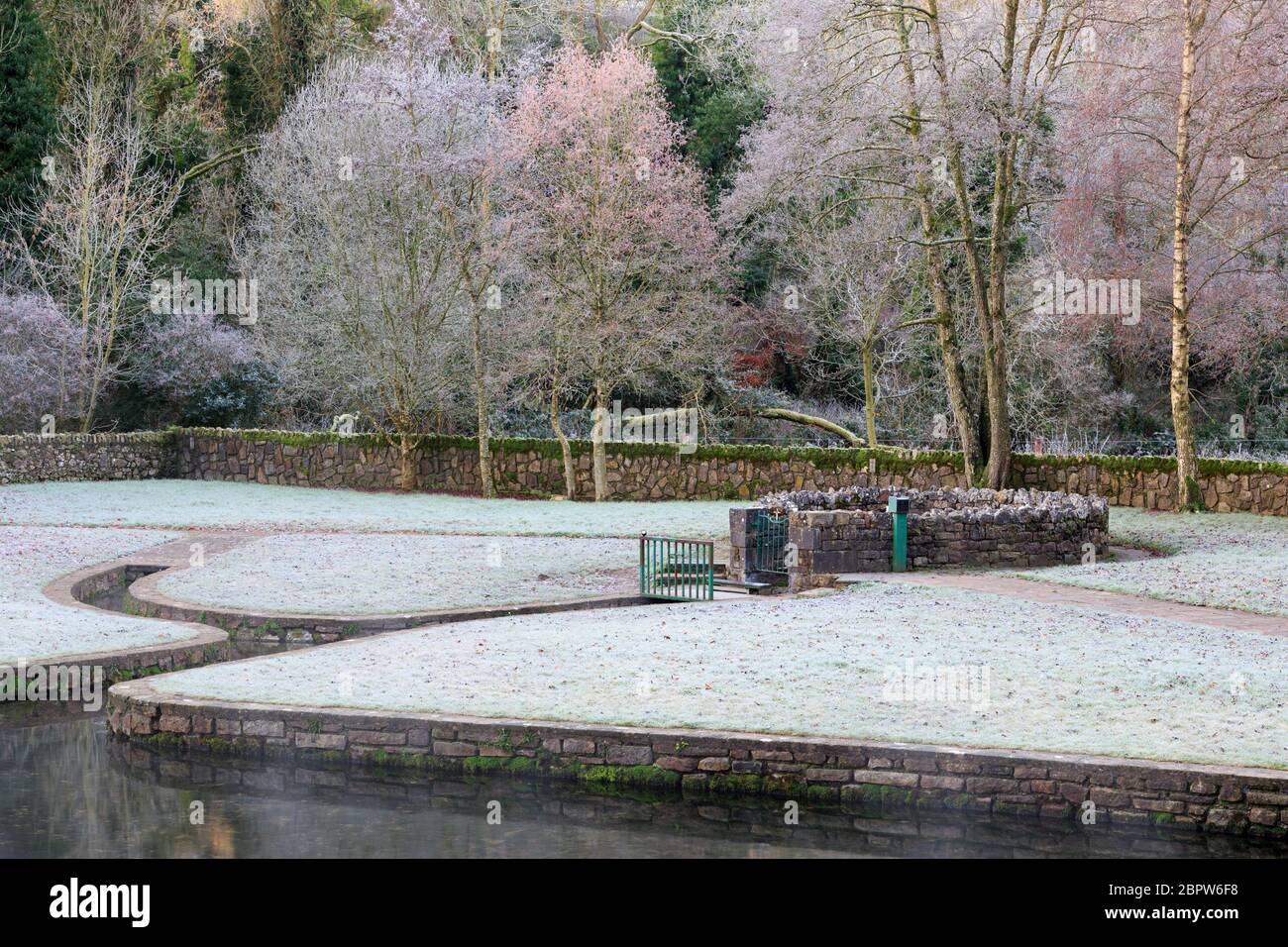
St. Patrick's covered well stands on W facing slope of rising ground with stream and second open-air well to W, site of medieval church (LI032-063001-) and graveyard (LI032-063002-) 30m to SW. Penitential (LI032-063003-) station known locally as 'St. Patrick's Bed' lies immediately to E. Tobar Phádraig/Patrickswell was described by John O'Donovan in 1840 as follows; 'this td. is said to have derived its name from this well, at which, according to tradition, St. Patrick celebrated Mass. On the centre stone are engraved the letters I H S (OSNB, Knockainy Parish, 1215). St. Patrick's holy well was described by Ó Danachair (1955, 215) as following; 'The well is enclosed in a small rectangular structure of masonry; over the opening is a slab with I H S and two crude angel figures. Close by are two small ponds and a mound, called "St Patrick's Bed" on which a tree grows. Three other trees stand close to the well. Devotions are still practised, especially on St Patrick's Day. The pilgrims usually make nine rounds of the well and five of the "Bed" [LI032-063004-); pebbles are used to tally the rounds. Water from the well and from each of the two ponds is drunk and carried away to be drunk at home. The water cures eye and stomach ailments and headaches; it is often brought to refresh those who are ill. Small religious objects, coins and flowers are left as offerings. Legends - Water from the well cannot boil. A fish was seen by people cured at the well. A woman who broke a branch from a tree by the well was reproved by a voice from the well. A man cut away portions of one of the trees; he was struck blind, but repented and was cured at the well. St Patrick'.
The following folklore was recorded from Kilmallock National School about St Patrick's Well; 'The local inhabitants say that St. Patrick slept a night under a tree near this well. The tree can still be seen near the well. It is very tall and thick. The well is divided into 3 parts. The first part of the well, where the water rises up out the ground is partly covered with stone flags and the water of which cannot be boiled because a local inhabitant cut down some of St. Patricks Tree (which grew over the well) for firewood. It is said that a curse befell the local tree cutter and *himself suffered mental agony afterwards and his family and cousins died without issue.
Every St. Patrick's Day people pay "rounds" at this well. A round consists of walking around the well and the tree saying while doing so "The Hail Mary" seven times at the well and "The Lord's Prayer" and five Hail Marys at the tree. Three or five "rounds" will suffice. Then the pilgrim should drink some of the water in the well; and some people say that the pilgrim should then gaze into the well and if he sees a fish there the person will be cured. "Rounds" are paid at this well from 1st March to St. Patrick's Day. The water of this well is often taken to people who are too sick to travel to the well; and they drink the water. The water is supposed to cure people suffering from head-aches, sore eyes and stomach pains' (The Schools’ Collection, Volume 0516, Pages 418-9; accessible online at www.duchas.ie/en/cbes/4922068/4849597).
According to local tradition (information panel); 'it is recorded that the waters of the wells here have a special efficacy for eye ailments and people visited the Well to pray and be cured. The water from St. Patrick's Well with its curative properties is known locally as 'Dionacht' which means protectiveness. The term 'dionacht ar ghalair' means immunity against disease. To access the 'dionacht', the pilgrim must visit the Well on St. Patrick's Day and make the 'Rounds' which consisted of the following; ‘1. Collect 9 pebbles from the pathway; 2. Make 9 circuits of the well, throwing away a pebble each time a ‘Round’ is completed; 3. Recite the Our Father/Hail Mary/Gloria during each ‘Round’; 4. Finish the ‘Round’ at the well and pause for a while before continuing on to complete another ‘Round’; 5. When all 9 ‘Rounds’ are completed, collect 5 pebbles and proceed to the nearby mound; i.e. St. Patrick’s Bed; 6. Complete 5 ‘Rounds’ of the mound reciting each of the above-mentioned prayers; 7. Return to the well and take 3 sips of water from the covered well. The visit (pilgrimage) to the well is now complete. Several ‘Visits’ may be made to the well. On your last ‘Visit’, half-fill a bottle with the water from the covered well, and then fill the other half with water from the other two wells’. it is recorded that a week-long 'pattern' took place at St. Patrick's Well around the 17th of March with a 'Gathering Day' and a 'Scattering Day'. The statue of St. Patrick was placed on top of the covered well by the local community in 2021.
See attached photos taken in 1954 by Caoimhín Ó Danachair, courtesy of and © National Folklore Collection, UCD. The Photographic Collection, F025.21.00450 accessible online at www.duchas.ie/en/cbeg/31012; F025.21.00451 accessible online at www.duchas.ie/en/cbeg/31013 and F025.21.00189 accessible online at www.duchas.ie/en/cbeg/16995.
Compiled and revised by: Caimin O'Brien
Date of revised upload: 7 November 2022
The monument record does not grant public access. Check the route and ask the landowner before entering private land.