Add your own picture and explain the route, parking, gates, paths or landmarks that help people find it.
Earn 5 points after the picture is checked and accepted.
Add your photo and local directionsShare what you foundWhat is recorded here
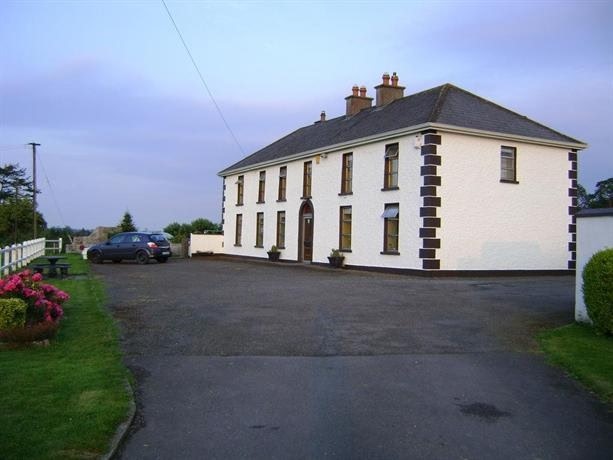
The present townland of Castletown was formerly known as Islandmore. The 1654-56 Civil Survey of Limerick recorded that there was on the lands of Islandmore [Castletown] belonging to Major General Sir Hardress Waller ‘a ruinous Castle, sixteene cottages a pigeon house [LI003-008002-], one orchard and one weare seate [LI003-008003-] on the River of Shanen’ (Simington 1938, 353). The castle of Castletown Waller, which was besieged in 1642, was located, according to Westropp (1906-7, 157), in the immediate vicinity of the country house Castletown Manor. This house was demolished in 1935 (Spellissy 1989, 241). There is now no standing remains at the site of either the castle or the house.
Castletown Waller described by Westropp (1906-7, 156-7) recorded that in '1642 Sir Hardress Waller was besieged for six weeks by Gen. P. Purcell, and surrendered for want of water. He describes the place as having a fair large stable, one story high, built of stone with fair timber-work; the repair of the C[astle]. and barbican cost £300. He gives a long and very interesting list of goods, furniture, stock, & c, including 20 musquets, fowling-pieces, callivers, and a harquebush (Dep., 287, 290). 1657 The D.S. [Down Survey] gives a view of the C[astle]. (D.S., B., 17). It was forfeited by Waller as one of the judges of Charles I., having signed his death-warrant. Granted to Sir H. Ingoldesbye, but remained still in possession of Waller's descendants. The modern house is on the C.[astle] site'. The presence of a barbican or gatehouse suggests the presence of a bawn or walled courtyard defending the castle. The stable building, orchard and pigeonhouse may all have been located within the bawn which was entered through the Barbican described in 1642.
Compiled by: Caimin O'Brien
Date of upload: 12 May 2020
The monument record does not grant public access. Check the route and ask the landowner before entering private land.