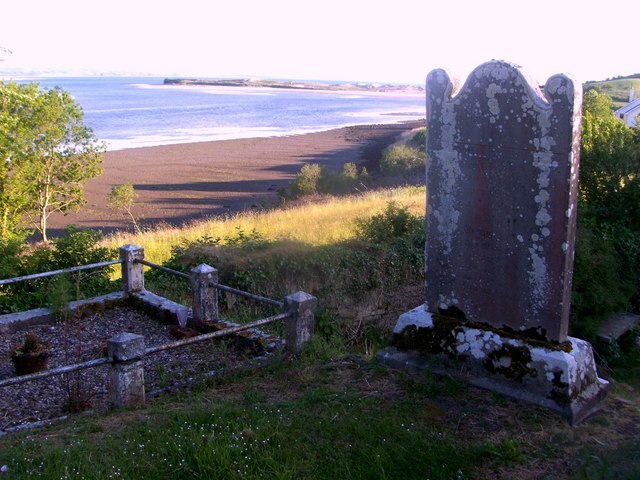
Add your own picture and explain the route, parking, gates, paths or landmarks that help people find it.
Earn 5 points after the picture is checked and accepted.
Add your photo and local directionsShare what you foundWhat is recorded here
Killymard Old Church (DG099-001001-): In 1622, the parish church was in ruins (Royal Commission, 214). Subsequently repaired or rebuilt, it continued in use until a new church was built at Ballydevitt in 1829 (MacHugh 1959, 167). The church is enclosed in a graveyard (DG099-001003-) containing modern grave slabs, the earliest noted of which was dated 1809. A carved stone (DG093-008) head probably depicting a bishop is at present preserved in Ballydevitt Church but is said formerly to have stood together with a second head (now lost) on the gate posts of the graveyard surrounding Killymard Church.
The above description was derived from the 'Archaeological Survey of County Donegal. A description of the field antiquities of the County from the Mesolithic Period to the 17th century.' Compiled by: Brian Lacey with Eamon Cody, Claire Cotter, Judy Cuppage, Noel Dunne, Vincent Hurley, Celie O'Rahilly, Paul Walsh and Seán Ó Nualláin (Lifford: Donegal County Council, 1983). In certain instances the entries have been revised and updated.
Date of upload: 22 September 2008
Excavation licence number 01E0087
It is proposed to use a subrectangular field beside the site of Killymard old church, a medieval church surrounded by a more modern graveyard, as an extension to the existing graveyard. The site was tested by digging three parallel trenches lengthways from north-west to south-east and a fourth perpendicular trench parallel to the existing graveyard wall. The trenches measured c. 30-50m in length; all were 2m wide.
The trenches revealed a fairly shallow clay topsoil, light brown in colour and dry and silty in consistency; general depth ranged from 0.2m to 0.3m. It overlay a grey-brown subsoil with patches of iron pan, orange staining and sparse pockets of gravel. At the middle of Trench I and at the south-east end of Trench IV and resting in the natural subsoil were deposits of black organic-rich charcoal-stained silty soil; these appeared quite shallow, but those in Trench I were quite linear. It was not clear that these deposits were definitely archaeological in nature, but it was decided to exclude these areas from use in the proposed graveyard. (Excavations 2001)
Joanna Nolan, c/o Bypass office, 'Thornhill', Ballyhaunis Road, Claremorris, Co. Mayo.
The monument record does not grant public access. Check the route and ask the landowner before entering private land.