Add your own picture and explain the route, parking, gates, paths or landmarks that help people find it.
Earn 5 points after the picture is checked and accepted.
Add your photo and local directionsShare what you foundWhat is recorded here
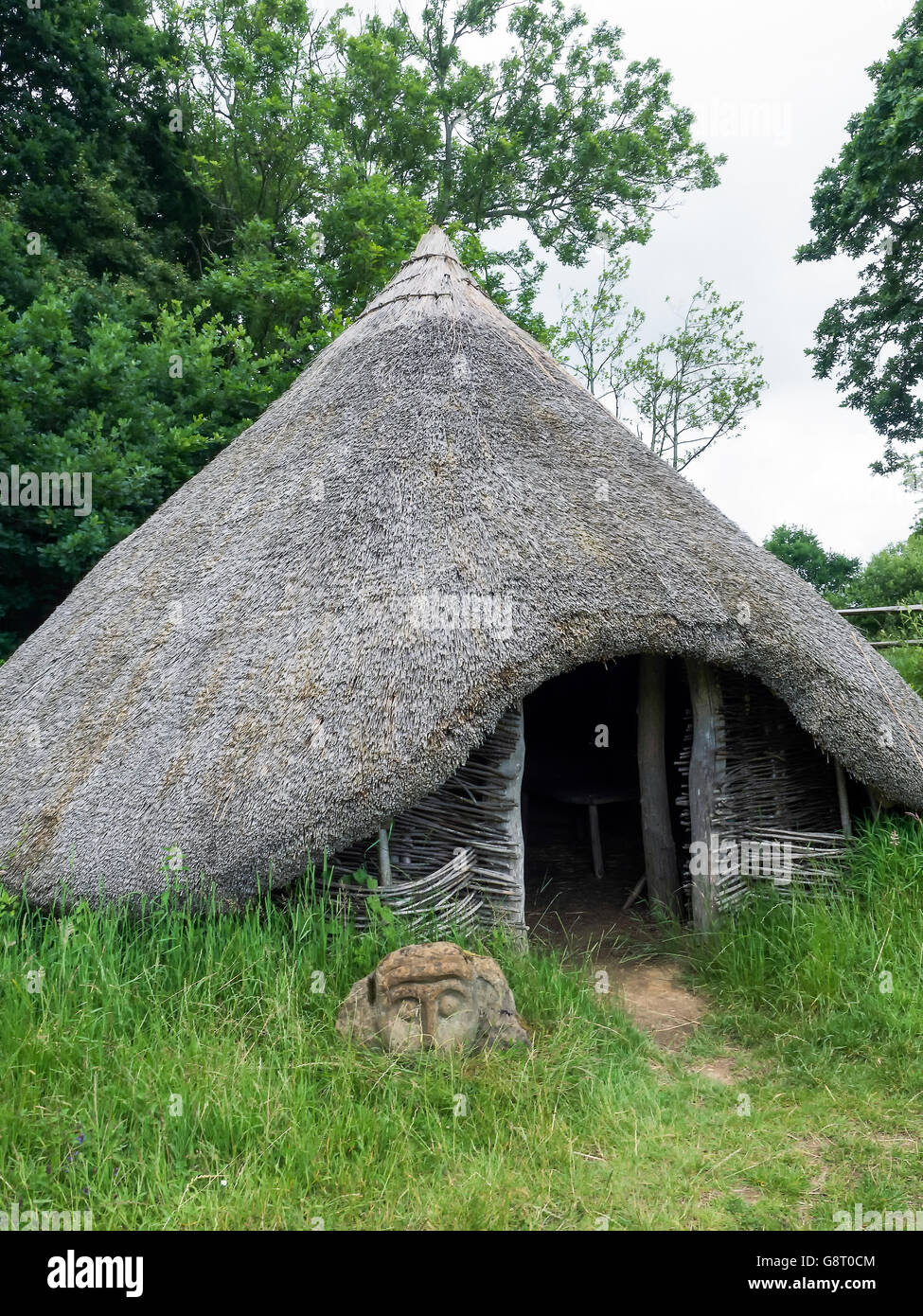
The remains of this timber house were excavated in 2001 in advance of the construction of the N8 Glanmire-Watergrasshill Bypass. The house (diam. c. 6m) was defined by a circle of post-holes (max. diam. 0.52m; max. D 0.51m) and consisted of a central hearth and a possible entrance at the SE. The hearth (diam. 0.62m; max. D 0.32m) was subcircular in shape and contained a number of fills of scorched, gritty material. A broken whetstone was found in one of the post-holes and a number of sherds of Beaker pottery were found in another. Two samples of oak charcoal from structural post-holes of the house were dated to between 1211 and 927 BC and to between 1189 and 919 BC (Sherlock 2005b, 34). According to Sherlock (2005b, 36), the pottery, which was thought to date to c. 2400-2200 BC, was clearly not found in an original context but rather in association with the significantly later Bronze Age house. A later phase of activity was noted at the N edge of the house, where material from a later hearth was found to seal a structural post-hole. A series of grain-storage pits and other miscellaneous pits (CO064-171----) were located to the W of the house. Two pit-burials (CO064-166----, CO064-168----) were situated 40m to the N and 210m to the S, respectively. (Sherlock 2003c, 45; Sherlock 2005b)
The above description is derived from 'The Archaeological Inventory of County Cork. Volume 5' (Dublin: Stationery Office, 2009).
Date of upload: 22 December 2009
The monument record does not grant public access. Check the route and ask the landowner before entering private land.