Add your own picture and explain the route, parking, gates, paths or landmarks that help people find it.
Earn 5 points after the picture is checked and accepted.
Add your photo and local directionsShare what you foundWhat is recorded here
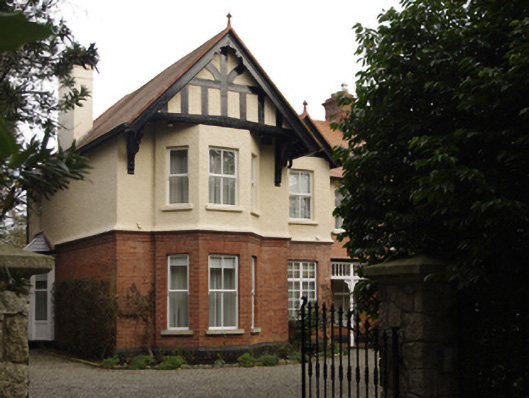
Detached three-bay two-storey house, extant 1909, on an F-shaped plan centred on single-bay two-storey gabled breakfront abutting single-bay two-storey gabled projecting end bay; two-bay (north) or single-bay (south) two-storey side elevations. Refenestrated. One of a pair. Pitched terracotta tile roof on an F-shaped plan centred on pitched (gabled) terracotta tile roof (breakfront), terracotta ridge tiles with terracotta finials to apexes, rendered (north) or red brick Running bond (south) chimney stacks having stringcourses below "Cyma Recta"- or "Cyma Reversa"-detailed corbelled stepped capping supporting yellow terracotta pots, timber bargeboards to gables on timber purlins, and replacement uPVC rainwater goods on timber eaves boards on exposed timber rafters retaining cast-iron octagonal or ogee hoppers and downpipes. Red brick Flemish bond walls (ground floor) on rendered chamfered plinth with red brick header bond "Cyma Recta"- or "Cyma Reversa"-detailed corbelled stepped stringcourse; roughcast surface finish (first floor) with "timber frame" surface finish to gables. Square-headed window opening (breakfront) with cut-granite sill, and red brick voussoirs framing replacement casement window. Square-headed window opening (first floor) with cut-granite sill, and concealed dressings framing replacement casement window replacing two-over-two timber sash window. Square-headed window openings (ground floor) with cut-granite sills, and red brick voussoirs framing replacement casement windows replacing one-over-one timber sash windows. Square-headed window openings (first floor) with cut-granite sills, and concealed dressings framing replacement casement windows replacing one-over-one timber sash windows. Set in landscaped grounds.
This official record and map point do not grant access. Most recorded buildings are privately owned; view them only from public ground unless the owner allows entry.