Add your own picture and explain the route, parking, gates, paths or landmarks that help people find it.
Earn 5 points after the picture is checked and accepted.
Add your photo and local directionsShare what you foundWhat is recorded here
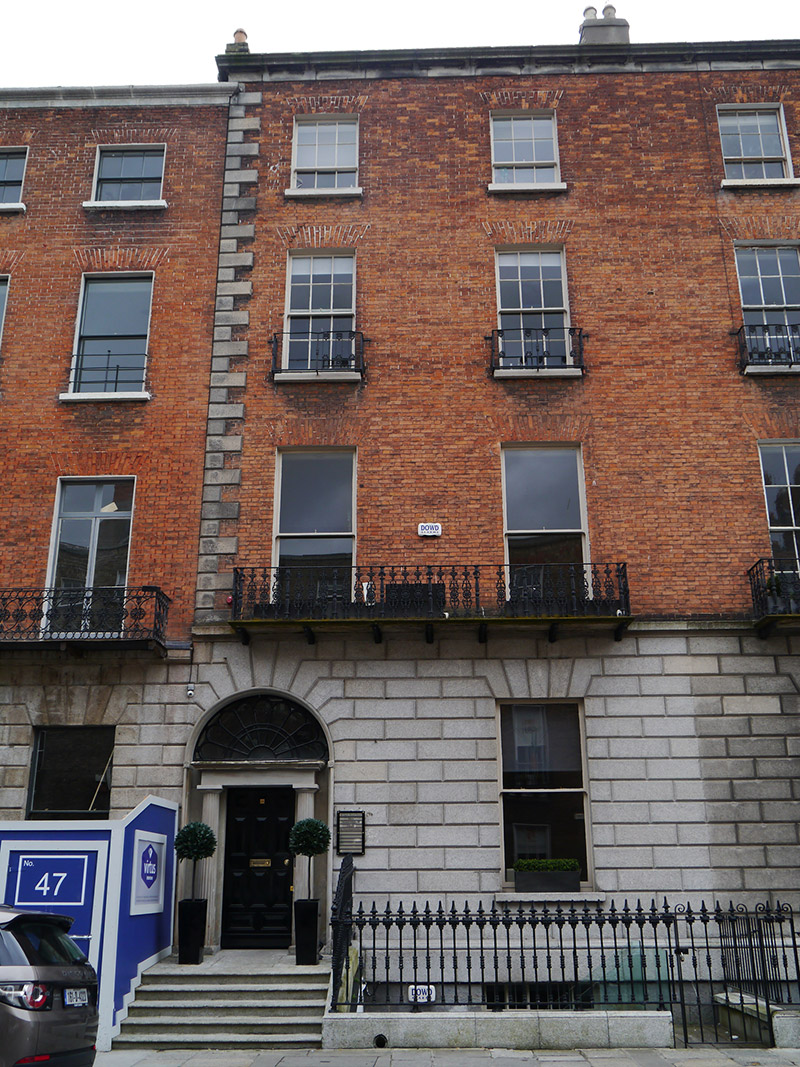
Attached two-bay four-storey former house over basement, built c. 1830 as one of pair with No. 49, having two-storey return to east end of rear. Now in office use. M-profile pitched slate roof, having brick parapet with granite coping and parapet gutters, cornice and platband. Rendered chimneystacks to west and brick to east with yellow clay pots. Flemish bond red brick walling to upper floors, with rusticated granite quoins to east end, rusticated granite walling to ground floor with projecting moulded granite course above and projecting granite course below, over tooled ashlar limestone basement walling; brick to rear. Square-headed window openings, diminishing in height to upper floors, with rendered reveals and painted masonry sills; plain stone surrounds to lower floors. Timber sliding sash windows with cavetto horns, six-over-six pane to second floor, six-over-three pane to top floor, fifteen-over-eight pane to basement and one-over-one pane elsewhere. Decorative cast-iron balconettes to second floor, and ornate balcony spanning first floor. Apparently timber sash windows to rear with round-headed nine-over-six pane to east bay and tripartite windows to ground and first floors of west bay. Round-headed doorcase with moulded surround, rosettes to impost level, pro-style fluted Doric columns, plain entablature, peacock's tail fanlight and eleven-panel timber door with brass furniture. Granite entrance platform with ornate cast-iron boot-scrape and five bull-nosed steps to street. Decorative spear-headed cast-iron railings on moulded granite plinth enclosing basement area. Cast-iron gate and timber steps lead down to basement. Plainly square-headed doorway beneath entrance platform. Garden and carparking to rear of plot.
This official record and map point do not grant access. Most recorded buildings are privately owned; view them only from public ground unless the owner allows entry.