Add your own picture and explain the route, parking, gates, paths or landmarks that help people find it.
Earn 5 points after the picture is checked and accepted.
Add your photo and local directionsShare what you foundWhat is recorded here
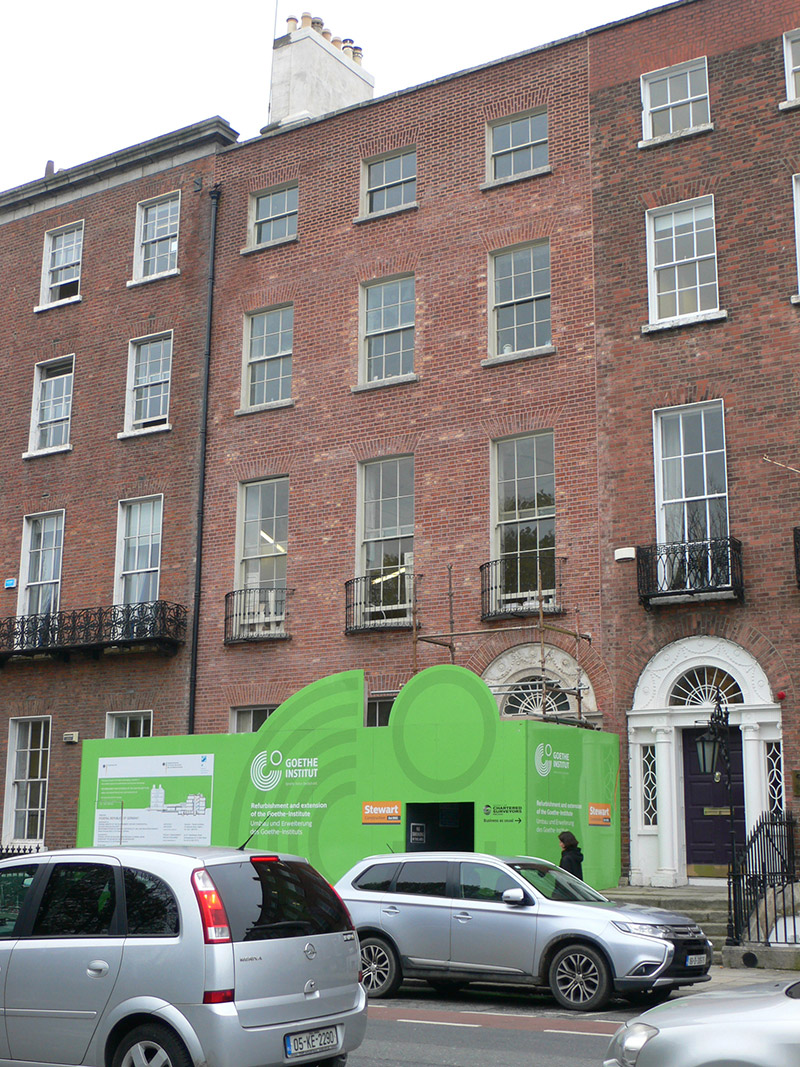
Attached three-bay four-storey former house over basement, built c. 1790 as one of terrace of four (Nos. 37-40), with two-storey flat-roofed extension to south end of rear and two-storey pitched roof block further back and parallel to main building. Now in use as cultural institute. Undergoing renovation at time of survey (2016). Pitched slate roof to front part, hipped to south, behind refaced brick parapet with granite coping, and having two roofs perpendicular to street to rear, north being fully hipped and south having curved hip to east. Rendered chimneystack to north end with clay pots, and cast-iron rainwater goods to north. Flemish bond brown brick walling (basement obscured), having refaced brick above top floor window sill level, and with vents to floors. Square-headed window openings, diminishing in height to upper floors, with rendered reveals and painted granite sills. Timber sliding sash windows, three-over-three pane to top floor and six-over-six pane elsewhere to front elevation. Decorative wrought-iron balconettes to first floor front. Apparently timber sliding sash windows to rear; round-headed stairs window to rear. Round-headed principal doorway with moulded render surround, fluted frieze with rosettes, moulded cornice, engaged Ionic columns, peacock's tail fanlight having swags and rosettes to front face of archivolt, door obscured at time of recording. Granite platform with decorative cast-iron boot-scrape and five granite steps. Wrought-iron railings with decorative cast-iron posts on moulded granite plinths (obscured at time of recording). Coal-hole cover to footpath to front. Casey (2005) notes well-preserved interior, with 'pretty transitional ceilings, decorative tympana and other elements. carparking to rear of plot.
This official record and map point do not grant access. Most recorded buildings are privately owned; view them only from public ground unless the owner allows entry.