Add your own picture and explain the route, parking, gates, paths or landmarks that help people find it.
Earn 5 points after the picture is checked and accepted.
Add your photo and local directionsShare what you foundWhat is recorded here
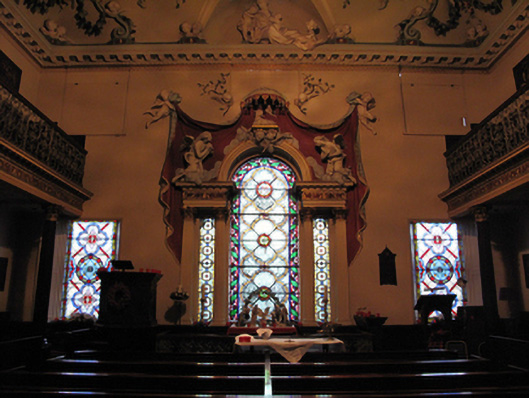
Single-cell square-plan double-height chapel, built c.1756, as part of Rotunda Lying-in Hospital, occupying upper floors of central gabled entrance front. Three-sided gallery, elaborate coved plasterwork ceiling and Venetian window to altar. Plastered walls, timber panelled wainscoting and linoleum covered floor with timber panelled box pews. Gallery supported on decorative Corinthian columns with decorative entablature base to gallery and elaborate wrought-iron railing with moulded timber handrail. Moulded plaster details to soffit of gallery. Elaborate plaster ceiling, deeply coved with large central lobed cartouche and four smaller cartouches to corners with stucco decoration by Bartholomew Cramillion c.1756. Deep lunettes to centre of each wall housing life-size figures with cherubs, festoons and rocaille ornament forming decorative borders to minor cartouches. North lunette occupied by organ to gallery. Plain timber altar on tiled step to front, surrounded by cast-iron railing and timber handrail. Polished timber panelled pulpit having steps to east of altar. Venetian window behind altar with fluted Corinthian pilasters and columns with respondent engaged pilasters and columns and later stained-glass windows. Reredos comprising tasseled canopy attached to curtain forming background. Lamb to centre over cherub heads, kneeling angels to sides and cherubs holding curtains to corners. Square-headed window openings flanking central opening having timber panelled surrounds and sills and stained-glass windows. Figures to each lunette: Charity, shown as mother with children, to front, Hope, with her anchor, to west, Faith, with cross, Bible and plummet of righteousness to east. Double-leaf flat-panelled mahogany doors providing access to chapel from central first floor corridor.
This official record and map point do not grant access. Most recorded buildings are privately owned; view them only from public ground unless the owner allows entry.