Add your own picture and explain the route, parking, gates, paths or landmarks that help people find it.
Earn 5 points after the picture is checked and accepted.
Add your photo and local directionsShare what you foundWhat is recorded here
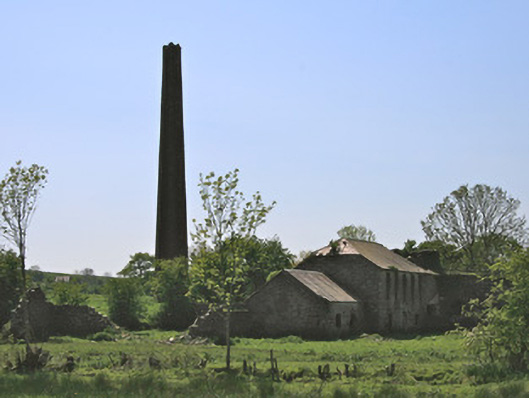
Attached multiple-bay, two-storey flax mill and associated detached chimney, built c.1850, aligned east-west on south bank of river. Now disused. Half-hipped slate roof, now partly missing, retaining some cast-iron gutters. Coursed rubble walls, with advanced stone eaves. Square-headed window openings, with brick surrounds to ground floor openings. Elongated window openings to first floor. Two-bay single-storey building abutting mill to east, with pitched slate roof and coursed rubble walls retaining some smooth render. Square-headed and camber-headed openings, no remaining fittings. High single-bay single-storey engine room abutting west gable of mill. Square-headed pediment, coursed rubble walls. Brick vaulting in facer bond to interior ground floor ceiling. Four-bay, two-storey building to north-west corner, probably store, having cement-rendered coursed rubble walls with dressed stone quoins visible in places. Square-headed window openings with brick surrounds and concrete sills, some breaks in wall. Free-standing chimney on rise to south of flax mill, of tapered octagonal plan and of red brick. Coping missing and deteriorating at top. Partly-buried intake flue from boiler room visible on north side. Located to south of river, and to east of late eighteenth-century corn mill and masonry bridge.
This official record and map point do not grant access. Most recorded buildings are privately owned; view them only from public ground unless the owner allows entry.