Add your own picture and explain the route, parking, gates, paths or landmarks that help people find it.
Earn 5 points after the picture is checked and accepted.
Add your photo and local directionsShare what you foundWhat is recorded here
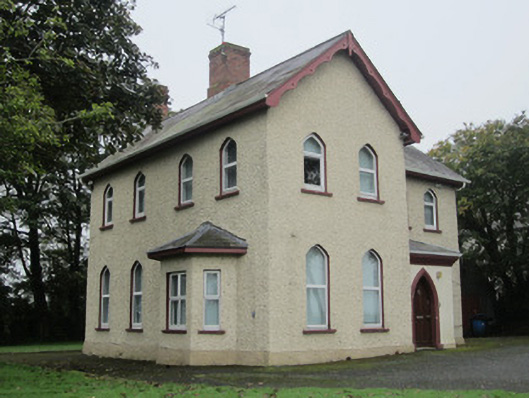
Detached five-bay two-storey manse, built 1871, to designs by Dundalk architect John Murray, with T-shaped plan having two-bay two-storey extension to rear elevation and lean-to slate with lead hip-roofed porch over main entrance. Rolled clay ridge tiles over pitched slate roof having brick chimneystacks with oversailing courses, overhanging eaves with timber-sheeted soffits, pierced timber bargeboards and replacement metal rainwater goods held on timber fasciaboard. Coarse roughcast cement rendered walls with battered, projecting stone plinth and pointed segmental-headed window openings with replacement uPVC frames, and concrete sills. Slate with lead hip-roofed single-storey canted bay window to south-east ground floor elevation having square-headed lights with replacement uPVC frames, and concrete sills. Two-centred pointed-arch doorway on smooth rendered entrance porch to north-east elevation with moulded render cornice to porch and moulding around doorcase which holds pointed timber door. Pitched slate-roofed single-storey roughcast rendered outbuilding to north-east with smooth rendered wall and steel-sheeted gates between outbuilding and manse which has single storey lean-to structure in this rear enclosed yard. Site set back off Keady road in own gardens surrounded by mature trees between manse and adjacent Presbyterian church building.
This official record and map point do not grant access. Most recorded buildings are privately owned; view them only from public ground unless the owner allows entry.