Add your own picture and explain the route, parking, gates, paths or landmarks that help people find it.
Earn 5 points after the picture is checked and accepted.
Add your photo and local directionsShare what you foundWhat is recorded here
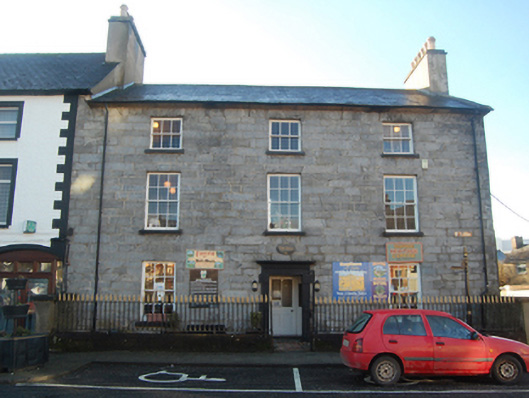
Attached end-of-terrace corner-sited three-bay three-storey house, built 1732 or 1752, having single-bay return and modern single-storey extension to the rear (west). Originally built as a residence for widows of deceased Church of Ireland. Now in use as a heritage centre. Pitched natural slate roof having cut stone eaves course, cement rendered chimneystacks to gable ends (north and south) with clay pots over, and with cast-iron rainwater goods. Ashlar limestone construction to front elevation (east), cement rendered walls to other elevations. Square-headed window openings having dressed stone sills, and with six-over-six pane hornless timber sliding sash windows at ground and first floor levels and three-over-three pane hornless timber sliding sash windows at second floor level. Central square-headed doorway to the front elevation (east) having timber panelled door, and with cut stone blocked architraved surround with entablature over with pronounced cornice. Set slightly back from road to the west side of the Diamond, Raphoe. Encaustic tiled threshold to doorway. Moulded cut stone plinth wall to road-frontage to the east having wrought-iron railings over with cast-iron finial above; rendered walls to the north and south boundaries of enclosed yard to front. Doorway served by wrought-iron pedestrian gate with cast-iron finials.
This official record and map point do not grant access. Most recorded buildings are privately owned; view them only from public ground unless the owner allows entry.