Add your own picture and explain the route, parking, gates, paths or landmarks that help people find it.
Earn 5 points after the picture is checked and accepted.
Add your photo and local directionsShare what you foundWhat is recorded here
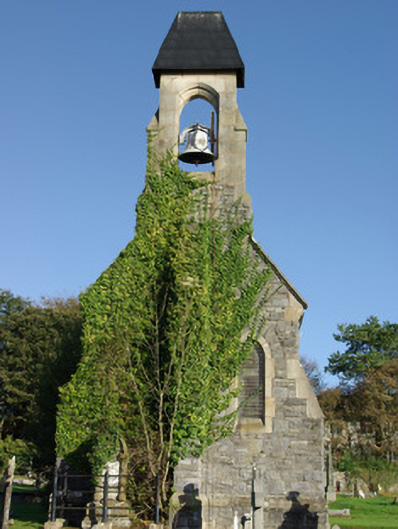
Remains of former Catholic church, built c. 1786 and extended in 1867, comprising a single-bay of the former nave or former porch with cut stone bellcote over the south gable end. Church largely demolished c. 1985 and now in use as a storage shed with modern wall to the north elevation. Pitched artificial slate roof with raised cut stone coping to the south gable end having cut stone kneeler stones at eaves level; ashlar construction to bellcote with hipped slate roof over. Snecked rubble stone construction with chamfered ashlar sandstone plinth course to the south elevation, and with clasping stepped buttresses to the corners to the south elevation and to the centre of the south elevation having cut stone coping over. South elevation now largely overgrown. Cement rendered finish to modern wall to the north. Pointed-arched window openings to the south elevation having chamfered ashlar sandstone surrounds, chamfered ashlar sandstone sills and plain glass windows. Modern square-headed window opening to the north elevation. Pointed-arched doorway to the east elevation having chamfered ashlar sandstone surround, timber door, and cut stone steps. Chamfered Tudor-arched opening to belfry having bell metal bell and metal swinging mechanism. Set back from road in own grounds to the north-west end of the centre of Convoy. Graveyard to site having upstanding and recumbent gravemarkers dating from the early-nineteenth century to the present, some with metal railed enclosures. Enclosed to the west by mainly rubble stone boundary walls; modern cement rendered boundary walls to the east. Gateway to the south-west corner comprising a pair of coursed and squared rubble stone gate piers (on square-plan) having capstones over, and with a pair of wrought-iron gates.
This official record and map point do not grant access. Most recorded buildings are privately owned; view them only from public ground unless the owner allows entry.