Add your own picture and explain the route, parking, gates, paths or landmarks that help people find it.
Earn 5 points after the picture is checked and accepted.
Add your photo and local directionsShare what you foundWhat is recorded here
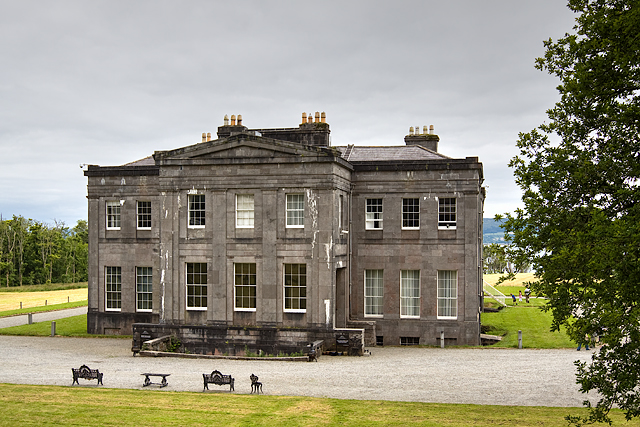
Detached nine-bay two-storey over basement Ballysodare limestone mansion, built between 1830 to 1835, inhabited from 1833. Designed in Greek Revival style by Francis Goodwin for Sir Robert Gore-Booth (1784-1835). Entrance front (north) elevation with three-bay pedimented central projection, lower storey originally open to east and west to form porte-cochere, flanked by three-bay side sections; east elevation with five-bay central section between two-bay projections, three-bay central breakfront; south elevation with three-bay central bow with raised parapet flanked by three-bay sections; west elevation with four-bay central section between four-bay projections each two-bays deep. Pitched and hipped slate roofs set behind parapets, lead ridge and hip cappings, ashlar chimneystacks with stepped capping and yellow clay pots, pyramidal rooflights over west gallery, lead hoppers and downpipes. Tooled and finely jointed ashlar walling, entablature with plain frieze and square unadorned cornice to all four sides, stepped architrave to north, east and west sides, carried on giant order Doric pilasters on projecting basement plinth, first floor platband. Square-headed window openings, painted six-over six timber sash windows to porte-cochere and first floor, nine-over-six to ground floor, six-over-three to basement. Square-headed door openings at porte-cochere, varnished vertically-sheeted timber double doors with wrought-iron strap hinges, flanked by Doric pilasters, projecting flanking walls on line of plinth. Situated on elevated site overlooking Sligo Bay, landscaped grounds, lawns to south terraced with stone steps on axis with bow window, woods beyond. The estate contains a variety of outbuildings which are recorded separately.
This official record and map point do not grant access. Most recorded buildings are privately owned; view them only from public ground unless the owner allows entry.