Add your own picture and explain the route, parking, gates, paths or landmarks that help people find it.
Earn 5 points after the picture is checked and accepted.
Add your photo and local directionsShare what you foundWhat is recorded here
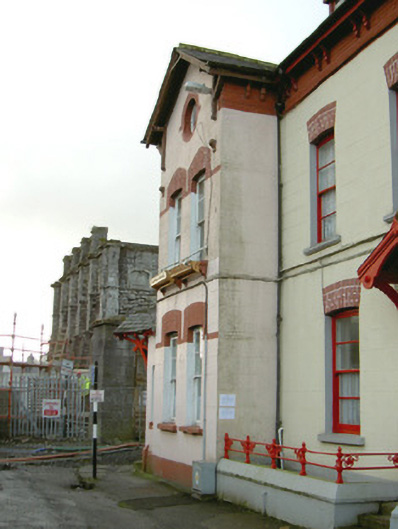
End-of-terrace multi-bay two-storey with attic smooth-rendered house, built c. 1860. Gable-fronted projecting full-height bay to front (east) elevation, splayed corner to south containing canopied entrance. One of a group of four. Pitched slate roof, clay ridge tiles, red brick corbelled chimneystack, painted timber projecting barge boards carried on timber brackets to bay, cast-iron half-round gutters on painted timber projecting eaves fascia on paired timber corbels. Painted ruled-and-lined smooth-rendered walls on moulded plinth. Oculus window to attic with painted brick head, painted stone sill, painted timber horizontally-pivoted casement window. Segmental-headed window openings to ground and first floors, painted brick dressings to first floor, painted stone sills, painted timber two-over-two sash windows to first floor and two-over-one to ground floor. Narrow round-headed window opening between entrance and projecting bay, flush splayed sill, painted timber one-over-one sash window. Segmental-headed door opening with chamfered reveals, painted timber six-panel door, plain-glazed fanlight, decorative painted timber gabled bracketted canopy with slate roof. Two stone steps to street, cast-iron boot scraper to second step. House set back slightly from street. Dressed limestone gate posts adjoin to south.
This official record and map point do not grant access. Most recorded buildings are privately owned; view them only from public ground unless the owner allows entry.