Add your own picture and explain the route, parking, gates, paths or landmarks that help people find it.
Earn 5 points after the picture is checked and accepted.
Add your photo and local directionsShare what you foundWhat is recorded here
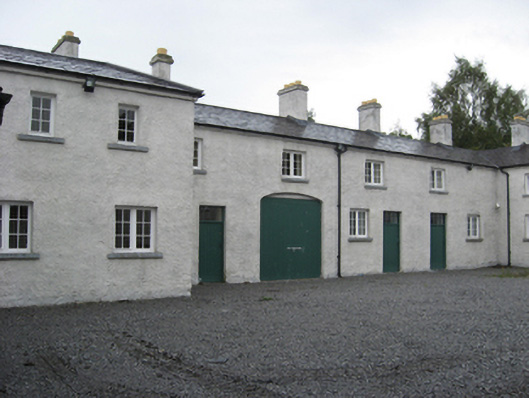
Detached former stableyard, built c.1800, comprising multiple-bay two-storey stable blocks ranged around closed central courtyard with porches to north and east ranges. Lean-to single-storey block to interior of north range. Converted for residential use c.1826. Currently not in use. Hipped slate roofs with roughcast rendered chimneystacks, and with rendered eaves course. Roughcast rendered walls. Square-headed window openings with cut limestone sills, and replacement six-pane timber single and two-light windows. East range has three-over-there pane timber sash windows to first floor, and three-over-six pane and six-over-six pane to ground floor. West range has window openings only to first floor, with three-over-three pane timber sliding sash windows. Square-headed pedestrian and vehicular door openings with replacement timber doors, double-leaf to latter and single-leaf with four-pane overlights to former. Segmental-headed carriage arch with timber battened double-leaf door. Elliptical-headed carriage arch to north elevation, with ashlar sandstone surround having imposts, limestone wheel guards and timber battened double-leaf door. Canted-bay six-over-six pane timber sliding sash window to exterior of south elevation. Gateway to north-east has square-profile dressed limestone piers with pyramidal limestone caps and double-leaf wrought-iron gate.
This official record and map point do not grant access. Most recorded buildings are privately owned; view them only from public ground unless the owner allows entry.