Add your own picture and explain the route, parking, gates, paths or landmarks that help people find it.
Earn 5 points after the picture is checked and accepted.
Add your photo and local directionsShare what you foundWhat is recorded here
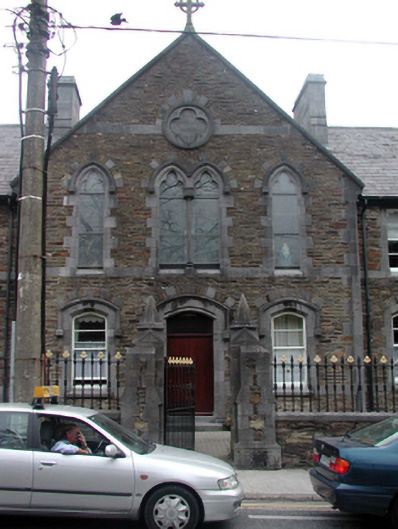
Terraced three-bay two-storey gable-fronted rubble stone almshouse, dated 1875, retaining most original aspect. Now in use as Presbyterian church. One of a terrace of five. Pitched (gable-fronted) and pitched (shared) slate roofs with clay ridge tiles, limestone ashlar chimney stacks, cut-limestone coping and replacement uPVC rainwater goods, c.2000. Random rubble stone walls with cut-limestone quoins to corner, cut-stone courses to each floor, cut-limestone quatrefoil date stone/plaque in medallion, and cut-limestone coping to gable having cross finial to apex. Pointed-arch window openings to ground floor with cut-limestone sills, block-and-start surrounds having chamfered reveals, hood mouldings over, and 2/2 timber sash windows with horizontal bias to glazing pattern. Trefoil-headed window openings to first floor (paired to centre) with cut-limestone sill course, block-and-start surrounds, colonette mullion to paired openings, hood mouldings over, and leaded stained glass panels. Pointed-arch door opening with two cut-limestone steps, cut-limestone block-and-start surround having chamfered reveals, hood moulding over, replacement tongue-and-groove timber panelled door, c.2000, and overlight. Set back from line of road in shared grounds with random rubble stone boundary wall to forecourt having limestone ashlar piers with profiled polygonal capping, and sections of cast-iron railings.
This official record and map point do not grant access. Most recorded buildings are privately owned; view them only from public ground unless the owner allows entry.