Add your own picture and explain the route, parking, gates, paths or landmarks that help people find it.
Earn 5 points after the picture is checked and accepted.
Add your photo and local directionsShare what you foundWhat is recorded here
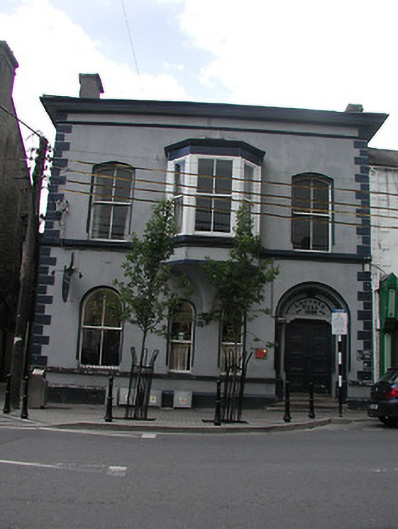
Attached three-bay (four-bay deep) two-storey lecture hall, built 1867-9; dated 1869, on a rectangular plan; two-bay two-storey rear (west) elevation. Hipped and hipped gabled slate roof with roll moulded ridge tiles, rendered chimney stacks having ogee or thumbnail beaded capping supporting terracotta pots, and cast-iron rainwater goods on timber eaves boards on slightly overhanging eaves with cast-iron octagonal hoppers and downpipes. Rendered, ruled and lined wall (east) on rendered chamfered plinth with rusticated rendered quoins to corners supporting moulded rendered cornice on blind frieze on moulded rendered stringcourse; coursed rough cut rubble limestone walls (remainder) with drag edged tooled cut-limestone flush quoins to corners. Paired round-headed central window openings (ground floor) with sill course supporting wrought iron sill guards, and concealed dressings having bull nose-detailed reveals framing one-over-one timber sash windows. Round-headed flanking window opening (south) with sill course supporting wrought iron sill guard, and concealed dressings having bull nose-detailed reveals framing two-over-two timber sash window. Square-headed flanking door opening in round-headed recess (north) with three cut-granite steps, doorcase with three quarter-engaged Composite colonettes on pedestals supporting archivolt framing timber panelled double doors having overpanel ("1869"). Camber-headed window openings (first floor) with sill course, and concealed dressings having bull nose-detailed reveals framing two-over-two timber sash windows. Round-headed window openings (west) with cut-granite sills, and red brick block-and-start surrounds framing roundel-detailed two-over-two timber sash windows. Street fronted with concrete brick cobbled footpath to front.
This official record and map point do not grant access. Most recorded buildings are privately owned; view them only from public ground unless the owner allows entry.