Add your own picture and explain the route, parking, gates, paths or landmarks that help people find it.
Earn 5 points after the picture is checked and accepted.
Add your photo and local directionsShare what you foundWhat is recorded here
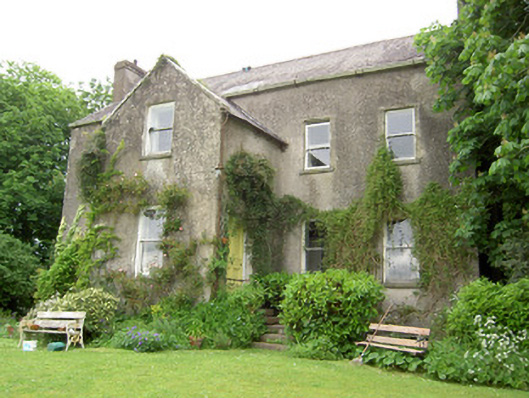
Detached five-bay two-storey over half-basement former glebe house, built 1782-4, with gabled projecting two-storey porch and having lower shallow gabled three-storey return and single-storey extension to rear. Now in use as house. Pitched slate roof with rendered chimneystacks and cast-iron rainwater goods. Roughcast rendered walls. Square-headed window openings with one-over-one pane timber sliding sash windows with tooled limestone sills. Tall square-headed twelve-over-twelve pane and three-over-three pane timber sash windows to return, with some segmental-arched windows to basement at rear of main block. Square-headed door opening with timber panelled door accessed via limestone steps to side of porch, and square-headed door opening with timber panelled door having console brackets and cornice to rear extension. Ranges of outbuildings attached to ends of rear of house to form courtyard. Rubble sandstone walls and pitched slate roofs, having timber louvered vent, redbrick surrounds to doorway and segmental-arch opening to southwest range and rubble limestone walls with hipped slate roof to two-storey west range, with square-headed window and door openings and segmental-arch openings with cut limestone surrounds. Freestanding cast-iron pump to yard. Rock-faced limestone gate piers with cast-iron gates to front of site.
This official record and map point do not grant access. Most recorded buildings are privately owned; view them only from public ground unless the owner allows entry.