Add your own picture and explain the route, parking, gates, paths or landmarks that help people find it.
Earn 5 points after the picture is checked and accepted.
Add your photo and local directionsShare what you foundWhat is recorded here
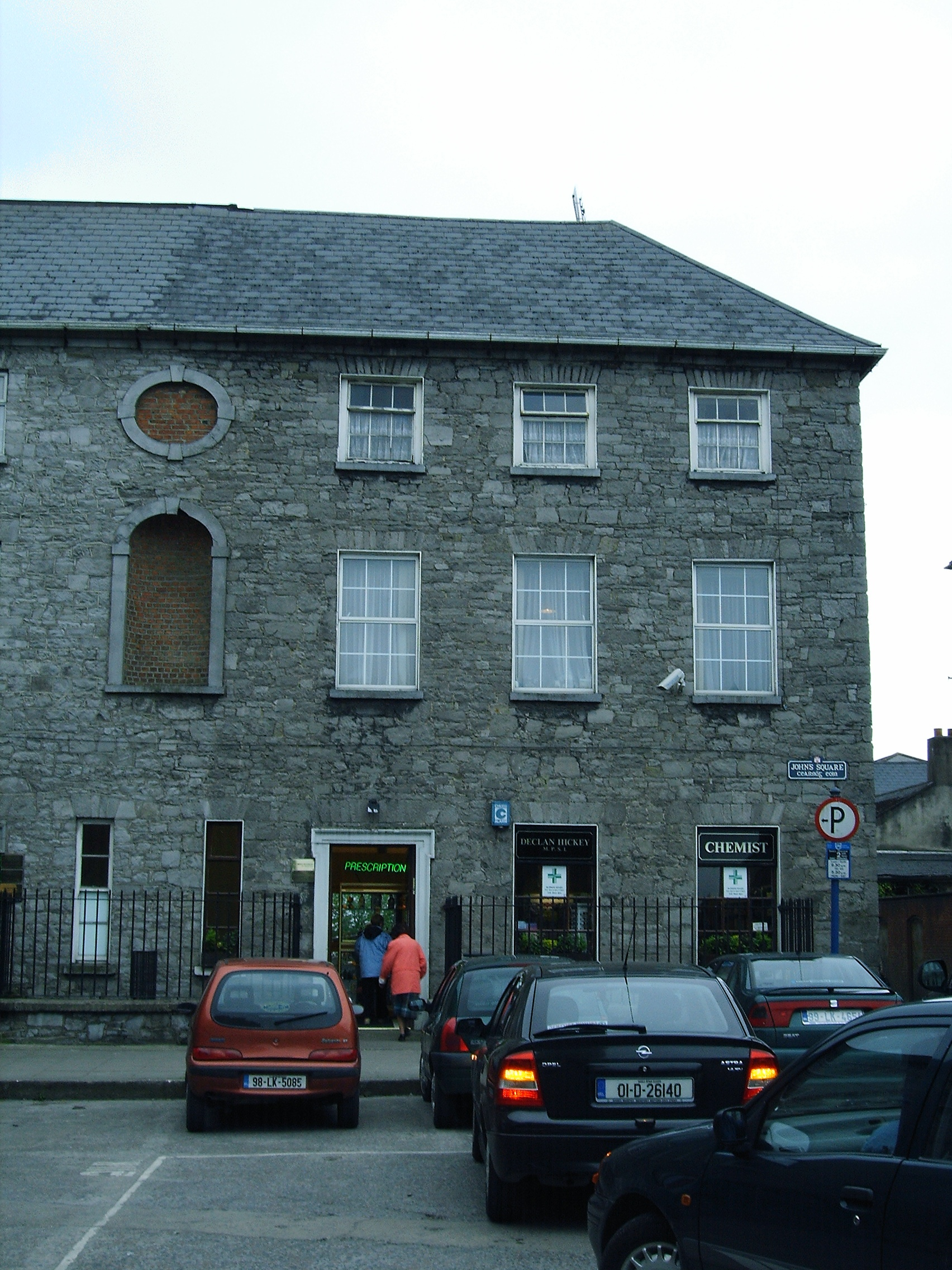
End-of-terrace three-bay three-storey over basement limestone townhouse, built in 1751, facing north and compositionally linked to neighbouring building by a pair of lancet windows at ground floor level and a red brick faced niche and oculus above, and which together forms one side of the square. Rendered single- and two-storey structure attached to rear returning at the corner with Barrack Lane. Artificial slate hipped roof on an L-plan. Rendered chimneystack with plain clay pots. uPVC rainwater goods. Partially coursed random rubble limestone walls to the front and side elevation with ashlar limestone quoins turning the corner of the façade, retaining historic lime mortar finish, with cement re-pointed to basement level and lower part of ground floor level. Limestone ashlar architrave to niche and oculus. Rear elevation in cement render. Square-headed window openings to front elevation with limestone flat arch voussoirs, limestone ashlar sills, patent rendered reveals and replacement uPVC and timber casement windows. At second floor level the historic three-over-six timber sash windows have been modified to form swing-out casements. Two window openings to side elevation, c. 1970, one blocked-up. Large camber-arched openings to rear elevation with bipartite uPVC windows, possibly nineteenth-century. Square-headed front door opening, with limestone voussoirs above original lugged painted limestone architrave and flat-panelled timber door, c. 1990. Front site basement area enclosed by rubble limestone plinth wall surmounted by concrete coping, c. 1990, and replacement wrought-metal railings. Railings return on a curve to meet the concrete front door platform. Metal stairs to basement area, c. 2000. Flat-roofed structure to basement area.
This official record and map point do not grant access. Most recorded buildings are privately owned; view them only from public ground unless the owner allows entry.