Add your own picture and explain the route, parking, gates, paths or landmarks that help people find it.
Earn 5 points after the picture is checked and accepted.
Add your photo and local directionsShare what you foundWhat is recorded here
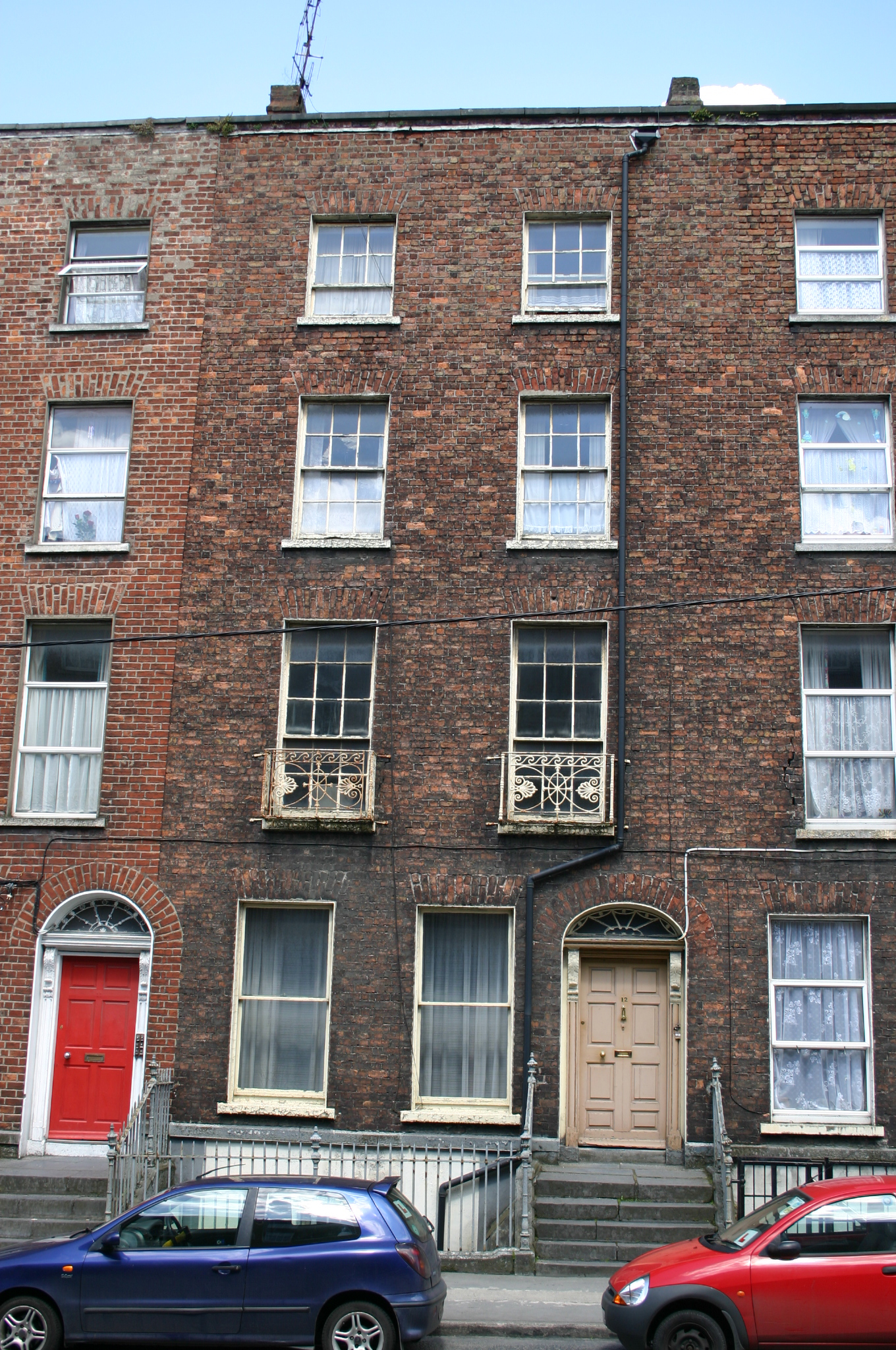
Terraced two-bay four-storey over basement house, built c. 1840, sharing a parapet height with No. 10. Asymmetrical alignment of fenestration at ground floor level to accommodate door opening. Pitched roof concealed behind parapet wall. Red brick chimneystack to east and west party wall. Cast-iron rainwater goods. Red brick walls laid in Flemish bond; lead damp proof course beneath limestone coping to parapet wall; rendered basement elevation terminating with painted chamfered painted stone plinth course; exposed squared and snecked rubble limestone rear elevation with red brick parapet quoins and window surrounds. Square-headed window openings, red brick flat arches, patent rendered reveals, painted limestone sills; original timber sash windows forming: six-over-three to third floor level; six-over-six to second floor level; nine-over-six to first floor level and one-over-one to basement and ground floor level. Red brick three-centre arched door opening, patent rendered reveals, and inset timber doorcase, c. 1850, comprising flat-panelled pilasters with foliate console brackets supporting lintel cornice, with original webbed lead detailed fanlight; and original raised and fielded panelled timber door leaf. Limestone door platform bridging front site basement area, arrived at by a flight of limestone steps, flanked by wrought-iron railings with Neo-classical cast-iron rail posts with pineapple finials. Front site basement area enclosed by original wrought-iron railings with cast-iron rail posts having pineapple finials. Fine painted rubble limestone coach house to rear site access lane, distinguished by dramatic arched opening, with early plank vehicular double-leaf gates and brick filled arch with square-headed loft window opening. Pedestrian opening to west.
This official record and map point do not grant access. Most recorded buildings are privately owned; view them only from public ground unless the owner allows entry.