Add your own picture and explain the route, parking, gates, paths or landmarks that help people find it.
Earn 5 points after the picture is checked and accepted.
Add your photo and local directionsShare what you foundWhat is recorded here
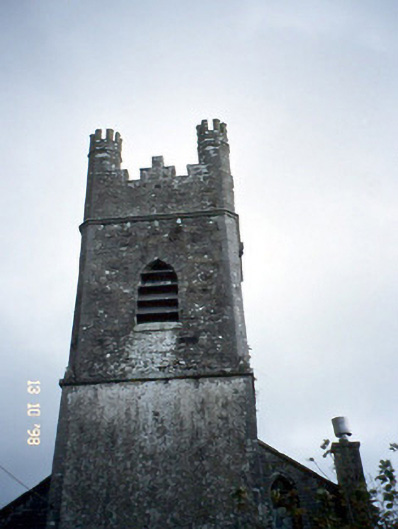
Freestanding double-height Church of Ireland church, built c. 1820, with four-bay nave and single-bay two-stage cut-stone-built entrance tower to west gable end. Renovated and extended to east gable end, c. 1865, with single-bay double-height chancel having single-bay single-storey lean-to vestry projection added to north-east corner. Pitched slate roofs with clay ridge tiles, cast-iron gutters and downpipes, gable ashlar copings, and having profiled cast-iron gutters to chancel with ashlar brackets. Castellated parapet to tower. Coursed rubble stone walls with ashlar quoins and projecting ashlar eaves course. Rendered walls to east wall of nave and west wall of tower. Slate-hanging to west and south walls of nave. Limestone ashlar string courses to tower. Pointed arch opening with limestone ashlar surrounds, having iron framed lattice glazing and "Y" tracery to nave windows. Single lancets to west wall and tower with leaded, coloured glass glazing. Hood moulding to doorway having timber double leaf door and limestone step. Open timber trussed roof and plain walls with brass memorial plaques to interior. Graveyard to site with various cut-stone grave markers and mausolea, c. 1820-present. Gateway, built c. 1820, to east comprising pair of cut-stone piers with wrought-iron gates. Rubble stone boundary walls.
This official record and map point do not grant access. Most recorded buildings are privately owned; view them only from public ground unless the owner allows entry.