Add your own picture and explain the route, parking, gates, paths or landmarks that help people find it.
Earn 5 points after the picture is checked and accepted.
Add your photo and local directionsShare what you foundWhat is recorded here
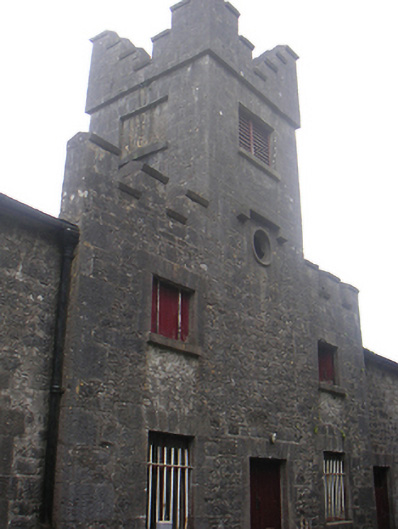
Stable block and coach yard to the rear (southwest) of Lisnabin Castle (15402014), built c.1824, comprising central advanced two-bay two-storey section with three-storey tower (on square-plan) with battlemented parapet over with Irish Crenellations, flanked to the northwest and southeast by lower two-bay two-storey sections with central segmental-headed carriage arches. Pitched natural slate roofs to lower two-storey sections with battlemented parapet over two-storey central section. Constructed of rubble limestone with ashlar limestone trim and dressings. Square-headed window openings with timber casement windows and cut-stone sills. Cast-iron security bars to ground floor openings. Square-headed doorcases with battened timber half doors. Stable block and coach yard is accessed through a pointed segmental-headed carriage arch, flanked by octagonal turrets, having cast-iron double gates to the northwest side of the castle. Crenellated curtain wall screens complex from view on approach to Lisnabin Castle from the northeast. Extensive complex of rubble stone single and two-storey outbuildings (hipped natural slate roofs) to the south, arranged around a central cobbled courtyard (not accessed). A number of single-storey detached rubble limestone structures with square-headed openings lies to the south of this southern courtyard.
This official record and map point do not grant access. Most recorded buildings are privately owned; view them only from public ground unless the owner allows entry.