Add your own picture and explain the route, parking, gates, paths or landmarks that help people find it.
Earn 5 points after the picture is checked and accepted.
Add your photo and local directionsShare what you foundWhat is recorded here
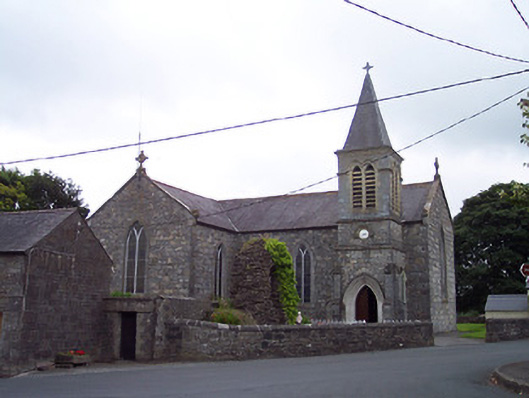
Freestanding T-plan Roman Catholic chapel, built c.1830, comprising two-bay nave, single-bay transepts and a three-stage tower on square plan with corner buttresses, string courses and a slated spire to northeast side (nave). Pitched natural slate roofs with raised limestone verges, carved ashlar kneeler stones and carved stone cross finials. Constructed of roughly coursed rubble limestone over ashlar plinth with flush ashlar quoins to corners. Pointed-arched openings with timber Y-tracery and stained glass windows. Pointed-arched doorcase to north face of tower with carved limestone surrounds, limestone hoodmoulding over and timber sheeted double-doors. Clockface to second stage of tower with paired pointed-arched louvred vents to belfry on third stage. The church is bounded to the front by a rubble limestone wall with semi-circular limestone coping over. Grotto to north surrounded by wrought-iron and cast-iron boundary railings. Interior is plainly finished with three round-headed Gothic niches with ogee-headed frames and crocketed finials to the altar wall (no chancel or east window). Marble monuments include those to Rev Michael Duff (1869), by Farrell and Son, and to Rev. B. Moore (1862). Located just to south of the centre of Multyfarnham.
This official record and map point do not grant access. Most recorded buildings are privately owned; view them only from public ground unless the owner allows entry.