Add your own picture and explain the route, parking, gates, paths or landmarks that help people find it.
Earn 5 points after the picture is checked and accepted.
Add your photo and local directionsShare what you foundWhat is recorded here
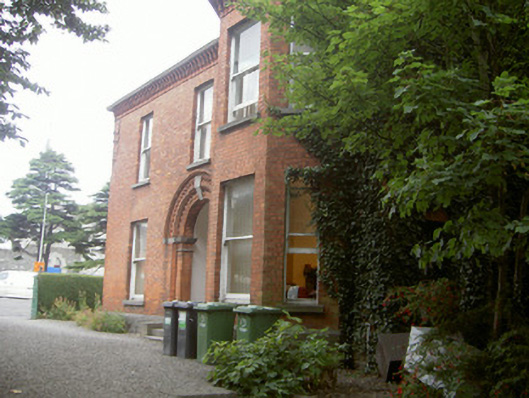
Detached three-bay two-storey former house, built c. 1890, now in use as offices. Full-height canted bay to south, breakfront with full-height canted bay to west, two-storey return to east. Hipped slate roof, leaded ridge and hips, red brick corbelled chimneystacks, moulded cast-iron gutters on brick corbels, square-profile cast-iron downpipes. Red brick walling laid in Flemish bond, stone plinth with chamfered ashlar plinth. Square-headed window openings, stone sills, painted timber one-over-one sliding sash windows. Round-headed double-arch opening to recessed porch, accessed by three limestone steps, moulded brick hood moulding, limestone stops, limestone keystone; outer arch with square-billet moulding, roll-moulded archivolt, stop-chamfered reveals, limestone imposts; inner arch supported on engaged square Tuscan columns, chamfered corners, cut limestone base and capitals, roll-moulded archivolt; encaustic tiles to platform; square-headed door opening, painted timber door with raised-and-fielded bottom panels and round-headed glazed upper panels, plain-glazed sidelights, stained glass tripartite overlight. Set within own grounds, grass to west and east, gravel surface to south, squared-and-snecked limestone boundary wall to west, cut limestone coping, cast-iron railings, stone gate piers, ball finials to pier caps, cast-iron gate.
This official record and map point do not grant access. Most recorded buildings are privately owned; view them only from public ground unless the owner allows entry.