Add your own picture and explain the route, parking, gates, paths or landmarks that help people find it.
Earn 5 points after the picture is checked and accepted.
Add your photo and local directionsShare what you foundWhat is recorded here
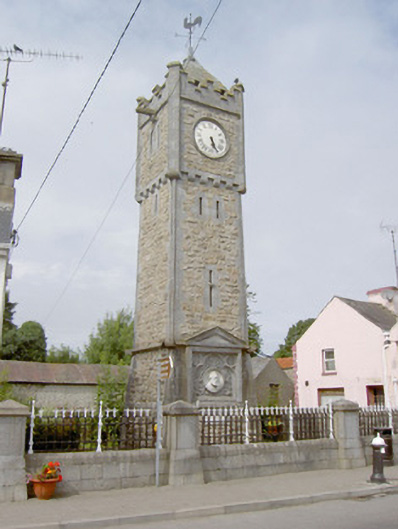
Freestanding three-stage Gothic Revival clock tower on square-plan, dated 1878. Pyramidal slate roof with cast-iron weather vane and castellated cut limestone parapet having Irish style crenellations. Base batter at first stage level. Snecked rock-faced limestone with corbelled limestone string course and cut limestone engaged corner shafts/pilasters to third stage, carved limestone rolled mouldings to corners of second stage and cut limestone quoins to first stage. Clock face to east elevation of third stage. Carved limestone aedicule framing carved limestone date plaque and marble bust, with additional carved marble plaque below, to east elevation of first stage. Loop windows to second stage of east elevation, second and third stages of other elevations, having cut limestone surrounds and leaded glass. Square-headed door opening to north elevation of first stage with carved limestone lintel having concave profile and cut limestone surround. Timber battened door with decorative wrought-iron hinges. Set behind tooled and rock-faced cut limestone walls with cast-iron railings to east elevation, having cut limestone piers on square plan with battered base, carved roll mouldings to edges and pyramidal capping. Set back from road at main T-junction to the centre of Keenagh village. Cast-iron water hydrant, c. 1900, to the east.
This official record and map point do not grant access. Most recorded buildings are privately owned; view them only from public ground unless the owner allows entry.