Add your own picture and explain the route, parking, gates, paths or landmarks that help people find it.
Earn 5 points after the picture is checked and accepted.
Add your photo and local directionsShare what you foundWhat is recorded here
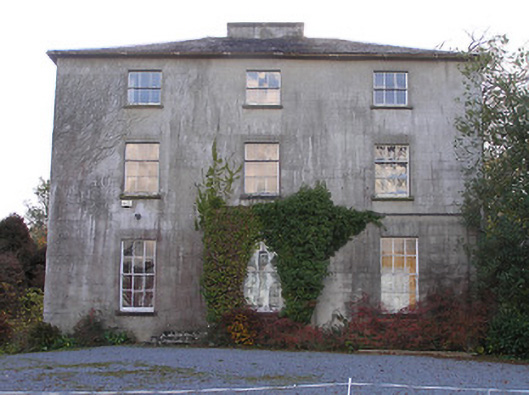
Detached three-bay three-storey Board of First Fruits glebe house, built 1815, with two-bay single-storey flat-roofed projecting entrance bay to ground floor incorporating single-bay single-storey advanced porch to left, two-bay three-storey side elevations, and three-bay three-storey rear (south) elevation having four-bay single-storey open veranda along ground floor. Converted to private residential use, pre-1902. Hipped slate roof with rolled lead ridges, rendered chimney stacks (one on axis with ridge), slightly swept eaves, and cast-iron rainwater goods on rendered eaves. Flat roof to entrance bay not visible behind parapet. Hipped slate roof to veranda on timber posts with clay ridge tiles, cast-iron rainwater goods on timber eaves, and open work timber parapets. Unpainted rendered, ruled and lined walls with cut-limestone stringcourse to first floor, and ivy-clad walls to porch having stringcourse supporting parapet. Square-headed window openings (round-headed window opening to porch; one in tripartite arrangement to ground floor rear (south) elevation) with cut-limestone sills, six-over-six (ground floor), three-over-six (first floor), and three-over-three (top floor) timber sash windows having three-over-six timber sash window to porch incorporating fanlight (six-over-six timber sash window to tripartite opening having two-over-two sidelights). Square-headed door opening on three cut-limestone steps with moulded surround, and timber panelled door. Round-headed door opening to house with timber panelled pilaster doorcase, and glazed timber panelled double doors having fanlight. Interior with timber panelled shutters to window openings. Set back from road in own grounds with gravel forecourt, and landscaped grounds to site.
This official record and map point do not grant access. Most recorded buildings are privately owned; view them only from public ground unless the owner allows entry.