Add your own picture and explain the route, parking, gates, paths or landmarks that help people find it.
Earn 5 points after the picture is checked and accepted.
Add your photo and local directionsShare what you foundWhat is recorded here
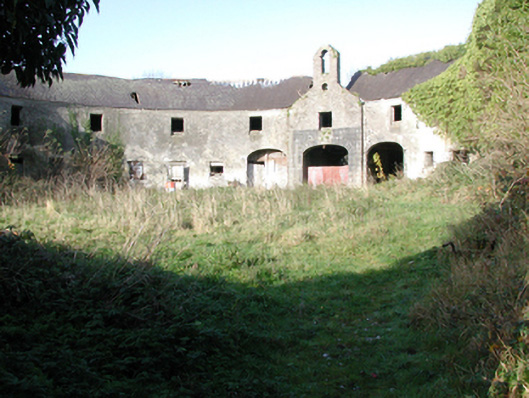
Detached nine-bay two-storey stable block, dated 1805, on a crescent-shaped plan centred on single-bay two-storey gabled breakfront. In alternative use, 1900. Now disused. Hipped slate roof on a crescent-shaped plan on collared timber construction centred on remains of pitched (gabled) slate roof (breakfront), clay or terracotta ridge tiles, rendered coping to gable with rendered gabled bellcote to apex, and no rainwater goods surviving on rendered red brick header bond eaves. Part creeper- or ivy-covered lime rendered or roughcast coursed rubble limestone walls with concealed cut- or hammered limestone flush quoins to corners; limestone ashlar surface finish (breakfront). Elliptical-headed central carriageway with limestone ashlar voussoirs centred on cut-limestone keystone with no fittings surviving. Elliptical-headed flanking carriageways with lime rendered or roughcast limestone ashlar voussoirs. Square-headed door openings with overgrown thresholds, and concealed dressings with no fittings surviving. Square-headed flanking window openings, concealed dressings with no fittings surviving. Square-headed window openings (first floor), concealed dressings with no fittings surviving. Set in unkempt grounds with part creeper- or ivy-covered piers to perimeter having overgrown capping supporting wrought iron-detailed flat iron double gates.
This official record and map point do not grant access. Most recorded buildings are privately owned; view them only from public ground unless the owner allows entry.