What is recorded here
Margaret holds an unseen object against her throat while William spreads fabric over his feet, both frozen in limestone since the fourteenth century. They endured churchyard exposure and later museum relocation because stone remembers what flesh forgets. The faded Latin letters no longer give their names, yet the angular folds and cushioned heads still distinguish them from ordinary death.
At St Mary's parish church (KK019-026115-) in Kilkenny. A mid-late 14th-century double effigy of William and Margaret Goer, made from fossiliferous limestone. Its earliest mention in Carrigan (1905, vol.3, 98) has it in churchyard, on the S side of the church, but this is probably not its original location. Hunt describes the slab thus, ‘William Goer and his wife Margaret lie with their heads resting on cushions. The effigies show degeneracy of treatment and the breaking through again of that flat engraved or script like technique always lurking in the Irish background compare Ardfert, Co. Kerry and Kilfenora Co. Clare. The attention is concentrated on the upper part of the monument. The sculptors use of violent angular folds in the woman's dress and the protective spread over the feet of the man are interesting. Both wear mantles over long ungirdled gowns with lappets and liripipes at the elbows. The man wears a short shoulder-cape over his gown. The barbe about the woman's throat may be compared with that on the effigy at Rippingdale Lincs. She holds some unidentifiable object in her left hand against her barbe. The late survival of the Lombardic lettering should not be allowed to confuse the dating which must be later than the middle of the 14th century’ (Hunt 1974, vol.1, 161-2). The inscription in Latin with Lombardic lettering reads:
HIC : JACET : WILLS: GO
ER : ET : MAR
GARETA : UXOR : EIUS.
[the inscription has now largely disappeared due to weathering].
Moved to the W wall of the new N aisle of the Medieval Mile Museum in 2015.
Compiled by: Cóilín Ó Drisceoil
Date of upload: 21 November 2022
Medieval effigial tomb, 14th century. Signifies the presence of a wealthy or noble family in Kilkenny, reflecting social and artistic practices of the late medieval period in Ireland.
The monument record does not grant public access. Check the route and ask the landowner before entering private land.
- What survives
- Recorded monument
Places near here
 Medieval Mile MuseumMuseum · 24 yd
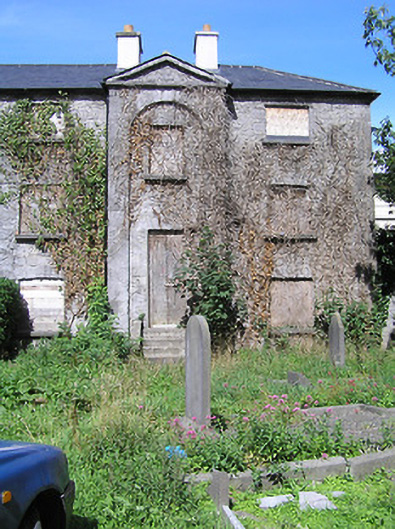 Saint Mary's Church (Saint Mary's)almshouse · 26 yd
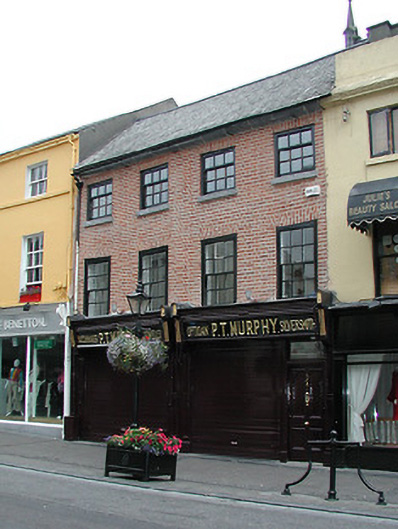 P.T. Murphyhouse · 30 yd
 Graveslab in Gardens (kilkenny City By., St. Mary’s Par.)Graveslab · 32 yd
 TholselHeritage attraction · 35 yd
 Almshouse in Gardens (kilkenny City By., St. Mary’s Par.)Almshouse · 85 yd
 Irish River LifeVisitor information · 152 yd
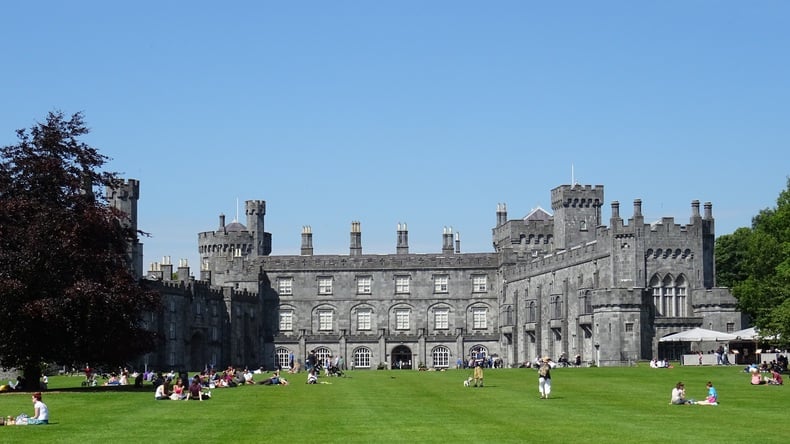 Thomas DollardMemorial · 154 yd
 Thomas MooreMemorial · 205 yd
 Kilkenny CourthouseVisitor information · 288 yd
 Grace's Old CastleCastle · 311 yd
 Black PoplarBlack Poplar · 786 yd