What is recorded here
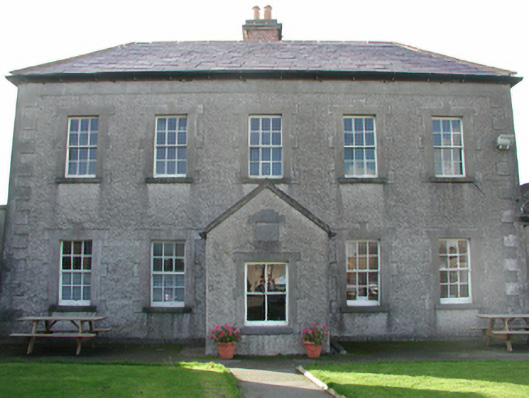
Detached five-bay two-storey royal artillery officers' barrack, extant 1840, on a T-shaped plan centred on single-bay single-storey gabled projecting porch to ground floor; five-bay two-storey rear (east) elevation. Occupied, 1901. Vacant, 1911. In alternative use, 1922. Vacated, 1986. Restored, 2005, to accommodate alternative use. Hipped slate roof on a quadrangular plan; pitched (gabled) slate roof (porch), terracotta ridge tiles, red brick Flemish bond central chimney stack having cut-limestone corbelled stepped stringcourse below capping supporting terracotta tapered pots, and replacement uPVC rainwater goods on rendered eaves. Roughcast walls on cut-granite chamfered plinth with rendered quoins to corners supporting rendered band to eaves; rendered surface finish to rear (west) elevation. Square-headed central window opening below reclaimed cut-limestone plaque ("1724") with cut-limestone sill, and block-and-start surround centred on keystone framing two-over-two timber sash window. Square-headed window openings with cut-limestone sills, and block-and-start surrounds centred on keystones framing six-over-six timber sash windows. Square-headed door openings with drag edged dragged cut-limestone surrounds centred on keystones framing timber boarded doors. Square-headed window openings to rear (west) elevation with cut-limestone sills, and concealed red brick block-and-start surrounds framing six-over-six timber sash windows. Set in shared grounds including relandscaped parade ground.
This official record and map point do not grant access. Most recorded buildings are privately owned; view them only from public ground unless the owner allows entry.