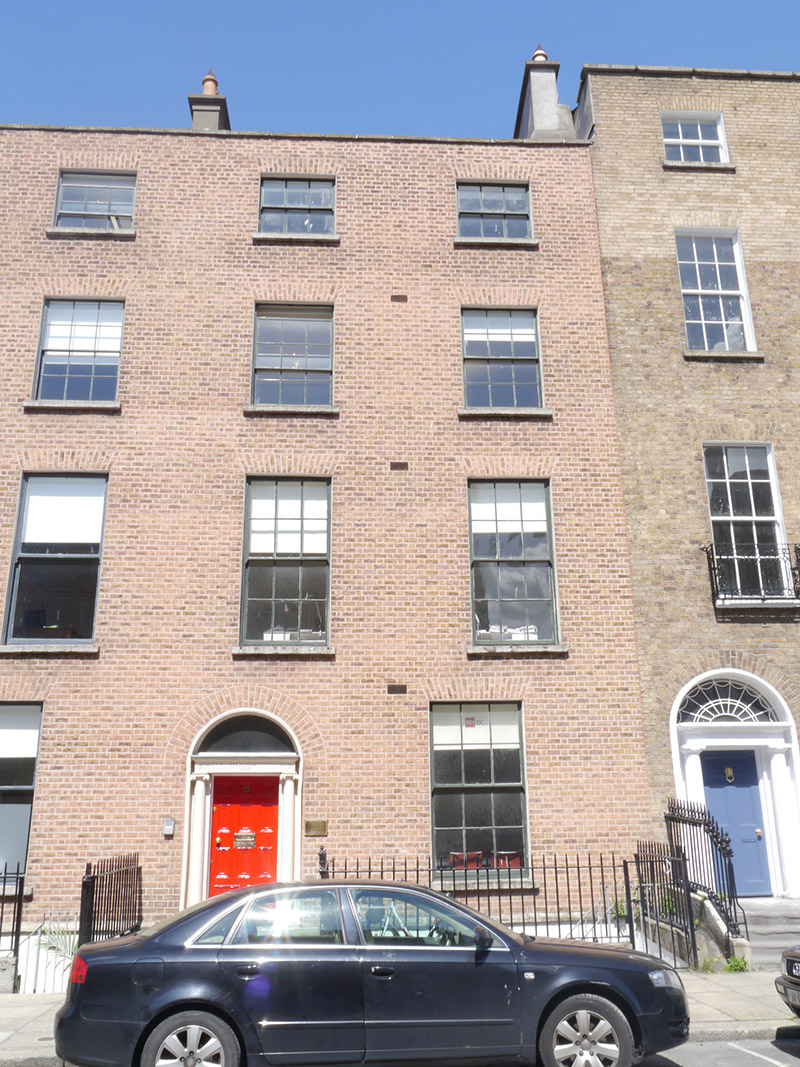
What is recorded here
Attached two-bay four-storey former house over basement, built c. 1810 as one of pair with No. 5, and having single-storey gabled return to rear. Now in office use. M-profile pitched slate roof, behind brick parapet with granite coping and parapet gutters. Rendered chimneystacks to party walls. Wigged red brick Flemish bond walling on granite plinth course over painted rendered basement walling; rendered walling to rear. Square-headed window openings, diminishing in height to upper floors, with masonry sills, rendered reveals and brick voussoirs. Timber sliding sash windows, three-over-three pane to top floor, four-over-four pane to basement and six-over-six pane to middle floors, hornless to basement and second floor. Wrought-iron grille to basement. Apparently timber sash windows to rear elevation. Round-headed door opening with moulded surround and painted masonry doorcase comprising Ionic columns supporting fluted entablature with rosettes, plain fanlight and eleven-panel bolection-moulded timber door with brass furniture. Granite entrance platform with two curved granite steps to street. Basement area enclosed by wrought-iron railings with decorative cast-iron posts on moulded granite plinth. Mild-steel steps to basement. Two-storey block to rear of plot, shared with No. 5, built 1953.
A late Georgian row house, built as a pair with No. 5 to its west. The front elevations in the terrace exhibit well-balanced proportions and fenestration grading typical of the period, restrained façades, intact setting features and, in this case, a fine Ionic doorcase. It makes a strong contribution to the cohesive character of Mount Street Upper and the wider architectural heritage of south Dublin city. This street was built 1790-1834, the variations in the streetscape are indicative of the piecemeal nature of its construction, the north side being notably less grand than the south. The east end of the street is effectively terminated by St. Stephen's Church, creating an interesting centrepiece and terminating one of the key vistas of Georgian Dublin.
This does not grant access. Most recorded buildings are privately owned; view them only from public ground unless the owner allows entry.
Places near here
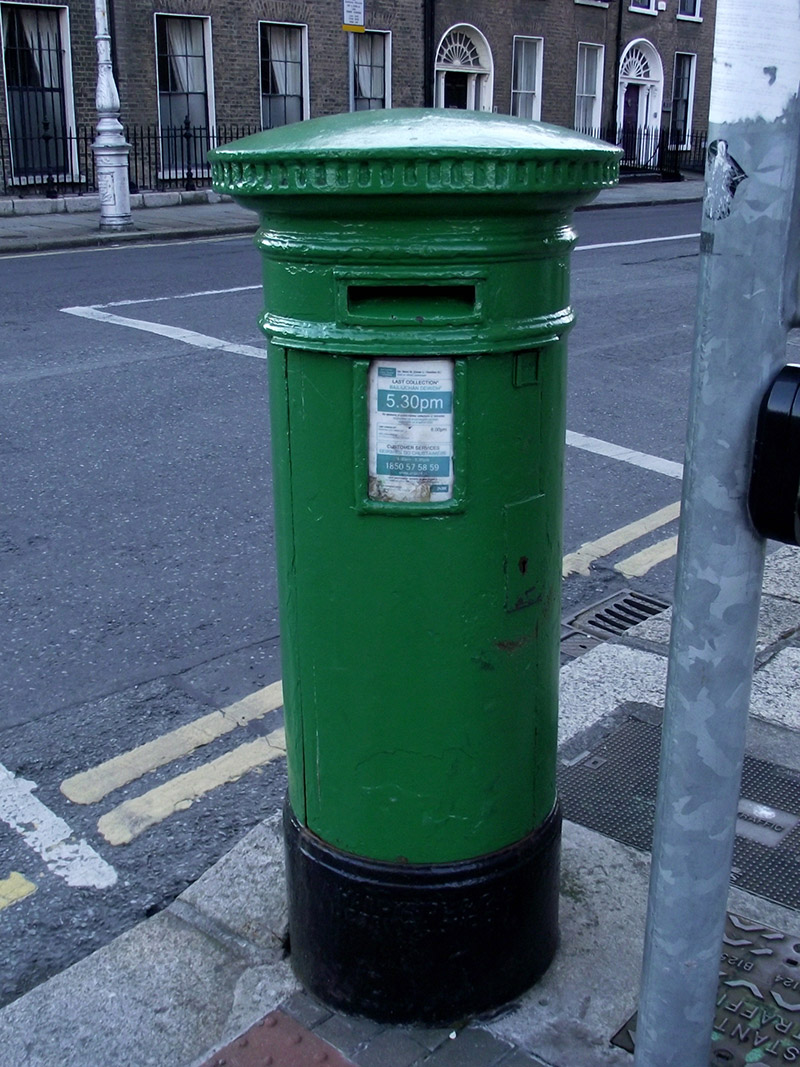 post boxpost box · 71 yd
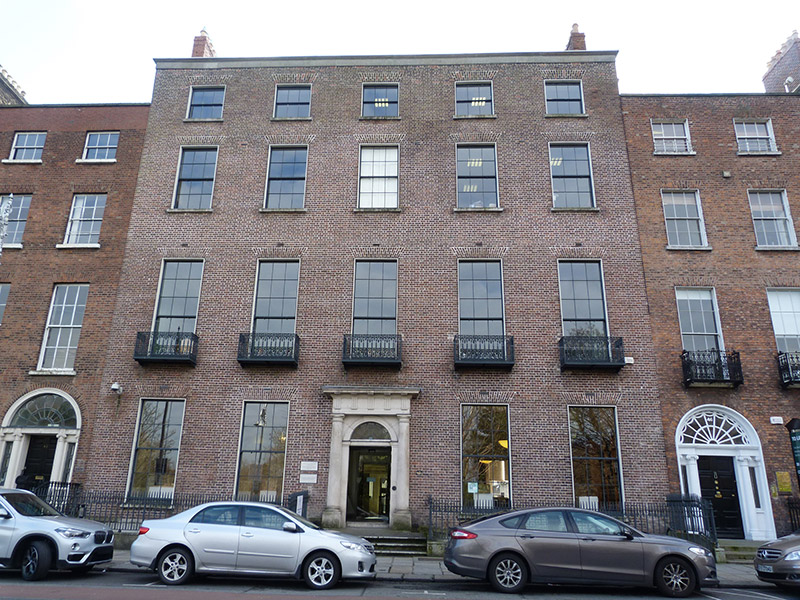 Irish Architectural Archivehouse · 89 yd
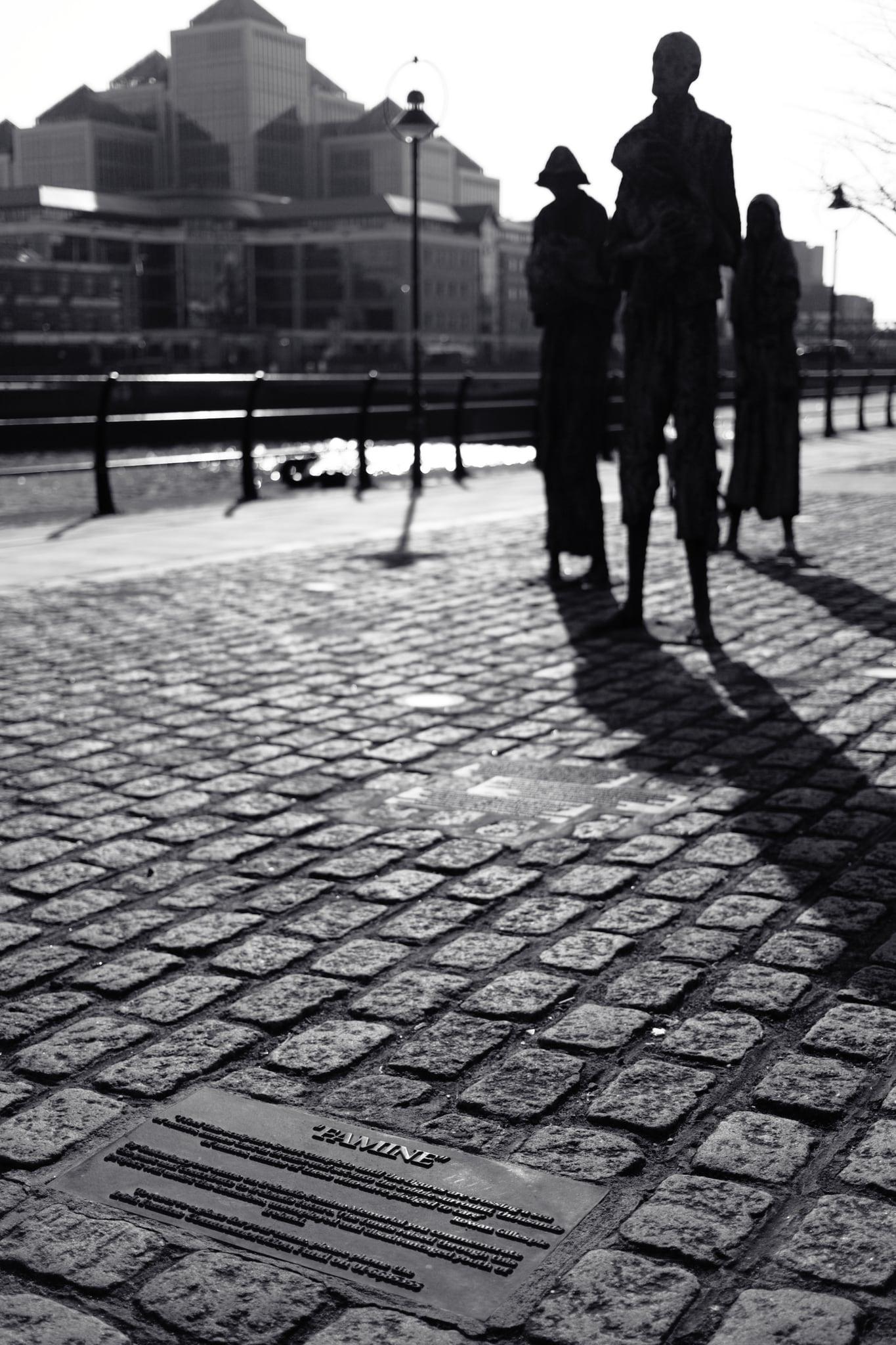 Éire MemorialMemorial · 185 yd
 Michael CollinsMemorial · 210 yd
 The Giant's GardenHeritage attraction · 415 yd
 Statue of Surgeon-Major ParkeMonument · 471 yd
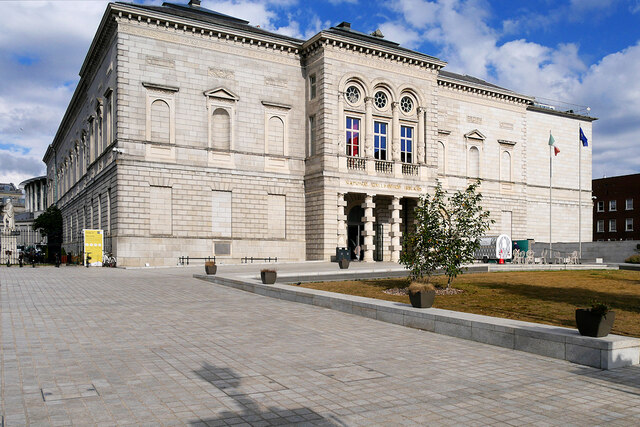 National Gallery of IrelandMemorial · 510 yd
 Oriental planeOriental plane · 995 yd
 St. Patricks WellHoly well · 1004 yd
 Bigleaf MapleBigleaf Maple · 1048 yd
 Burning of the Custom Housearmed conflict · 1360 yd
 CastleCastle, Anglo-Norman masonry castle · 1638 yd
Other information
Photo: National Inventory of Architectural Heritage · Website use allowed for educational or private purposes with source credit