What is recorded here
Two metres of limestone lean together on a Clare slope, forming a chamber wide enough for a crouching adult but narrowing like a throat. The broken capstone still bridges part of the opening, while a smaller doorstone lies across the gap as if someone had closed the tomb halfway and left it thinking. Around the mound, old field walls and distant hillfort marks suggest the place has watched herds, rituals and forgetting for millennia.
Near the top of a W-facing slope, which becomes steeper immediately to W. In pasture within a large multiperiod field system (CL009-059001-). Indicated and labelled ‘Cromlech’ on the 1842 and 1920 eds. of the OS 6-inch map. Described by de Valera and Ó Nualláin (1961, 33-4; see attachment) as a large and well-preserved wedge tomb (L c. 4.2m; Wth at SW 2.95m, narrowing to 2m at NE; H at SW 1.6m, dropping to 1m at NE) that was embedded in the centre of a low circular mound (diam. c. 14.5m; H not discernible). The trapezoidal tomb was oriented SW-NE. A modern NW–SE drystone field wall crossed the mound, incorporating the W side of the tomb. Each side of the tomb comprised a limestone slab standing on its long edge, with top edge flattened to support a capstone. The NW sidestone (L 5.4m; H at SW 1.6m; H at NE 1m; T 0.2-0.25m) was also worked on the inside and outside of its top edge. The upper part of the SE sidestone (L at top 5.8m; L at base 5.45m; H at SW 1.7m; H at NE 1m; T 0.25-0.3m) jutted out at its SW end. The NE endstone (L at base 1.95m; H 1m; T 0.15-0.2m) fitted neatly between the sidestones, and its S top corner was broken (L 0.3m; H 0.4m). The SW end was mostly blocked by a slab (L 2.4m; H 1.6m; T 0.2m), the side edges of which were also finely dressed. Between this endstone (‘blocking stone’ [ibid.]) and the NW sidestone there was a gap (L 0.6m), its lower part covered by a second, overlapping endstone (‘doorstone’ [ibid.]) (L 0.95; H 0.4m; T 0.15). The top edge of this slab appeared broken, supporting Westropp’s (1909, 18) proposal that it may have originally also covered the upper part of the gap at this end of the tomb. De Valera and Ó Nualláin (1961, 33) suggested that one of the slab fragments found outside the same end of the tomb may have been part of this broken endstone. Other fragments inside and outside the chamber appeared to be part of the broken capstone (est. L c. 6.1m; Wth 4.2m), two large pieces of which (L c. 2.8m; Wth c. 2-2.5m; T 0.25-0.3m) were still in position resting on the W and SW corners. (Westropp (1909, 18) described ‘small basins’/‘cup marks’ on the upper face of the fallen capstone fragments within the chamber.) Two slabs (L 0.4m; H 0.15m; T 0.1m) were set into the ground 1-2m to the W of the W corner of the tomb.
An inspection of the tomb in 1997 found it unaltered, except that the roof had been repaired by the Office of Public Works. The precariously balanced capstone fragments had collapsed into the chamber and were put back in place, with a steel bar supporting their NE edges.
A hut site (CL009-251----) lies c. 80m to the NNW, a cashel (CL009-059071-) lies c. 85m to the S and an enclosure (CL009-059074-) lies c. 109m to the ENE.
The following items have been uploaded:
CL009-059072-_01.pdf Details from Ruaidhrí de Valera and Seán Ó Nualláin, Survey of the Megalithic Tombs of Ireland. Volume I. County Clare. (Dublin: Stationery Office, 1961)
CL009-059072-_01.jpg View from NE
CL009-059072-_02.jpg View from SW
Compiled by: Mary Tunney and Conn Herriott
Date of upload: 30 March 2022
Wedge tomb, dating to the Late Neolithic or Early Bronze Age (c. 2500–1000 BCE). Its inclusion on early Ordnance Survey maps indicates historical recognition as a megalithic monument, though its wider archaeological significance remains understudied.
The monument record does not grant public access. Check the route and ask the landowner before entering private land.
- What survives
- Recorded monument
Places near here
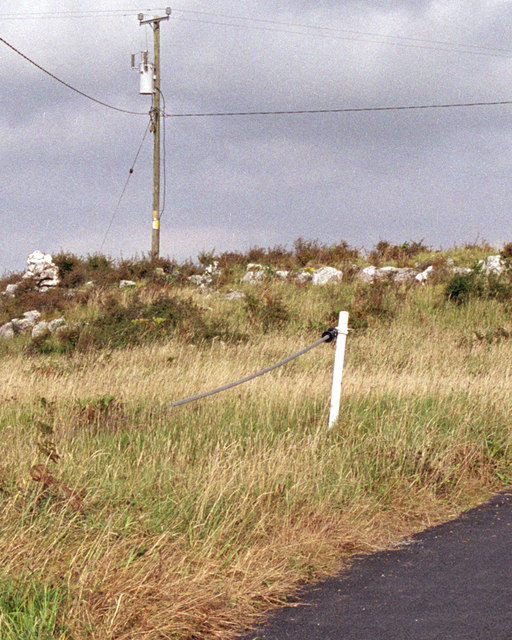 Ballyganner Castle (in ruins)Castle, tower house · 296 yd
 IndicatedFairy fort / stone ringfort · 614 yd
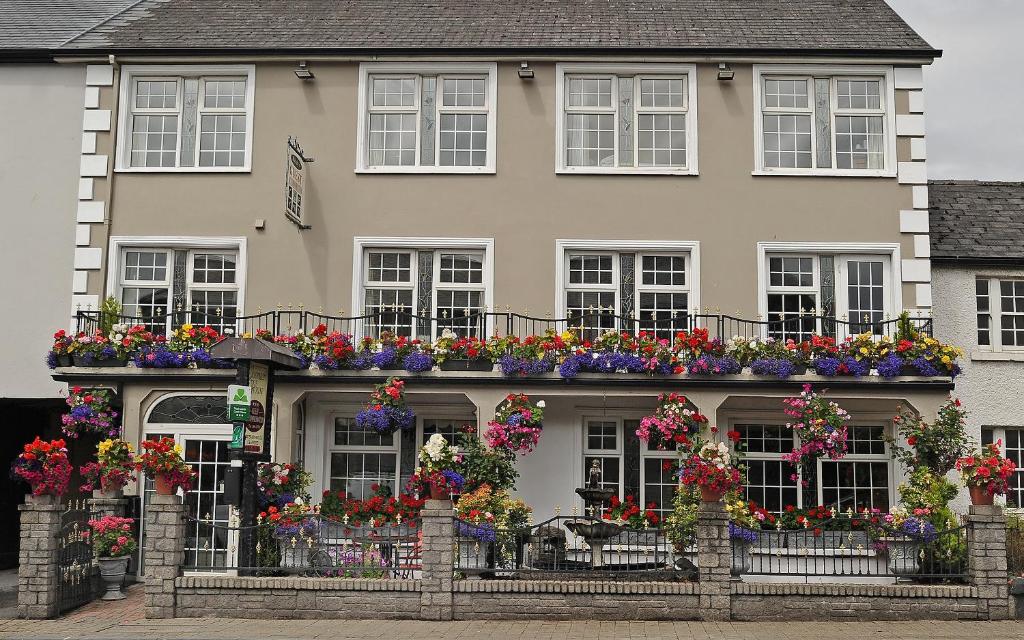 Enclosure in Clooneen (corcomroe By.)Enclosure · 717 yd
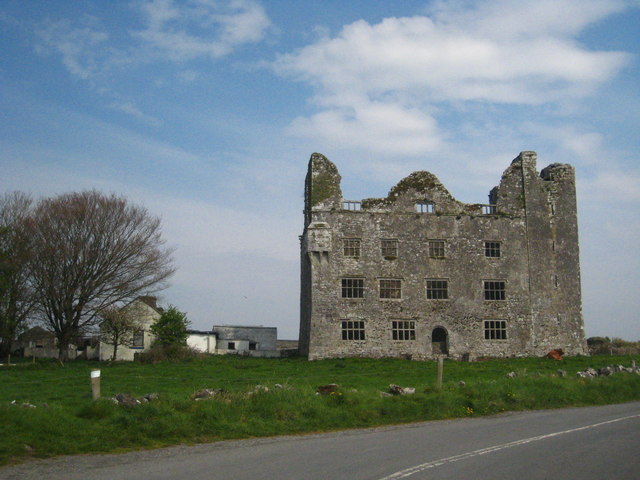 Leamaneh Castle (in ruins)House, fortified house · 1.0 mi
 Noughaval Church (in ruins)Church · 1.6 mi
 Saint Mochua's Catholic Churchchurch/chapel · 1.6 mi
 Burren Centre KilfenoraVisitor information · 2.3 mi
 High CrossHeritage attraction · 2.3 mi
 Fergus River CaveCave · 2.4 mi
 Cave of the Wild HorsesCave · 3.0 mi
 CaherconnellHeritage attraction · 3.3 mi
 Poulnabrone - Burren GeositeVisitor information · 3.7 mi